
Decon 30 Mold Removal: Products Compared by Use

For a Decon 30 product, choose Benefect Decon 30 Botanical Cleaner, 1 Gallon for a 1-gallon ready-to-use disinfectant cleaner; it is not presented as a mold-stain remover. Choose a stain-removal alternative if visible discoloration is the main problem, and verify that the surface is approved for that product.
Decon 30 is a botanical disinfectant cleaner, while the RMR and 30 SECONDS options here are marketed for mold and mildew stains. Removing a stain does not address the moisture source that can allow mold to return.
We earn a commission if you buy through links on this page. As an Amazon Associate I earn from qualifying purchases. Products are compared on manufacturer specifications, not hands-on testing.
- Best overall: Benefect Decon 30 Botanical Cleaner, 1 Gallon – A 1-gallon ready-to-use Decon 30 cleaner for restoration and water-damage cleaning.
- Best for larger jobs: Benefect Decon 30 Botanical Cleaner, 5 Gallons – The Decon 30 ready-to-use format comes in a 5-gallon pail.
- Best for contractor use: RMR-86 Pro Stain Remover, 1 Gallon – RMR-86 Pro is a ready-to-use, sodium hypochlorite-based stain remover in a 1-gallon size.
| Product | Best for | Volume | Product type | Formula or format | Shop |
|---|---|---|---|---|---|
| Benefect Decon 30 Botanical Cleaner, 1 Gallon | Restoration cleaning | 128 fl oz | Disinfectant cleaner | Ready to use | Check Price on Amazon |
| Benefect Decon 30 Botanical Cleaner, 5 Gallons | Larger cleaning jobs | 640 fl oz | Disinfectant cleaner | Ready to use | Check Price on Amazon |
| RMR-86 Pro Stain Remover, 1 Gallon | Contractor stain removal | 128 fl oz | Mold and mildew stain remover | Ready-to-use liquid | Check Price on Amazon |
| RMR-86 Instant Stain Remover, 1 Gallon | Multi-surface staining | 128 fl oz | Mold and mildew stain remover | Spray | Check Price on Amazon |
| 30 SECONDS Pro Mold & Mildew Remover, 32 Oz | Small stain jobs | 32 fl oz | Mold and mildew stain remover | Spray | Check Price on Amazon |
Decon 30 Mold Removal Products and Alternatives
Compare the Decon 30 cleaners with stain-removal formulas by intended task and package size.
Benefect Decon 30 Botanical Cleaner, 1 Gallon
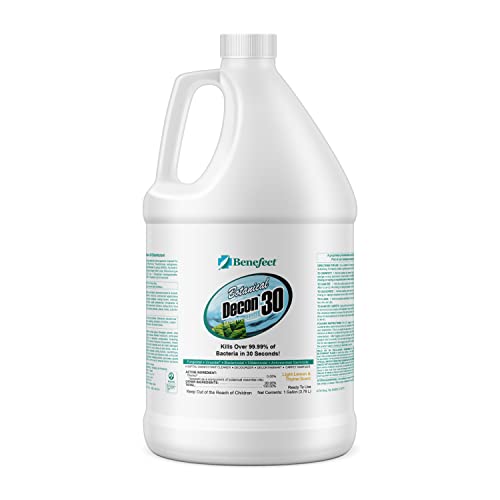
For buyers specifically seeking Decon 30, this 1-gallon bottle is the smaller of the two Decon 30 sizes here. The botanical disinfectant cleaner is described for restoration and water-damage jobs, and the maker says it is ready to use and suitable for food-contact surfaces without rinsing or wiping. The maker also claims it kills 99.99% of germs and bacteria in 30 seconds. This is a cleaner, not a formula identified here as removing mold stains, so choose a stain remover instead when visible discoloration is the main goal. The 128-fluid-ounce bottle weighs 8.73 pounds.
Bottom line: Pick this for a smaller Decon 30 quantity and restoration cleaning rather than stain removal.
Benefect Decon 30 Botanical Cleaner, 5 Gallons
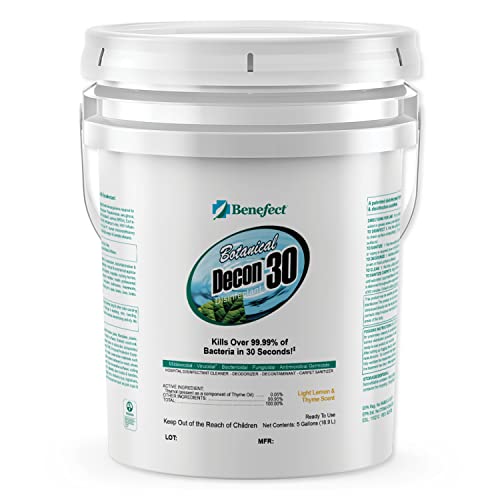
The 5-gallon pail provides five times the volume of the 1-gallon Decon 30 bottle, making it the larger-format choice for repeated cleaning work. It is ready to apply without mixing or diluting and is intended for hard, non-porous surfaces. The light lemon and thyme scent distinguishes its fragrance. Use only as directed on the product label, especially when selecting a surface and handling the pail. Like the smaller Decon 30 format, this is a disinfectant cleaner rather than a product described here as lifting mold stains; a stain remover may fit better when discoloration is the concern.
Bottom line: Choose this when you need Decon 30 in a larger volume for hard, non-porous surfaces.
RMR-86 Pro Stain Remover, 1 Gallon

Unlike Decon 30, RMR-86 Pro is specifically positioned as a mold and mildew stain remover. Its ready-to-use, sodium hypochlorite-based formula is marketed for tough stains without scrubbing or sanding, and the maker calls it contractor-grade. The specifications direct users to use proper ventilation and appropriate personal protective equipment during application. This makes it a different fit from a botanical disinfectant cleaner, particularly when visible staining is the task. The 1-gallon size suits larger jobs, but anyone seeking a botanical cleaner or a food-contact-surface cleaner should not treat this as an interchangeable Decon 30 alternative.
Bottom line: Pick this for a ready-to-use contractor stain-removal formula when ventilation and PPE are manageable.
RMR-86 Instant Stain Remover, 1 Gallon

This RMR-86 option is the one in the group whose name specifies a spray format, and its surface range includes decks, wood, vinyl siding, drywall, concrete and brick, plus other approved surfaces. It is aimed at discoloration from mold and mildew, so it addresses a different job from Decon 30 disinfectant cleaning. The maker advises ventilation and appropriate protective equipment, and the product features say to test an inconspicuous area as directed on the label. It comes in a 1-gallon size. Confirm the surface is approved and test it before broader use, especially where appearance changes would matter.
Bottom line: Choose this when you want a spray stain remover for an approved surface and can test an inconspicuous spot.
30 SECONDS Pro Mold & Mildew Remover, 32 Oz
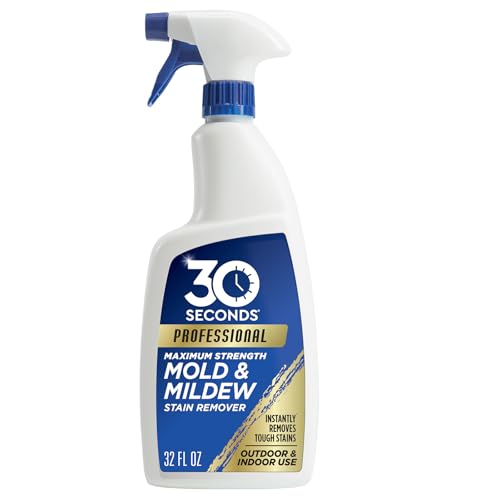
The 32-ounce 30 SECONDS Pro is the smallest package here, making it a more limited-volume choice than the gallon and pail formats. It is marketed for indoor and outdoor mold and mildew stains, with examples including siding, fences, decks, concrete floors and brick. The maker says the formula lifts stains without scrubbing and is twice as strong as its standard 30 SECONDS Outdoor Cleaner. Those are stain-removal claims, not a substitute for correcting dampness or choosing a disinfectant cleaner such as Decon 30. Its smaller volume may be limiting for extensive staining across multiple surfaces.
Bottom line: Pick this for a smaller stain-removal job on a surface within its approved use.
Choose a cleaner or a stain remover
Start by deciding whether you need surface disinfection or visible stain removal: those are different tasks. Decon 30 is presented here as a disinfectant cleaner, while the RMR-86 and 30 SECONDS products are presented as mold and mildew stain removers. A stain can remain after the underlying growth is addressed, and a cleaner or stain treatment cannot solve a continuing leak or condensation problem. For mold cleanup, the EPA generally recommends professional help when the affected area is more than about 10 square feet, when sewage or contaminated water is involved, or when the HVAC system may be affected. For smaller areas, identify and correct the moisture source before cleaning; otherwise the problem can return. Do not assume a product’s stain-removal claim means it disinfects.
Match the formula to the surface and job size
Surface compatibility and volume are the practical decision points. The Decon 30 pail is for hard, non-porous surfaces, while the RMR-86 spray names wood, drywall, concrete, brick, vinyl siding and decks among its potential surfaces, subject to label approval. The smaller 30 SECONDS package is 32 fluid ounces; the Decon 30 formats are 128 and 640 fluid ounces. Use this comparison to separate task and quantity rather than treating all products as interchangeable.
| Need | Product type | Volume |
|---|---|---|
| Disinfectant cleaning | Decon 30 cleaner | 128 or 640 fl oz |
| Stain removal, larger quantity | RMR-86 stain remover | 128 fl oz |
| Stain removal, smaller quantity | 30 SECONDS Pro remover | 32 fl oz |
When using a stain remover on a surface where color or finish matters, test an inconspicuous spot first and follow the label’s surface directions.
Use mold-removal products safely
Ventilation and protective equipment matter when handling stain removers: the RMR product features specifically call for proper ventilation and appropriate PPE. Never mix cleaning products, especially bleach-containing products with ammonia or acidic cleaners, because dangerous gases can form. Keep people and pets away during application and until the label permits re-entry, and avoid breathing spray or mist. Product labels govern application, contact time, rinsing, storage and disposal; use the label for the exact product and surface rather than borrowing directions from another formula. If mold covers more than about 10 square feet, follows contaminated water, or reaches HVAC components, EPA guidance points toward professional assessment rather than expanding a DIY cleanup.
Stop moisture before treating stains
Moisture control is essential because mold can regrow when damp conditions persist. Repair leaks, dry wet materials promptly, and address condensation or poor ventilation before focusing on discoloration. Porous materials such as ceiling tiles or carpet may need removal if moldy; cleaning the visible face alone may not address material beneath the surface. Do not paint or caulk over mold. For a small, contained area on a hard surface, choose a product labeled for that surface and follow its directions, then keep the area dry. When the source is a recurring leak, a large wet area, or hidden growth in a wall or ventilation system, stain treatment alone is not a sound solution.
Frequently Asked Questions
Does Decon 30 remove visible mold stains?
Decon 30 is presented as a botanical disinfectant cleaner, not a mold-stain remover. Choose a product labeled for stain removal when visible discoloration is the main issue, and correct the moisture source to reduce recurrence.
How much mold can I clean up myself?
The EPA generally recommends professional help when mold covers more than about 10 square feet. Contaminated water, HVAC involvement, or hidden growth are also reasons to seek professional guidance rather than expand a small cleanup.
Can I mix mold removers with other cleaners?
No; never mix cleaning products. Bleach-containing products mixed with ammonia or acidic cleaners can produce dangerous gases, so ventilate and follow the specific product label.
Should I remove mold from drywall or carpet?
Porous materials such as drywall, carpet and ceiling tiles can be difficult to clean fully when moldy and may need removal. Fix the moisture source first, and seek professional help if the affected area exceeds about 10 square feet or is hidden.