
Best Fish Hook Sharpener: 5 Tools Compared by Fit

The rechargeable electric sharpener is the best fish hook sharpener for anglers who want powered touch-ups and portability in one tool. Choose a manual diamond file instead if you prefer to control each stroke or want a specific grit and hook groove.
We earn a commission if you buy through links on this page. As an Amazon Associate I earn from qualifying purchases. Products are compared on manufacturer specifications, not hands-on testing.
- Best overall: SAMSFX Dual-Grit Diamond Hook File, 2-Pack – Its 200- and 400-grit diamond sides, three hook grooves, and 4-inch length give a clear, manual sharpening setup.
- Best for powered touch-ups: USB Rechargeable Electric Hook Sharpener – Rechargeable operation and two rotating ways are useful for anglers who prefer powered sharpening.
- Best for multiple angles: Kraken 600-Grit Diamond Hook Sharpener – The 600-grit diamond stone has three sides and hook grooves for changing working angles.
- Best for spare files: Skylety 4-Inch Diamond Hook Files, 4-Pack – The package includes four portable diamond files with one or two recesses per side.
| Product | Best for | Abrasive | Hook grooves | Length | Shop |
|---|---|---|---|---|---|
| USB Rechargeable Electric Hook Sharpener | Powered touch-ups | — | — | — | Check Price on Amazon |
| SAMSFX Dual-Grit Diamond Hook File, 2-Pack | Grit selection | Diamond, 200/400 grit | 3 grooves | 4 in | Check Price on Amazon |
| Kraken 600-Grit Diamond Hook Sharpener | Angled sharpening | Diamond, 600 grit | Grooved, count unspecified | — | Check Price on Amazon |
| Skylety 4-Inch Diamond Hook Files, 4-Pack | Extra file supply | Diamond, fine/medium | 1 or 2 recesses per side | 4 in | Check Price on Amazon |
| Skylety Double-Sided Diamond Hook File, 2-Pack | Saltwater tackle | Diamond, fine/medium | 1 or 2 recesses per side | — | Check Price on Amazon |
Fish Hook Sharpeners
Choose between powered touch-ups and manual diamond files by considering the grit, grooves and portability you want.
USB Rechargeable Electric Hook Sharpener

Unlike the manual files here, this rechargeable sharpener uses two rotating ways to sharpen most fishing hooks. Its magnetic protective caps cover the sharpening area, and the package includes a charging cable and storage pouch for carrying it between boat, shore or kayak trips. It suits anglers who want a powered option for routine touch-ups without packing a separate stone.
Bottom line: Pick this if powered sharpening and a portable rechargeable format matter more than choosing a manual grit.
SAMSFX Dual-Grit Diamond Hook File, 2-Pack

Each 4-inch stainless steel file has two grooves on the medium side and one on the fine side, and the package includes two files. Use the coarser side for more material removal and the finer side for a finishing pass. This is a fit for anglers who want explicit grit choices and hook-guiding grooves; its short file is less suited to someone who wants powered operation.
Bottom line: Choose this when distinct coarse and fine surfaces are more important than powered convenience.
Kraken 600-Grit Diamond Hook Sharpener
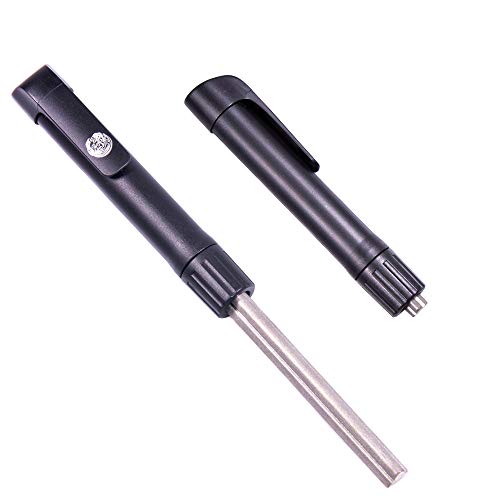
The triangular, three-sided stone is the key distinction: it gives you multiple faces for changing the sharpening angle on hooks or knives. Kraken identifies the abrasive as 600-grit diamond and includes hook grooves for treble hooks, worm hooks, crankbaits and jigs. A retractable sharpening surface protects the stone when it is carried, and a pocket clip supports tackle-box portability. It suits anglers who want a single fine-grit tool with different working faces. It does not offer the separate medium and fine grits found on the dual-sided file.
Bottom line: Pick this for a pocketable, fine-grit stone with several faces for adjusting your approach.
Skylety 4-Inch Diamond Hook Files, 4-Pack

This four-piece set emphasizes having spare files: each is 4 inches long, with one or two carved recesses per side for guiding hooks. The handles are designed for a firm grip, and each file has a rope detail for storage. That makes the set a practical match for anglers who want multiple manual files on hand or want to keep one in different tackle kits. The limitation is that the fine and medium surfaces have no numbered grit values, so buyers who want a specific abrasive grade should choose a file with grits.
Bottom line: Choose this set if having several manual files matters more than numbered grit grades.
Skylety Double-Sided Diamond Hook File, 2-Pack

Designed with saltwater fishing in mind, this two-file set pairs fine and medium diamond surfaces with one recess on one side and two on the other. The compact files have rubber-grip handles and lanyards for holding and storage, making them easy to keep with a fishing kit. Compared with the four-file set, this package provides fewer spares but still gives you two files to rotate. The grit grades are described as fine and medium rather than numbered, so this is not the best fit for anglers who need a particular grit specification.
Bottom line: Pick this for a compact saltwater-oriented file set with lanyards and a rubber-grip handle.
How to Choose a Fish Hook Sharpener
Choose by how much control and convenience you want: powered sharpeners reduce manual filing, while diamond files let you guide each stroke. A medium-to-fine progression can help when a point needs more work than a light touch-up, and a grooved face helps keep a hook positioned during filing. For routine touch-ups, start with the finer surface; use a coarser one only when the point needs more material removed. If you fish from a kayak or carry a small tackle kit, compare the tool’s format and included storage features. A sharp point is hazardous: keep fingers behind the hook point, work away from your hand, and return caps or covers before storing the sharpener.
How to Check and Sharpen a Hook Point
Check a hook point with a light touch against a fingernail: a sharp point should catch rather than slide across the surface. Keep the hook stable and make controlled strokes along the point, maintaining its existing shape instead of rounding it over. A groove can help guide the hook, but it does not replace a secure grip on the shank. Check the point again after a few strokes rather than filing continuously; excessive filing can shorten or weaken the point. Replace a hook that is bent, deeply rusted or damaged instead of trying to sharpen it back into shape. Keep the point directed away from your fingers and face throughout the process.
Manual and Electric Hook Sharpeners Compared
Manual diamond files suit anglers who want to choose their stroke and, in some cases, select a grit; rechargeable sharpeners suit those who prefer a powered tool. Among these choices, the SAMSFX file has stated 200- and 400-grit faces, while the Kraken uses a 600-grit stone. The electric tool is rechargeable and has two rotating ways, but has no stated grit. Groove design also differs: some tools give a groove count or varied recesses, while others focus on multiple stone faces. Use the table to match the tool format to the feature you value; groove counts and grit are not interchangeable measures of sharpening performance.
| Need | Look for |
|---|---|
| Powered touch-ups | Rechargeable electric sharpener |
| Numbered grit progression | 200/400-grit diamond file |
| Several working faces | Triangular, three-sided stone |
| More manual files on hand | Multi-file set |
When to Touch Up or Replace a Fishing Hook
Touch up a hook when its point slides on a fingernail test but the hook is otherwise straight and intact. Check hooks after contact with rocks, docks or other hard surfaces, since impacts can dull or bend a point. File in short, controlled strokes and retest; more filing is not automatically better. A point that is bent, badly corroded or visibly damaged is a reason to replace the hook rather than keep removing metal. Handle used hooks as sharp even when they seem dull, and store files with their caps or covers in place to reduce accidental contact.
Frequently Asked Questions
How can I tell if a fishing hook is sharp?
A sharp hook point should catch on a light touch against a fingernail rather than slide across it. Keep the point directed away from your fingers while checking.
Should I use coarse or fine grit on a hook?
Use a finer grit for a light touch-up and a coarser grit when a dull point needs more material removed. Finish with the finer surface if your file has both.
Can I sharpen a bent fishing hook?
Sharpening does not restore a bent hook’s original shape or strength. Replace a hook that is bent, deeply rusted or visibly damaged.
How often should I check hook points?
Check a hook before fishing and again after it contacts rocks, docks or other hard surfaces. A fingernail test can reveal a point that needs a touch-up.
Are diamond files suitable for treble hooks?
Grooved files can help position treble hooks, and the Kraken file identifies treble hooks among its compatible styles. Keep each exposed point directed away from your fingers while filing.