
Best Celtic Salt Brand: 3 Grinds Compared for Cooking

Celtic Sea Salt Fine Ground suits most kitchens because its fine grind works for cooking, baking, and seasoning, while dissolving more readily than coarse crystals. Choose Celtic Sea Salt Light Grey Coarse for a coarse finishing salt, or Le Marinier Celtic Salt Fine Ground if you prefer a fine-ground option in an 18-ounce package.
Celtic salt is an unrefined sea salt; its grain size affects how quickly it dissolves and how much fits in a spoon.
We earn a commission if you buy through links on this page. As an Amazon Associate I earn from qualifying purchases. Products are compared on manufacturer specifications, not hands-on testing.
- Best overall: Celtic Sea Salt Fine Ground – Its fine grind is suited to everyday cooking, baking, and seasoning.
- Best for finishing: Celtic Sea Salt Light Grey Coarse – Coarse crystals provide a distinct texture for finishing dishes.
- Best for a larger pack: Le Marinier Celtic Salt Fine Ground – The fine-ground salt comes in an 18-ounce package.
| Product | Best for | Grind | Package size | Shop |
|---|---|---|---|---|
| Celtic Sea Salt Fine Ground | Everyday cooking | Fine | 16 oz | Check Price on Amazon |
| Celtic Sea Salt Light Grey Coarse | Coarse finishing | Coarse | 16 oz | Check Price on Amazon |
| Le Marinier Celtic Salt Fine Ground | Larger fine-grain pack | Fine | 18 oz | Check Price on Amazon |
Celtic Salt Brands Compared
Compare these Celtic salt options by grain size, package weight, and the kitchen tasks each suits.
Celtic Sea Salt Fine Ground
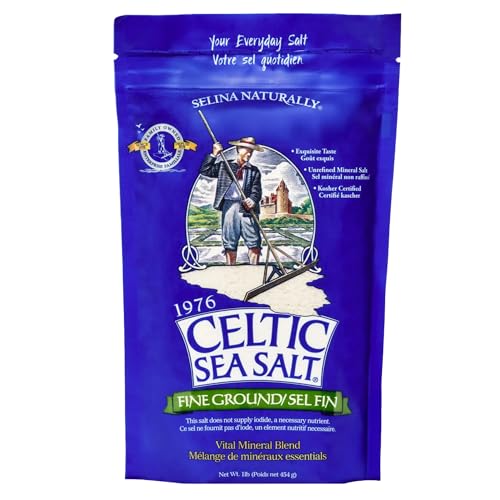
The fine grind makes this the most versatile option here for everyday cooking, baking, and seasoning. The 16-ounce package contains unrefined sea salt that the maker says is hand-harvested and lab tested; it also says the salt has no additives. Fine grains dissolve more quickly than coarse crystals, which can help distribute salt evenly through doughs and liquids. This texture is less suited to cooks who specifically want a crunchy finishing salt. The maker also describes the salt as retaining trace minerals, but salt should be used for flavor rather than as a mineral supplement.
Bottom line: Choose this fine grind for a single salt suited to everyday recipes.
Celtic Sea Salt Light Grey Coarse

The coarse crystals distinguish this option from the two fine-ground salts, making it a fit for finishing dishes when you want a more noticeable grain. This is a 16-ounce package of light grey salt. The maker describes it as hand-harvested whole crystals and says it is lab tested and additive-free. Coarse grains dissolve more slowly than fine salt, so they are less convenient for mixing evenly into delicate batters or quickly dissolving in liquids. If a recipe measures salt by volume, avoid substituting coarse crystals spoon-for-spoon for fine salt; weighing the salt gives a more consistent amount.
Bottom line: Pick the coarse crystals when texture on finished food matters more than quick dissolving.
Le Marinier Celtic Salt Fine Ground
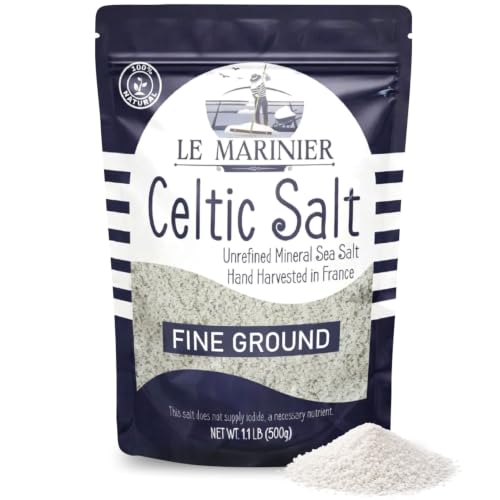
The 18-ounce package sets this fine-ground option apart from the 16-ounce choices, while its texture suits cooking and baking. Le Marinier describes the salt as hand-harvested in French ocean marshes, unrefined, and free of additives. The maker also claims it contains more than 82 minerals; that claim does not make salt a substitute for a balanced diet. Fine grains dissolve quickly and are easier to incorporate evenly than coarse crystals, but this is not the right choice if you want a visibly coarse finishing grain. Its French harvesting claim may matter to shoppers seeking that origin.
Bottom line: Choose this if you want fine grains and an 18-ounce package.
How to Choose a Celtic Salt Grind
Choose fine-grained salt for recipes where quick, even dissolving matters, and coarse crystals for a finishing texture. Fine grains incorporate readily into batters, sauces, and soups; coarse grains take longer to dissolve and stand out more on the surface of food. Salt measured by weight is more consistent than salt measured by volume because a teaspoon can hold different amounts depending on grain size and how tightly grains settle. For baking, use the grind specified by the recipe or weigh the salt rather than swapping spoonfuls of coarse and fine grains. For table seasoning, choose the texture you prefer and adjust gradually: salt cannot be removed once mixed into a dish.
What Unrefined Sea Salt Means in the Kitchen
Unrefined sea salt is produced by evaporating seawater, while the mineral content and color can vary with the source and processing. The products here are marketed as unrefined, and the maker claims about trace minerals should not be read as a nutrition treatment or a reason to increase salt intake. Salt’s primary kitchen function is seasoning; a little can also affect texture and dough behavior in baking. For most adults, the FDA recommends limiting sodium to less than 2,300 milligrams per day, and sodium is present in many packaged foods as well as salt added at home. Taste as you cook and account for salty ingredients such as broth, cheese, and cured foods.
How to Substitute Coarse and Fine Salt
Do not assume that equal spoonfuls of coarse and fine salt contain equal amounts. Fine grains pack more closely into a measuring spoon, while coarse crystals leave more air space, so volume substitutions can shift a recipe’s saltiness. When possible, weigh salt in grams and follow the recipe’s weight; when only volume is given, use the specified grind. If you must substitute, start with less than the called-for amount, dissolve or mix it thoroughly, then taste and adjust when safe and appropriate. Coarse salt is also slower to dissolve in cold liquid, so allow time before deciding that a dish needs more. These rules matter most in baking, where precise amounts affect the finished result.
Frequently Asked Questions
Does fine Celtic salt dissolve faster than coarse salt?
Yes, fine grains dissolve faster because they have more exposed surface area relative to each grain. Coarse crystals can take longer to disappear in cold liquids and are better suited to a finishing texture.
Can I swap coarse salt for fine salt in baking?
Use the recipe’s specified grind when possible, because equal spoonfuls of coarse and fine salt may contain different amounts. Weighing the salt is a more consistent way to substitute.
How much sodium should adults have in a day?
The FDA recommends that adults limit sodium to less than 2,300 milligrams per day. Salt is only one source, so consider sodium in packaged foods and salty ingredients too.
Is Celtic salt a meaningful source of minerals?
Salt may contain trace minerals, but it is primarily a seasoning and should not be used as a mineral supplement. The FDA’s adult sodium limit remains less than 2,300 milligrams per day.