
Kit to Make Jewelry: Beads, Tools and Findings Compared

For a kit to make jewelry, Xmada 1,587-Piece Gemstone Bead Kit is the most versatile starting point because it combines colorful gemstone beads, findings, wire and basic pliers. Choose shynek 1,857-Piece Tools and Findings Kit or PAXCOO Pliers and Findings Kit instead if repairs and tool variety matter more than a large bead selection, or Funtopia 6 mm Glass Bead Kit and Pizooro 6 mm Clay Bead Bracelet Kit for projects built around glass or clay beads.
We earn a commission if you buy through links on this page. As an Amazon Associate I earn from qualifying purchases. Products are compared on manufacturer specifications, not hands-on testing.
- Best overall: Xmada 1,587-Piece Gemstone Bead Kit – Combines multicolor gemstone beads, several findings, three wires and basic pliers.
- Best for repairs: shynek 1,857-Piece Tools and Findings Kit – Pairs 3 pliers with 1,830 findings and repair-oriented supplies.
- Best for glass bead designs: Funtopia 6 mm Glass Bead Kit – Includes 6 mm glass beads in 34 colors, elastic line and spacer beads.
- Best for colorful bracelets: Pizooro 6 mm Clay Bead Bracelet Kit – Centers on 6 mm clay beads, with letter beads, charms and strings.
| Product | Best for | Bead selection | Tools | Findings or extras | Shop |
|---|---|---|---|---|---|
| Xmada 1,587-Piece Gemstone Bead Kit | Mixed bead projects | About 1,200 gemstone beads; 20 colors | Flat-nose pliers, tweezers, opener | 170 pendants; hooks, pins, wire | Check Price on Amazon |
| shynek 1,857-Piece Tools and Findings Kit | Jewelry repairs | No beads listed | 3 pliers; helping hands, caliper | 1,830 findings; wire, chain, cord | Check Price on Amazon |
| Funtopia 6 mm Glass Bead Kit | Glass bead bracelets | 952 glass beads; 6 mm, 34 colors | No pliers listed | 400 spacers; elastic line, 6 pendants | Check Price on Amazon |
| PAXCOO Pliers and Findings Kit | Basic jewelry repairs | No beads listed | 3 pliers: round, cutting, chain nose | 845 findings; wire | Check Price on Amazon |
| Pizooro 6 mm Clay Bead Bracelet Kit | Clay bead bracelets | 9,600 clay beads; 6 mm, 48 colors | Tweezers, scissors | 850 assorted beads; string, hooks | Check Price on Amazon |
Jewelry-Making Kits Compared
Match the kit’s bead material and included hardware to the pieces you plan to make.
Xmada 1,587-Piece Gemstone Bead Kit
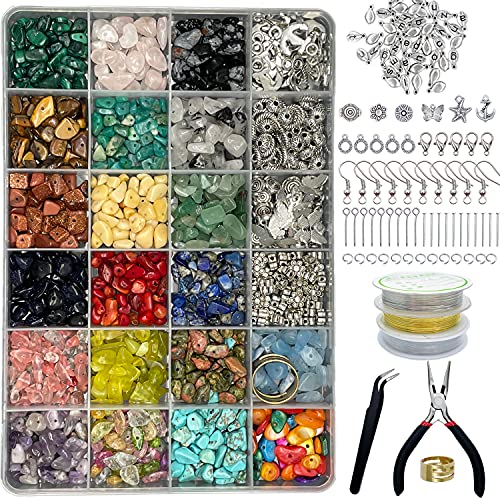
For a mix of colorful gemstone-style beads and basic hardware, this kit brings together about 1,200 beads in 20 colors, 170 pendants, earring hooks, pins, clasps, jump rings and three colors of jewelry wire. A flat-nose plier, jump ring opener and tweezers cover simple assembly tasks, and the supplies come in a 24-grid box. The range suits beginners who want to try bracelets, necklaces and earrings without centering every project on one bead material.
Bottom line: Choose this for varied bead-and-finding projects with basic assembly tools.
shynek 1,857-Piece Tools and Findings Kit
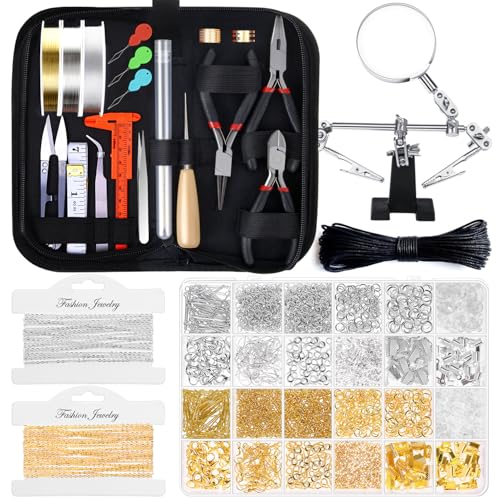
Unlike bead-heavy sets, this kit puts its emphasis on repairs and assembly: it includes three jewelry pliers, 1,830 findings, copper wire, necklace chain, elastic string and waxed cord. A helping-hands tool, caliper, awl, needles and measuring tape add support for small adjustments and stringing work. Its broad hardware selection makes it a practical fit for someone who already has beads or wants to replace clasps and connect components. It is less suited to a first project that depends on a ready-made assortment of decorative beads; choose a bead-focused kit if color and bead variety are the priority.
Bottom line: Pick this when your work needs a wide range of findings and repair tools.
Funtopia 6 mm Glass Bead Kit
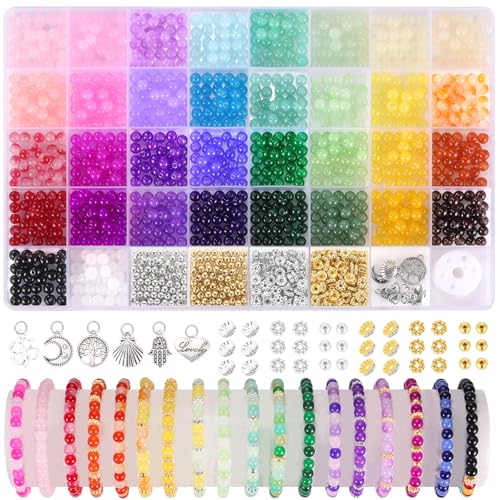
Funtopia is the focused choice for designs built around 6 mm round glass beads, with 952 beads across 34 solid and gradient colors. The kit adds elastic line, 400 gold- and silver-colored spacer beads, six pendants and separate color compartments, so it is organized for color-led bracelet or necklace patterns. The specified bead diameter helps when planning a repeating design or estimating how many beads fit a strand. This set does not include pliers, so projects requiring wire loops, jump-ring manipulation or hardware repair may need tools from another kit.
Bottom line: Choose this for color-rich projects using uniform 6 mm glass beads.
PAXCOO Pliers and Findings Kit
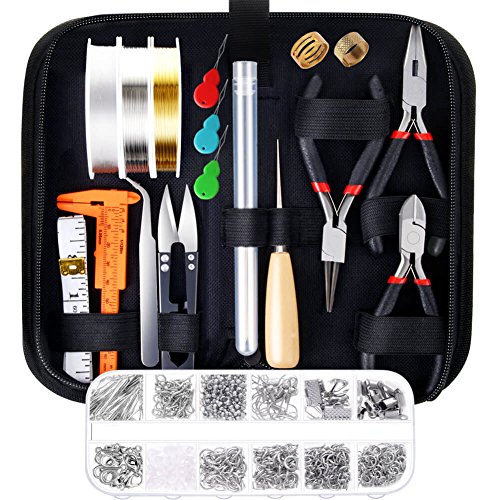
PAXCOO concentrates on the three pliers most useful for basic jewelry assembly: round-nose, wire-cutting and chain-nose. Its 845 findings include open jump rings in four diameters—4, 5, 6 and 8 mm—giving repair work a defined range of connector sizes. The maker notes that the plier heads may have protective oil; wipe them before use and oil them before storage to help guard against rust. This is a more compact tool-and-hardware direction than a bead assortment, so it suits repairs or makers who already have beads rather than someone seeking decorative materials in many colors.
Bottom line: Pick this for a simple plier set and common repair findings.
Pizooro 6 mm Clay Bead Bracelet Kit

Pizooro centers on 6 mm clay beads, offering 9,600 pieces across 48 colors, plus 850 assorted beads that include letters, pearls, spacers and hearts. Elastic string, earring hooks, tweezers, scissors and jump rings give the set a bracelet-first feel while allowing necklaces, earrings and other small accessories. Its large color range suits coordinated or personalized designs, especially when letter beads or charms are part of the plan. The included tools are aimed at stringing and simple assembly rather than wire shaping, so makers doing substantial metal-wire work should choose a plier-focused set.
Bottom line: Choose this for colorful clay bead bracelets and letter-bead designs.
How to Choose a Jewelry-Making Kit
Start with the construction method: elastic stringing, wire-and-findings assembly, or bead selection. A kit built around beads gives more color and material choices, while a tool-and-findings kit is more useful for replacing clasps or connecting components. For simple elastic bracelets, prioritize beads, elastic line and a way to trim cord; for wire loops and repairs, look for round-nose, chain-nose and cutting pliers. Jump rings commonly come in several diameters, and smaller rings are easier to conceal while larger rings can connect bulkier components. Choose a bead-focused kit if most planned pieces are decorative strands; choose tools and findings if the main job is fixing existing jewelry.
Bead Sizes and Stringing Fit
Bead diameter affects both the look and fit of a bracelet: 6 mm beads are a common mid-size option, while larger beads use up strand length more quickly. For a rough layout, divide the desired strand length in millimeters by the bead diameter, then allow extra room for knots and spacers. A 7-inch strand made entirely of 6 mm beads holds about 30 beads before spacing and closure adjustments. Elastic cord should pass through the bead holes without forcing; thick cord can be difficult to double back through small holes. Make a test strand before trimming, and leave enough cord to tie and secure the knot.
Tools and Findings for Assembly
Round-nose pliers form loops, chain- or flat-nose pliers grip components, and flush or wire cutters trim wire; three-tool kits therefore cover more wire tasks than bead-only sets. To open a jump ring, move its ends sideways in opposite directions rather than pulling them apart, then reverse the motion to close it flush. A gap can let a component slip free. Match ring diameter and wire thickness to the weight and size of the components, and check that the ring closes fully. The table gives a quick starting point for matching the project to a kit style.
| Project need | Useful kit focus | Reason |
|---|---|---|
| Colorful elastic strands | Beads and elastic line | Supports bead-first designs and stringing |
| Jewelry repair | Pliers and findings | Supports joining, trimming and replacing hardware |
| Mixed decorative projects | Beads, findings and basic tools | Offers materials for several assembly styles |
Safe Storage and Care for Small Supplies
Small beads and findings are choking hazards; keep them away from children under 3 and supervise older children during projects. Work over a tray or shallow container so loose pieces are easier to contain, and return components to divided storage after each session. Pliers and wire cutters have sharp working edges, so cut wire away from the face and keep fingers clear of the cutting point. Wipe protective oil from tool heads before handling if present, and store clean metal tools dry; moisture can encourage rust. Keep elastic cord and fine wire wound or bagged separately to reduce tangles and avoid accidental snags.
Frequently Asked Questions
How many 6 mm beads fit a 7-inch bracelet?
A 7-inch strand holds roughly 30 beads that are each 6 mm across, before adding spacers or a closure. Leave extra cord for the knot and test the fit on the wearer before trimming.
How do you keep elastic bracelet knots from slipping?
Tie a secure square knot and test it with a gentle pull before trimming the ends. A small dab of flexible jewelry adhesive may help secure the knot, but let it cure fully before wearing.
What pliers are needed to make wire jewelry?
Round-nose pliers form loops, chain-nose or flat-nose pliers grip wire, and wire cutters trim it. For frequent work, choose all three rather than relying on a single multipurpose tool.
How should you open a jewelry jump ring?
Use two pliers to twist the ring ends sideways in opposite directions, preserving the ring’s round shape. After attaching the component, twist the ends back until they meet with no visible gap.
What should beginners make with a jewelry kit?
A simple elastic bracelet is a manageable first project because it needs beads, cord and a secure knot rather than wire shaping. Lay out the pattern first, then check the strand length before tying it.