
Blum 120 Hinge Replacement: Compare 4 Options

Compact 33 110/120-Degree Screw-On Hinge is the strongest starting point for a Blum 120 hinge replacement because it is a screw-on replacement option for 110- and 120-degree openings. Choose another option if your cabinet needs a clip-on hinge, a 110-degree-only hinge or a particular plate fit.
Concealed cabinet hinges attach inside the cabinet and door, so matching the mounting style, overlay and existing plate matters as much as the opening angle.
We earn a commission if you buy through links on this page. As an Amazon Associate I earn from qualifying purchases. Products are compared on manufacturer specifications, not hands-on testing.
- Best overall: Compact 33 110/120-Degree Screw-On Hinge – Offers a screw-on replacement for 110- and 120-degree hinges, with screws included.
- Best for clip-on mounting: Blum 120-Degree Clip-On Hinge with Adapter – A 120-degree clip-on hinge supplied with a face-frame adapter.
- Best for plate compatibility: ZVJV Compact 33 110/120-Degree Hinge – Names several Compact 31 and 33 edge-mounting plate sizes.
| Product | Best for | Opening angle | Mounting style | Pack size | Shop |
|---|---|---|---|---|---|
| Compact 33 110/120-Degree Screw-On Hinge | Mixed-angle replacement | 110° and 120° | Screw-on | 8 hinges | Check Price on Amazon |
| Blum 120-Degree Clip-On Hinge with Adapter | Clip-on setup | 120° | Clip-on | 2 hinges | Check Price on Amazon |
| ZVJV Compact 33 110/120-Degree Hinge | Plate-size matching | 110° and 120° | Screw-on | 4 hinges | Check Price on Amazon |
Blum 120 Hinge Replacement Options
Compare opening angle, attachment style and included hardware before matching a replacement to your cabinet.
Compact 33 110/120-Degree Screw-On Hinge
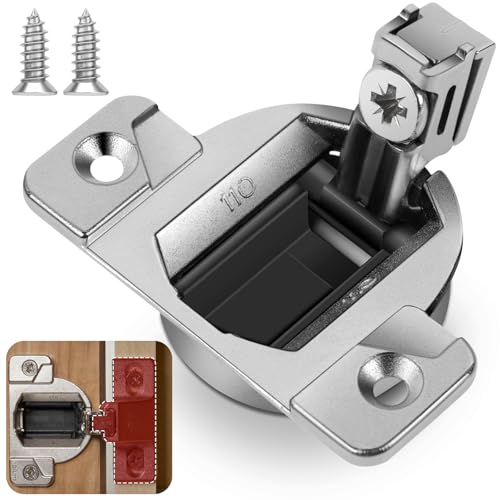
Compact 33 110/120-Degree Screw-On Hinge is the only option here that explicitly combines 110- and 120-degree openings with a screw-on replacement for older Compact 31 hinges. The pack contains eight hinges and wood screws, but no mounting plate. Its replacement screw-hole positions differ from the older hinge, so expect to drill new small pilot holes when swapping an old-style model.
Choose this option when the screw-on style and broad angle range match your cabinet. Verify the hinge version, overlay and borehole position first; it may not suit a cabinet whose existing holes must remain unchanged.
Bottom line: Pick this when you need a screw-on replacement spanning 110- and 120-degree openings.
Blum 120-Degree Clip-On Hinge with Adapter

Blum 120-Degree Clip-On Hinge with Adapter is the clip-on choice: it is a 120-degree hinge supplied with a face-frame adapter, unlike the screw-on replacements in this group. The pack contains two hinges. That makes it a candidate when a clip-on connection and face-frame adapter match the cabinet hardware already in place.
The short product name does not identify a Compact series or a plate model, so confirm the hinge-to-plate connection and overlay before choosing it. The pack is also smaller than the eight-hinge options, which matters when replacing a whole run of doors.
Bottom line: Choose this when your cabinet uses a compatible clip-on connection and face-frame adapter.
ZVJV Compact 33 110/120-Degree Hinge

ZVJV Compact 33 110/120-Degree Hinge combines 110- and 120-degree openings with a screw-on design and names compatible Compact 31 and 33 edge-mounting plate sizes, including 1/4-, 1/2-, 5/8- and 3/4-inch options. Four hinges, screws and a screwdriver are included; the mounting plates are not.
Its screw-hole positions differ from the older hinge, so replacing an old version calls for drilling new small wood-screw holes. This option is useful when you can identify the plate size, but it is a poor match if you need new plates in the same package.
Bottom line: Pick this when its specified plate sizes match the hardware on your cabinet.
How to choose a Blum 120 hinge replacement
Start by matching the attachment style, then confirm opening angle and overlay. A screw-on hinge attaches to the door and cabinet-side mounting plate with screws; a clip-on hinge connects to a compatible plate by clipping into place. A 110-degree hinge will not provide the same opening travel as a 120-degree hinge. Measure overlay—the amount the closed door covers the cabinet side or frame—and identify whether the cabinet is frameless or face-frame before selecting a plate.
Use this decision guide to narrow the options. If you cannot identify the mounting style or plate, remove one hinge and compare its connection and hole positions before ordering; angle alone does not establish fit.
| Cabinet need | Look for |
|---|---|
| 120-degree opening, screw-on | 120-degree screw-on hinge |
| 120-degree opening, clip-on | 120-degree clip-on hinge and compatible plate |
| 110-degree opening, 16–19 mm door | 110-degree hinge rated for that thickness |
Check cup drilling and door fit
Many concealed European-style hinges use a 35 mm cup bored into the back of the door; the cup diameter, depth and distance from the door edge all affect fit. One option here specifies a 1/2-inch cup depth and 1/8-inch distance from the cup edge to the door edge, while another specifies doors 16–19 mm thick. Match your actual door measurements rather than assuming every Compact-style replacement shares the same drilling pattern.
Overlay also determines how far the door covers the cabinet side or face frame when closed. With an old hinge replacement, compare the closed-door position and plate location before drilling. If screw-hole locations differ, use the replacement hinge as a drilling guide only if its instructions permit, and avoid enlarging or overlapping old holes.
Screw-on and clip-on hinges compared
Screw-on and clip-on hinges differ at the cabinet-side connection, so they are not automatically interchangeable. A screw-on model fastens with screws; a clip-on model requires a compatible mounting plate and release mechanism. Some screw-on replacements also require a separate plate, so included hinge screws do not mean the plate is included.
Opening angle is a separate specification from connection type: either mounting style can have its own angle range. Choose by matching both the connection and required travel, then verify plate size and overlay. Never force a clip-on hinge onto a plate that does not engage securely. Cabinet doors can pinch fingers as they swing, so support a door while removing its hinges and keep hands clear of the hinge gap during adjustment.
Common replacement mistakes
The most common mismatch is buying by brand or angle alone while overlooking plate compatibility, overlay or screw-hole position. Replacement hinges may shift screw locations; some older Compact 31 replacements specifically require new small pilot holes. A plate sold separately can also delay installation if the existing plate does not match.
Before removing the old hardware, mark which door belongs to each cabinet opening and note whether the hinge connects by screws or a clip. Replace one hinge first and check the door’s closing position and clearance before changing the rest. Use a pilot hole sized for the wood screw and avoid driving a screw into an old hole that no longer holds firmly.
Frequently Asked Questions
How do I tell if my hinge is 110 or 120 degrees?
Open the door and observe its travel, or compare the hinge’s model marking with the manufacturer’s specifications. The angle is the hinge’s opening range, not the door overlay; a 110-degree replacement cannot provide a 120-degree opening.
Will a new hinge use the old screw holes?
Not always: some replacement screw-on hinges have different hole positions and require new small pilot holes. Compare the old and new hinge before drilling, and avoid reusing a hole if the screw no longer grips securely.
What does a 35 mm hinge cup mean?
A 35 mm cup is the round recess bored into the back of a cabinet door to seat a concealed hinge. Cup depth and edge distance also matter, so measure them along with the diameter before replacing a hinge.
Do replacement hinges come with mounting plates?
Some options require a mounting plate that is purchased separately, while a clip-on hinge also needs a plate it can securely engage. Check the existing plate’s connection and size before installation.
Can I replace a single cabinet hinge at a time?
Yes, replace one hinge first and check that the door closes evenly and clears nearby doors before proceeding. Support the door during removal because an unsecured cabinet door can fall or pinch fingers.