
Best Removable Caulking for Windows: 3 Options Compared

DAP Seal ‘N Peel Removable Caulk suits most people seeking removable caulking for windows because it is explicitly made as removable weatherstrip caulk; choose Frost King Mortite Caulking Cord, 1/8 in instead for a putty cord format, or Gorilla 100% Silicone Window & Door Caulk for a lasting silicone repair.
Removable weatherstrip caulk seals a window gap temporarily and can be peeled away later, unlike ordinary silicone caulk, which is intended to remain in place.
We earn a commission if you buy through links on this page. As an Amazon Associate I earn from qualifying purchases. Products are compared on manufacturer specifications, not hands-on testing.
- Best overall: DAP Seal ‘N Peel Removable Caulk – It is explicitly labeled clear removable weatherstrip caulk for windows.
- Best for cord application: Frost King Mortite Caulking Cord, 1/8 in – The 1/8-inch putty cord offers a no-gun format for a temporary window seal.
- Best for permanent repair: Gorilla 100% Silicone Window & Door Caulk – The 100% silicone formula makes a waterproof, flexible seal for window frames.
| Product | Best for | Format | Color | Size | Shop |
|---|---|---|---|---|---|
| DAP Seal ‘N Peel Removable Caulk | Temporary window seals | Caulk | Clear | 10.1 fl oz | Check Price on Amazon |
| Frost King Mortite Caulking Cord, 1/8 in | Cord-style sealing | Putty cord | Gray | 1/8 in x 90 ft | Check Price on Amazon |
| Gorilla 100% Silicone Window & Door Caulk | Permanent window repairs | Silicone caulk | Clear | 2.8 fl oz | Check Price on Amazon |
Removable Caulking for Windows
Choose by whether you need a temporary seal to remove later or a permanent repair.
DAP Seal ‘N Peel Removable Caulk

DAP Seal ‘N Peel Removable Caulk is the clearest match for a temporary window seal: it is identified as removable weatherstrip caulk and comes in a clear 10.1-fluid-ounce tube. That makes it a fit when you want a caulk-style bead rather than a preformed strip or putty cord. The product name also identifies window, door, and siding use.
Removability is the key distinction, but the facts do not define a removal window or surface compatibility. Check that the specific window surface and application conditions are suitable before applying.
Bottom line: Choose this for a clear caulk bead intended to peel away after seasonal sealing.
Frost King Mortite Caulking Cord, 1/8 in

Frost King Mortite Caulking Cord, 1/8 in differs from tube caulk by coming as a gray, 1/8-inch putty cord, so it can be pressed into a window gap without forming a tooled bead. The product name specifies window and door use and calls the cord weatherproof. Its 90-foot length in the name makes it useful when sealing multiple gaps.
A cord is less suited to narrow joints where the 1/8-inch profile cannot be pressed in cleanly. The product facts conflict on pack quantity, so confirm the amount included before ordering.
Bottom line: Choose this when a press-in putty cord suits the gap better than a caulk bead.
Gorilla 100% Silicone Window & Door Caulk
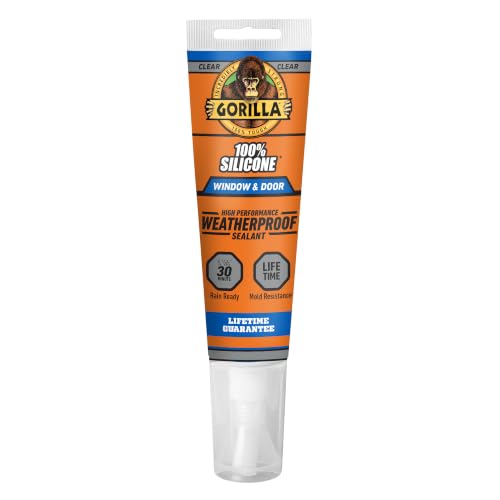
Gorilla 100% Silicone Window & Door Caulk is a permanent-repair alternative, not removable weatherstrip caulk: its 100% silicone formula is described as waterproof and designed to stay flexible without shrinking or cracking. The 2.8-fluid-ounce tube is aimed at touch-ups around window frames, door frames, siding, trim, and vents, and the clear color keeps the bead visually subtle.
Because silicone is not presented as peel-away caulk, choose it only when the repair should remain in place. Its small tube format suits touch-ups more than extended runs around many windows.
Bottom line: Choose this for a lasting waterproof touch-up, not a seasonal removable seal.
How to choose removable window caulk
Choose removable caulk when you need a seasonal seal that can be cleared away, rather than a joint intended to remain sealed. Most window caulk is applied as a bead; a putty cord is pressed into the gap and avoids a caulk gun. A 1/8-inch cord works only when the opening can accept that profile without forcing it. For an irregular gap, a caulk bead can conform more easily, but removal and surface compatibility matter.
Windows expand and contract with temperature, so a lasting sealant must tolerate movement; silicone is commonly used for this purpose. Do not substitute permanent silicone when removal is essential. Before applying any removable product, test a small, inconspicuous area because paint, finishes, and residue can be affected during removal.
Temporary caulk versus permanent silicone
Temporary weatherstrip caulk and permanent silicone solve different problems: the first is intended to come off, while silicone forms a durable seal. Use this distinction to decide before choosing a format.
| Need | Product type | What to consider |
|---|---|---|
| Seasonal removable seal | Weatherstrip caulk | Surface compatibility and removal |
| Press-in gap seal | Putty caulking cord | Gap must accept the cord profile |
| Long-lasting repair | Silicone caulk | Not intended as a peel-away seal |
Old caulk should be removed before a new bead is applied; sealant generally adheres poorly to dusty or loose residue. For a permanent repair, use a compatible window-and-door sealant rather than layering new caulk over a failed bead.
How to apply and remove window weatherstrip caulk
Apply removable caulk to a clean, dry frame in a continuous line so the seal has fewer gaps. For tube caulk, cut a small nozzle opening first; a narrow opening gives better control than an oversized bead. For putty cord, press it evenly into the gap without stretching it thin, since a thinned section can leave a weak point.
Let the product set as directed before opening or closing the window, and remove the seal slowly rather than pulling sharply across painted trim. A plastic scraper is safer than a metal blade on finished frames. Stop if the finish begins lifting, and work in short sections to reduce strain on paint or delicate surfaces.
Window sealing mistakes to avoid
The most common mistake is choosing a permanent sealant for a seasonal job. Silicone can resist water and movement, but those benefits do not make it removable. Another mistake is covering dirty, damp, or loose material; clean and dry the frame first so the product contacts the intended surface rather than dust or failing paint.
Do not block a window’s drainage or weep openings when sealing a frame. Those small openings let water escape from the window assembly; sealing them can trap water. Keep removable caulk limited to the intended joint and avoid applying it across moving hardware, tracks, or the window sash where it could interfere with operation.
Frequently Asked Questions
How long can removable caulk stay on a window?
Removable caulk is used as a temporary weather seal, but the appropriate duration depends on the product and surface. Remove it when the seasonal seal is no longer needed, and test a small spot first if the frame has a delicate finish.
Can removable caulk be used on painted window trim?
It may adhere to painted trim, but removal can lift weak or aged paint. Test an inconspicuous area and avoid applying over peeling paint or dusty surfaces.
Can I use silicone caulk if I need to remove it later?
Ordinary silicone is intended to form a durable, lasting seal rather than peel away cleanly. Choose removable weatherstrip caulk for a temporary seal instead.
Should window caulk go inside or outside?
Use caulk only at the intended joint and select a product suitable for that exposure. Do not seal window weep holes or drainage paths, which need to remain open for water to escape.
How wide a gap can caulking cord seal?
The cord in this comparison is 1/8 inch in diameter, so it is suited to gaps that can accept that profile. For a gap wider than the cord can fill securely, use a suitable sealant instead of stretching the cord.