
Best Outdoor WiFi Antenna Options for Different Setups

For a focused link toward a distant device, Eifagur 15dBi Dual-Band Panel Antenna is the best outdoor WiFi antenna choice here because its directional 15dBi panel concentrates signal in one direction and includes a 10-foot cable.
We earn a commission if you buy through links on this page. As an Amazon Associate I earn from qualifying purchases. Products are compared on manufacturer specifications, not hands-on testing.
- Best overall: Eifagur 15dBi Dual-Band Panel Antenna – A 15dBi directional panel with a 10-foot RG58 cable suits a link aimed at one area.
- Best for a general antenna swap: Eifagur 9dBi Dual-Band Outdoor Antenna – The 9dBi dual-band antenna is described for routers, access points and cameras.
- Best for a two-antenna replacement: Bingfu 3dBi Dual-Band Antennas, 2-Pack – The package includes two compact 3dBi antennas, with RP-SMA male connectors.
| Product | Best for | Gain | Connector / cable | Shop |
|---|---|---|---|---|
| Eifagur 15dBi Dual-Band Panel Antenna | Focused outdoor links | 15dBi | RP-SMA male; 10 ft RG58 | Check Price on Amazon |
| Eifagur 9dBi Dual-Band Outdoor Antenna | General antenna upgrades | 9dBi | — | Check Price on Amazon |
| Bingfu 3dBi Dual-Band Antennas, 2-Pack | Matching replacement pair | 3dBi | RP-SMA male | Check Price on Amazon |
Outdoor WiFi Antennas and Access Points
Match the antenna or access point to the coverage pattern and connector your setup requires.
Eifagur 15dBi Dual-Band Panel Antenna
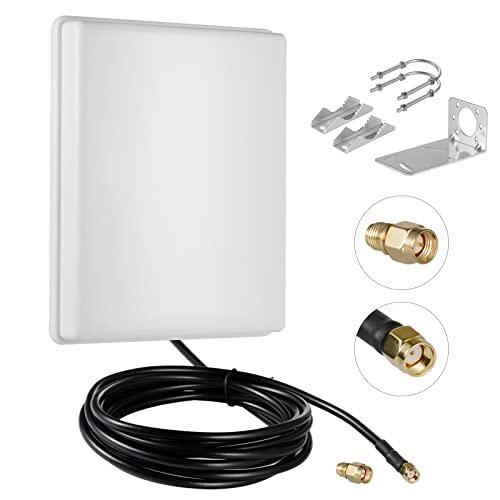
For coverage aimed toward one location, this 15dBi directional panel is the most focused antenna option here. It covers 2.4GHz and 5GHz/5.8GHz, has an RP-SMA male connector and comes with a 10-foot RG58 cable. That combination can suit a camera or network device across an open yard when you can point the panel toward it. The directional pattern is also its limitation: it is not the right choice when devices need coverage all around the antenna. Confirm your equipment uses RP-SMA before ordering.
Bottom line: Choose this when the target device sits in a specific direction and the connector matches.
Eifagur 9dBi Dual-Band Outdoor Antenna

For a broader replacement role than a directional panel, this 9dBi dual-band antenna is presented for routers, access points, security IP cameras and RV cameras. It supports 2.4GHz and 5GHz/5.8GHz, so it is relevant when a setup operates on either band. Its simple replacement format may suit someone upgrading an existing outdoor wireless device rather than installing a separate access point. Unlike the panel option, the antenna’s pattern and connector are not identified in the facts, so it is a poor fit if a particular connector or aiming direction is essential.
Bottom line: Pick it for a basic dual-band replacement when its physical fit is already known.
Bingfu 3dBi Dual-Band Antennas, 2-Pack
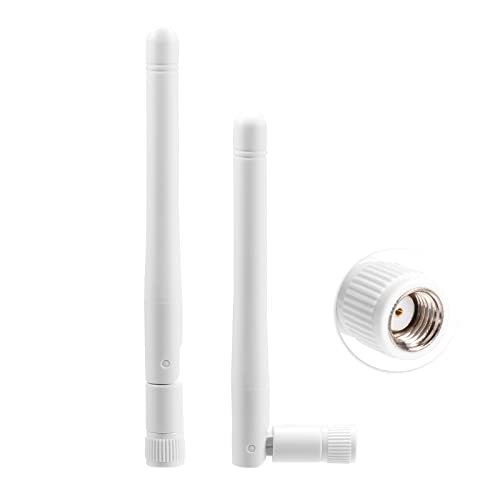
For replacing two small antennas together, this Bingfu pack includes a pair of 3dBi dual-band antennas, unlike the single higher-gain panel choices. The frequency range spans 2.4GHz, 5GHz and 5.8GHz, and the RP-SMA male connector is explicitly identified. The compact 4.33-inch length can help where a larger antenna would be awkward. At 3dBi, this is not the high-gain option for a long, aimed link; it makes more sense for compatible equipment needing a short replacement pair. Check the connector carefully because RP-SMA and SMA are different.
Bottom line: Choose the pair for compatible devices that need compact replacement antennas.
How to choose an outdoor WiFi antenna
Choose by coverage pattern first: directional antennas focus energy toward one target, while omnidirectional antennas serve devices around them. Gain in dBi describes antenna directivity, not a guaranteed distance increase; a higher-gain design usually narrows the useful coverage angle. For one camera across an open yard, a directional panel can make sense; for devices spread around a building, avoid aiming a narrow panel at only one of them. A router or camera must also support the antenna’s frequency band and connector. Outdoor equipment must be mounted with secure hardware and weather protection at cable entries; a weatherproof antenna does not automatically make its connected device or cable joint weatherproof.
Directional panels, replacement antennas and access points
A replacement antenna connects to compatible radio equipment, while an access point creates a wireless coverage area and needs a network connection and power. An extender/repeater also relays an existing network, so it is not interchangeable with a passive antenna. The options here span a 15dBi directional panel, 9dBi and 3dBi replacement choices, and complete outdoor access-point units. Use the table to match the job to the hardware type rather than comparing gain figures alone.
Coverage need is the deciding distinction among these types:
| Need | Type to consider | Why |
|---|---|---|
| One distant target | Directional panel | Concentrates coverage in one direction |
| General compatible-device swap | Replacement antenna | Uses the existing radio and connector |
| New outdoor coverage area | Access point or extender | Adds an active network device |
Check connector and band compatibility
Connector compatibility is a hard fit requirement: RP-SMA and SMA are distinct connector types, and a male connector must mate with the device’s matching port. Frequency compatibility matters too; a dual-band antenna should cover the same band the router or camera uses. The 2.4GHz band generally travels farther and handles obstacles better than 5GHz, while 5GHz can offer more capacity over shorter, clearer paths. Before choosing a replacement antenna, match connector gender and type, frequency band, and whether the device can detach its antenna. Confirm those physical connections before ordering.
Outdoor mounting and signal limits
Line of sight matters more than a headline range: walls, trees, metal siding and wet foliage can weaken WiFi, especially at 5GHz. Mount antennas above nearby obstructions where practical, and point a directional panel at the receiving device; small alignment changes matter more as the link distance grows. Secure outdoor mounts against wind, and keep cable runs as short as the installation allows because coaxial cable loses signal. Seal cable entry points and use drip loops so rain does not follow a cable indoors. WiFi gear should not be placed where an antenna or conductive mounting hardware could contact overhead power lines.
Frequently Asked Questions
Does a higher dBi antenna always reach farther?
No; higher gain focuses the signal into a narrower pattern rather than increasing power in every direction. A directional antenna can help across a clear path, but it can leave nearby devices outside its coverage angle.
Is 2.4GHz or 5GHz better for outdoor WiFi?
2.4GHz usually carries farther and penetrates obstacles better, while 5GHz can provide more capacity across a shorter, clearer path. Choose a band supported by both the antenna and connected device.
Can I replace any router antenna with RP-SMA?
No; the router must have a matching RP-SMA port and detachable antenna. RP-SMA and SMA look similar but have different center contacts, so verify both connector type and gender.
Where should an outdoor WiFi antenna be mounted?
Mount it as high and clear of obstacles as practical, while keeping it safely away from overhead power lines. Trees, walls and metal surfaces can obstruct the path, so a line-of-sight mount is preferable for a directional link.