
Seat Belt Buckle Covers: Types and Fit Compared

For protecting interior surfaces from buckle scratches and noise, the YONZEE five-pack is the clearest match; covers meant to deter unbuckling serve a different purpose. Choose a child-resistant guard only when its buckle fit matches your vehicle or restraint, and confirm the restraint maker permits accessories.
We earn a commission if you buy through links on this page. As an Amazon Associate I earn from qualifying purchases. Products are compared on manufacturer specifications, not hands-on testing.
- Best overall: YONZEE Silicone Buckle Protectors, 5-Pack – Five silicone protectors are designed to reduce buckle noise and prevent interior scratches.
- Best for standard-belt buckle resistance: Morlike Silicone Buckle Guard, 2-Pack – The two-pack is designed for standard seatbelts and uses a slim item for release.
- Best for 2-point lap belts: Buckle Guard for 2-Point Lap Belts, 2-Pack – Its child-resistant cover is designed for push-button lap-belt buckles.
| Product | Best for | Material | Pack | Stated fit | Shop |
|---|---|---|---|---|---|
| YONZEE Silicone Buckle Protectors, 5-Pack | Interior protection | Silicone | 5 covers | Cars, SUVs, trucks | Check Price on Amazon |
| Morlike Silicone Buckle Guard, 2-Pack | Standard belt guard | Silicone | 2 covers | Standard seatbelts | Check Price on Amazon |
| Buckle Guard for 2-Point Lap Belts, 2-Pack | Lap-belt guard | — | 2 covers | 2-point lap buckles | Check Price on Amazon |
Seat Belt Buckle Covers
Start with the cover’s purpose, then match its fit to your buckle and restraint.
YONZEE Silicone Buckle Protectors, 5-Pack
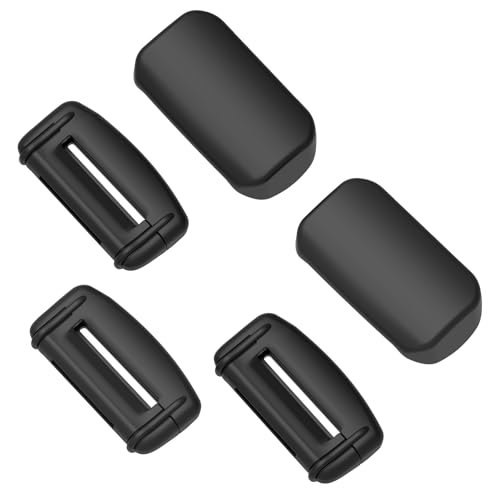
For preventing buckle contact with interior surfaces, this five-piece silicone set is the most direct fit among these options. The covers slide onto buckles without tools or adhesives, and the maker says they help reduce collision sounds as well as scratches to leather and other interior components. Choose this style when protection and noise reduction are the goal, not resistance to someone unbuckling.
Bottom line: Choose this set when you want several silicone covers for interior protection.
Morlike Silicone Buckle Guard, 2-Pack

Unlike a sleeve meant to protect interior trim, this two-pack is designed to make accidental unbuckling harder. Morlike says the silicone guard fits standard seatbelts in almost all vehicles and requires a slim item for release; toys or other buckles are not meant to release it. The soft lower portion is intended to accommodate different belts, while the reinforced top covers the release area. This design is aimed at child or special-needs use, but it should only be used if compatible with the seat belt and any child restraint in use; do not obstruct normal access in an emergency.
Bottom line: Choose this guard when a compatible standard-belt buckle needs added resistance to release.
Buckle Guard for 2-Point Lap Belts, 2-Pack

This guard targets a narrower buckle type than the other options: push-button buckles on two-point lap belts. Its cover slides over the buckle and conceals the release button; the maker says installation and removal require no tools and that no key is needed. That makes it a possible fit for some buses, vans, and medical-transport equipment using the specified belt style. Do not assume it fits a vehicle’s three-point shoulder belt or a different release design. The use is specific, so match the buckle construction before selecting it.
Bottom line: Choose this only for a compatible push-button, two-point lap-belt buckle.
Choose by the job the cover needs to do
Seat belt buckle covers fall into two different categories: protective sleeves and release-resistant guards. Protective sleeves sit around a buckle to reduce contact with upholstery or other hard surfaces; release-resistant guards conceal or make the release button harder to press. Decide which problem you are addressing before comparing fit. A sleeve is not a child lock, and a child-resistant guard is not simply a trim protector. If you need a guard, match the buckle style precisely: a two-point lap-belt guard is not interchangeable with a three-point belt buckle just because both use push-button releases. Never let an accessory block belt operation or delay release during an emergency.
Match the cover to your buckle and restraint
Fit depends on the buckle’s shape, release button, and belt path, not just the vehicle category. The products here distinguish standard seatbelts from two-point lap-belt buckles, while the interior-protection set names vehicle categories without giving buckle dimensions. Before choosing a cover, compare its application with the belt actually installed. For a child seat, check the child-restraint manual and manufacturer guidance before adding any accessory; a cover that changes access to the buckle or the belt’s routing may be unsuitable. For a commercial or transport seat, verify whether the buckle is a two-point lap style with a push-in release. If the fit is uncertain, confirm compatibility before ordering.
Compare cover types by intended use
Use the purpose and stated belt fit together; neither feature alone is enough to establish compatibility.
| Cover type | Primary purpose | Fit cue |
|---|---|---|
| Silicone protector sleeve | Reduce scratches and buckle noise | Check the buckle and belt dimensions |
| Standard-belt release guard | Make unbuckling harder | Standard seatbelt compatibility |
| Lap-belt release guard | Conceal a push-button release | Two-point lap belt |
These types are not substitutes for one another. A noise-reducing sleeve does not provide the release resistance of a guard, and a guard designed for a lap belt may not fit a vehicle belt with a shoulder strap.
Use buckle guards without compromising access
A buckle guard should never interfere with the belt’s normal function or prevent prompt release when needed. A cover that conceals a release button is specifically intended to make unbuckling harder, so use it only in a compatible situation and ensure the responsible adult can remove it as needed. For child restraints, the harness must remain correctly fastened and adjusted; an added accessory cannot replace the restraint’s own buckle and harness instructions. Keep the belt free of twists and make sure the buckle engages and releases as intended. If a cover prevents a clear click, normal belt positioning, or quick adult access, do not use it.
Frequently Asked Questions
Are buckle covers and buckle guards the same thing?
No. A protective sleeve is meant to reduce contact with interior surfaces, while a guard is designed to make the release button harder to access. Choose based on whether you need trim protection or release resistance.
Will a lap-belt buckle guard fit a car seat belt?
Not necessarily. A guard made for a two-point lap belt may not fit a three-point vehicle belt, even if both use a push-button buckle. Check the belt style and buckle shape before use.
Can I add a cover to a child car seat buckle?
Use an added cover only if the child-restraint manufacturer permits it for that seat. A cover must not interfere with the harness, buckle engagement, or prompt release.
How do I keep a buckle protector from scratching trim?
Choose a protector intended to surround the buckle, then check that it remains in place and covers the contact points. Silicone sleeves are designed for this purpose, but fit depends on the specific buckle and interior.