
Wide Football Cleats for Linemen: 5 Models Compared

Under Armour Spotlight Hammer Wide suits most linemen with wide feet because its cleats are built with an E-width fit. The other options are football cleats without a wide-width fit, so choose them only if their fit works for your foot.
Football cleats use molded or plate-based outsoles for field traction; a wide size designation is a more useful starting point than assuming a standard size will fit broadly.
We earn a commission if you buy through links on this page. As an Amazon Associate I earn from qualifying purchases. Products are compared on manufacturer specifications, not hands-on testing.
- Best overall: Under Armour Spotlight Hammer Wide – Its cleats are built with an E-width fit, the clearest match for wide feet.
- Best for molded traction: Under Armour Highlight RM – Rubber molded cleats are specified for traction on all surfaces.
- Best for forefoot support: Nike Alpha Menace Strong – Rubber overlays cover the toes and forefoot.
| Product | Best for | Outsole | Upper | Shop |
|---|---|---|---|---|
| Under Armour Spotlight Hammer Wide | Wide-foot fit | Molded rubber | Synthetic | Check Price on Amazon |
| Under Armour Highlight RM | Molded traction | Molded rubber | Synthetic, textile | Check Price on Amazon |
| Nike Alpha Menace Strong | Forefoot support | Mixed sticky rubber plate | Mesh collar, tongue | Check Price on Amazon |
| Under Armour Blur Pro | Lightweight upper | Biomechanical plate | Textile, TPU skin | Check Price on Amazon |
| Adidas Adizero Impact.2 Molded | Molded outsole | Cleated rubber | Synthetic, textile | Check Price on Amazon |
Football Cleats for Linemen With Wide Feet
Compare the fit cue and construction first, then confirm that the cleat feels secure without squeezing your foot.
Under Armour Spotlight Hammer Wide

The E-width build distinguishes this option for linemen who need more room than a standard-width cleat provides. Its synthetic upper is paired with a full-length EVA midsole and a durable molded-rubber outsole; the maker says that outsole provides traction on all field surfaces. The E-width designation makes this the clearest starting point here for a wide-foot fit. It may still be a poor match if your foot needs a different width or the cleat presses across your toes, so check the fit before game use.
Bottom line: Choose this if you need an explicitly E-width football cleat.
Under Armour Highlight RM
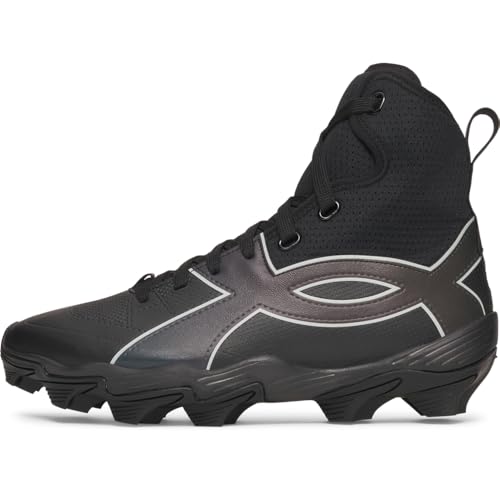
Unlike the E-width option, this cleat does not identify a wide fit; its distinguishing feature is a rubber molded outsole. The maker says the outsole provides aggressive traction on all surfaces, while the synthetic upper and textile collar are intended to balance mobility and support. An open-holed mesh tongue adds ventilation, and a die-cut EVA sockliner sits underfoot. Consider it if molded traction matters and your foot fits comfortably in its size. The size is 16, so it may not suit someone seeking another size.
Bottom line: Choose this for molded traction if the fit is comfortable on your foot.
Nike Alpha Menace Strong

Forefoot overlays set this cleat apart: rubber covers the toe area, and the mixed sticky-rubber plate combines forefoot and heel traction. Soft foam is also part of the plate construction. The mesh collar and tongue provide breathable materials around the foot, but no wide-width fit is identified here. That makes it a possible alternative for a lineman prioritizing toe-area support, not a confirmed wide-foot choice. Its size is 14, so shoppers outside that size should look for another size before deciding.
Bottom line: Choose this if toe-area overlays matter more than a specified wide fit.
Under Armour Blur Pro

A textile upper and thin TPU skin distinguish this cleat from the molded-rubber options. The maker says its HOVR drop-in midsole provides energy return and comfort, and describes the biomechanical plate as designed for speed and agility. Its IntelliKnit collar has a sock-like fit, but no wide-width designation appears among the features. A snug collar may feel different from a roomier cut, so prioritize an in-person fit check if your forefoot is broad. The size is 9.5.
Bottom line: Choose this if you want the textile-and-plate construction and it fits securely.
Adidas Adizero Impact.2 Molded
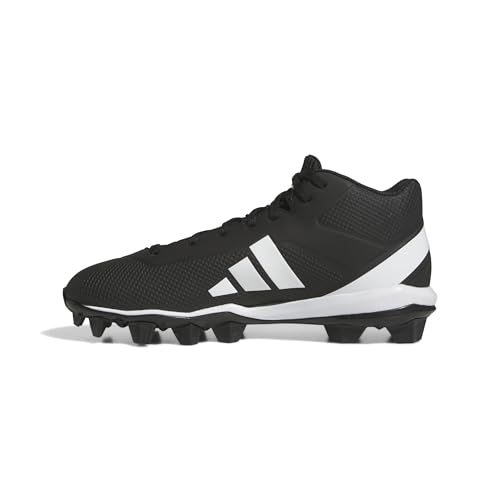
This molded cleat combines a synthetic-and-textile upper with a cleated rubber outsole, rather than a wide-width construction. The maker says the outsole supports traction for speed, stopping and changes of direction; the lining is textile. The fit note says to buy one size bigger because the shoe runs small, so use that guidance when comparing sizes, while checking width separately. It may suit a lineman who wants a molded outsole and can accommodate the sizing guidance, but it is not a documented wide-fit choice.
Bottom line: Choose this for its molded outsole if the size-up guidance and width work for you.
How to choose football cleats for wide feet
Start with width, then compare traction and fit at the toes. A manufacturer’s width designation, such as E, is a clearer signal than choosing a longer shoe to create extra room. Too much length can let the foot slide, while a tight forefoot can create pressure during lateral movement. For a lineman, prioritize a secure heel and enough toe room to avoid pinching when pushing off. Try cleats with the socks you wear for practice, and check both feet while standing. If the toe box feels cramped or your heel lifts, try another width or model rather than assuming the cleat will stretch.
Molded cleats and plate designs
Molded rubber outsoles have fixed studs, while a plate describes the base that carries traction elements and can use a different construction. These designs are not interchangeable in every field condition: surface firmness, wetness and league rules affect the choice. For a simple decision rule, start with molded rubber when you need fixed traction and your field permits it; confirm permitted stud type with your league before choosing a plate-based cleat. Traction does not compensate for a poor fit. A cleat that slides inside the shoe can make quick starts and direction changes feel less controlled, so confirm heel hold and forefoot room during a walking fit check.
Fit checks for wide-foot linemen
A wide-size label is the most direct cue, but foot shape still matters: some feet are broad at the toes, while others need more room through the midfoot. Check the fit late in the day, when feet may be slightly larger, and wear game socks. Leave a small amount of room at the front without letting the heel slip; the shoe should feel secure when you bend your knees and shift side to side. Use the maker’s size guidance when a model runs small, but do not treat sizing up as a substitute for width. A shoe that is too long can shift under load, so choose a different width if length becomes excessive.
Choose by fit need
Use the cleat’s construction to narrow choices, then let foot fit decide. The table pairs a buyer need with the product feature that directly addresses it; it does not mean every cleat will fit every foot. Wide sizing should come first when forefoot pressure is your main concern. Molded outsoles and plate constructions describe traction hardware, not shoe width. Before practice, check that the laces hold the foot without pressure and that no toe rub develops during a few minutes of movement. If your league restricts stud configurations, resolve that rule before selecting by traction style.
| Need | Feature to prioritize |
|---|---|
| Explicit wide fit | E-width designation |
| Fixed rubber studs | Molded rubber outsole |
| Toe-area overlays | Forefoot rubber overlays |
Frequently Asked Questions
How much toe room should football cleats have?
Leave a small gap at the toe while keeping the heel secure. If the foot slides when you shift laterally, the cleat is too long or not holding your foot well.
Does buying a bigger size make cleats wider?
Sizing up adds length as well as some width, so it may leave the heel loose. Choose a designated wide size when available, and check fit with game socks.
Are molded cleats allowed on every football field?
No, field and league rules can restrict stud type or configuration. Confirm your league’s rules before choosing molded or plate-based traction.
When should I try on football cleats?
Try them on late in the day with the socks you wear for practice, when feet may be slightly larger. Walk and shift side to side to check toe pressure and heel movement.