
X-BULL Winch: 4 Models Compared by Capacity and Rope

For most ATV and UTV owners, X-BULL 4500 lb Winch is the balanced X-BULL winch choice: its 4,500-pound capacity, 50-foot synthetic rope and wireless remote cover a useful middle ground. Choose a 3,000-pound unit for lighter recovery demands or a 5,000-pound unit when the required pull rating is higher.
An electric winch uses a motor, gearing and cable or rope to pull a load; match its rating to the loaded vehicle and recovery setup, not just the vehicle’s advertised dry weight.
We earn a commission if you buy through links on this page. As an Amazon Associate I earn from qualifying purchases. Products are compared on manufacturer specifications, not hands-on testing.
- Best overall: X-BULL 4500 lb Winch – Its 4,500-pound rating and 50-foot synthetic rope sit between the other rated options.
- Best for sealed protection: X-BULL 2S 5000 lb Winch – The 5,000-pound 2S model specifies IP68 protection and includes wired and wireless controls.
- Best for lighter loads: X-BULL 3000 lb Winch – Its 3,000-pound capacity and 32-foot synthetic rope suit lighter-duty recovery needs.
| Product | Best for | Rated capacity | Synthetic rope | Motor / controls | Shop |
|---|---|---|---|---|---|
| X-BULL 4500 lb Winch | Middle capacity | 4,500 lb | 1/4 in × 50 ft | 1.5 hp; wireless and rocker | Check Price on Amazon |
| X-BULL 3000 lb Winch | Light recovery | 3,000 lb | 3/16 in × 32 ft | 1.3 hp; wireless | Check Price on Amazon |
| X-BULL 2S 5000 lb Winch | Wet conditions | 5,000 lb | — | 1.3 hp; wired and wireless | Check Price on Amazon |
| X-BULL γ Series 5000 lb Winch | Higher motor power | 5,000 lb | — | 2.2 hp; wireless and wired | Check Price on Amazon |
X-BULL winches
Compare rated pull capacity, rope, motor and controls to match an X-BULL winch to your vehicle and recovery conditions.
X-BULL 4500 lb Winch
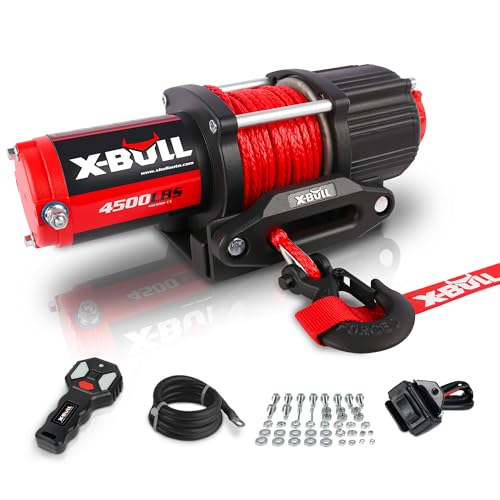
X-BULL 4500 lb Winch stands apart with a 50-foot synthetic rope, longer than the 32-foot rope on the 3,000-pound option. The 12-volt winch has a 1.5-horsepower motor, a 166:1 planetary gear ratio and a 4,500-pound rated capacity. Its controls include a wireless remote with an 82-foot stated range and an 8-foot handlebar rocker switch. The maker gives a full-load line speed of 8.6 feet per minute. The limitation is its lower capacity than either 5,000-pound model, so it is not the pick when the recovery calculation calls for more than 4,500 pounds.
Bottom line: Choose this when a 50-foot rope and midrange capacity suit your setup.
X-BULL 3000 lb Winch
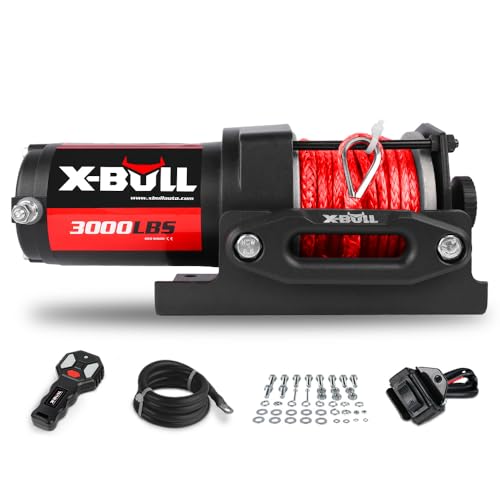
X-BULL 3000 lb Winch is the lowest-capacity choice here, with a 3,000-pound pull rating and 32-foot synthetic rope. Its 12-volt permanent-magnet motor is rated at 1.3 horsepower, paired with a 153:1 planetary gear system; the maker gives a full-load line speed of 3.3 feet per minute. A powder-coated surface is specified for corrosion resistance, and the product includes a wireless remote. The shorter rope and lower capacity limit its fit for heavier vehicles or recovery routes needing more reach. Use the vehicle’s loaded weight and the pull angle to determine whether 3,000 pounds is adequate.
Bottom line: Pick it for lighter recovery setups that fit the 3,000-pound rating.
X-BULL 2S 5000 lb Winch

X-BULL 2S 5000 lb Winch combines a 5,000-pound capacity with an IP68 waterproof rating, distinguishing it from the other models on that basis. Its 12-volt DC motor is rated at 1.3 horsepower and works with a three-stage planetary gear system at a 171:1 ratio. The maker gives a full-load line speed of 3.3 feet per minute. The package includes a synthetic rope, hawse fairlead, mounting plate, and wired and wireless remotes. Rope length is a key practical fit consideration for anchor distance, so confirm the rope length before ordering if your recovery route requires a particular reach.
Bottom line: Choose it when IP68 protection and wired plus wireless controls matter.
X-BULL γ Series 5000 lb Winch

X-BULL γ Series 5000 lb Winch pairs a 5,000-pound capacity with a 2.2-horsepower pure-copper 12-volt motor, the highest motor rating among these four options. Its three-stage planetary gearing has a 147:1 ratio, and the product specifies IP68 water protection. The synthetic rope, hawse fairlead, mounting plate, and wireless and wired remotes are included. Like other winches, its rating alone does not establish safe fit for every vehicle or pull angle.
Bottom line: Pick it when you want the higher motor rating among the 5,000-pound options.
How to choose an X-BULL winch capacity
Start with the loaded vehicle weight and recovery conditions, then choose a winch with a rating comfortably above the required pull. A common off-road rule of thumb is at least 1.5 times gross vehicle weight; steep grades, mud, and a pull that is not straight can increase the force required. For example, a 2,000-pound loaded vehicle points to at least a 3,000-pound rating under that rule. A snatch block can redirect the line and reduce the winch’s load, but the block, anchor, and rigging must all be rated for the forces involved. Never use the rated capacity as permission to exceed the vehicle’s recovery points or the winch’s duty limits.
How synthetic rope and fairleads affect fit
Rope length determines how far the anchor can be from the winch, while rope diameter and fairlead shape must match the winch’s design. Synthetic line is lighter than steel cable and does not store energy in the same way when it parts, but it can be damaged by abrasion, heat, and sharp edges. A hawse fairlead is typically used with synthetic rope; a roller fairlead is generally intended for steel cable. Before a pull, inspect the full line for cuts, glazing, or fraying and protect it from rocks and sharp corners. Keep hands clear of a loaded line and use a winch damper during recovery.
Compare winch controls and line speed
Wireless controls let an operator stand away from the vehicle, while a wired remote keeps the control physically connected and avoids relying on a radio link. The 4,500-pound model specifies an 82-foot wireless range; actual usable distance depends on obstructions and conditions. Full-load line speed is slower than no-load speed because the motor is pulling against resistance, and the line usually moves more slowly as more layers wind onto the drum. Use short pulls with cooling breaks rather than running an electric winch continuously; winch motors and cables can overheat. Keep the vehicle’s electrical system and wiring sized for the winch manufacturer’s current draw.
Winch recovery safety and upkeep
Use only rated recovery points, shackles, straps, and anchors, and keep bystanders outside the line’s potential recoil path. A winch is designed for pulling, not lifting people or suspended loads. Inspect the rope, hook, electrical connections, mounting bolts, and fairlead before each recovery; synthetic rope needs particular attention after contact with abrasive surfaces. Keep the rope clean and dry for storage, and re-spool it under light tension so layers sit evenly on the drum. Waterproof ratings such as IP68 describe enclosure protection under specified conditions, not permission to ignore maintenance or submerge electrical connections without checking the equipment requirements.
Frequently Asked Questions
How much winch capacity does an ATV need?
A common starting rule is a winch rated for at least 1.5 times the ATV’s loaded weight. Mud, steep slopes, and angled pulls can require more force, so choose the next suitable capacity when those conditions are likely.
Is a synthetic winch rope better than steel cable?
Synthetic rope is lighter and easier to handle than steel cable, but abrasion, heat, and sharp edges can damage it. Use a compatible hawse fairlead and inspect the rope along its full length before each pull.
How fast does a winch pull under load?
Winch line speed falls under load and as rope builds up in drum layers. For comparison, the 3,000- and 5,000-pound models specify 3.3 feet per minute at full load, while the 4,500-pound model specifies 8.6 feet per minute.
Can an electric winch run continuously?
No; electric winches need cooling breaks because sustained pulling can overheat the motor and wiring. Use short pulls, pause between them, and keep the battery and cable connections in good condition.
What does an IP68 winch rating mean?
IP68 is an enclosure protection rating for dust and water under specified test conditions. It does not make every connector or installation waterproof, so inspect connections and follow the winch’s operating limits before water crossings.