
Dryer Vent Cleaning Brushes: 3 Kits Compared by Reach

For most households, Holikme 30-Foot Dryer Vent Kit is a practical starting point because its flexible rods reach 30 feet and it can be used with or without a drill. Choose Sealegend 40-Foot Quick-Snap Kit instead when you need more reach; Sealegend 35-Foot 58-Piece Kit suits buyers who also want tools for the lint trap and other dryer areas.
A dryer vent cleaning brush is a flexible-rod tool for loosening lint inside the exhaust duct, but the duct material and route determine how to clean it safely.
We earn a commission if you buy through links on this page. As an Amazon Associate I earn from qualifying purchases. Products are compared on manufacturer specifications, not hands-on testing.
- Best overall: Holikme 30-Foot Dryer Vent Kit – Its 30-foot flexible rods offer substantial reach, and the brush can be used with or without a drill.
- Best for longer ducts: Sealegend 40-Foot Quick-Snap Kit – The 40-foot kit has the longest reach among these options and uses quick-snap rods.
- Best for extra tools: Sealegend 35-Foot 58-Piece Kit – The 35-foot set includes vacuum attachments, lint-trap brushes, and additional cleaning accessories.
| Product | Best for | Rod reach | Brush heads | Included extras | Shop |
|---|---|---|---|---|---|
| Holikme 30-Foot Dryer Vent Kit | Flexible drill use | 30 ft | 2 synthetic | Drill attachment; flexible rods | Check Price on Amazon |
| Sealegend 40-Foot Quick-Snap Kit | Longer duct runs | 40 ft | 1 synthetic | Drill bit; collection bag; helper kit | Check Price on Amazon |
| Sealegend 35-Foot 58-Piece Kit | Multi-area cleanup | 35 ft | 1 | Vacuum attachments; lint brushes; bags | Check Price on Amazon |
Dryer Vent Cleaning Brushes
Compare these kits by reach, rod connection style, and the extra tools included for dryer cleanup.
Holikme 30-Foot Dryer Vent Kit

Holikme stands out for offering two synthetic brush heads and the option to clean with or without a power drill. Its flexible rods extend to 30 feet, making this kit a fit for homeowners who want one tool for a long duct run and can work manually when drill use is unsuitable. The maker recommends taping rod connection points to reduce the chance of a rod separating. That extra step matters during use, and the 30-foot reach may not cover unusually long or winding runs.
Bottom line: Choose this kit if you want manual or drill-assisted cleaning with up to 30 feet of reach.
Sealegend 40-Foot Quick-Snap Kit

Sealegend provides the greatest rod reach here at 40 feet, with quick-snap connections designed for faster assembly. The kit includes 29 flexible rods, one synthetic brush head, a drill bit, a collection bag, and a disassembly helper. That combination suits a buyer who needs extra reach and prefers a drill-compatible setup. It has one brush head, unlike the two included with Holikme 30-Foot Dryer Vent Kit, so it offers less head choice for different cleaning areas.
Bottom line: Pick this when a duct run calls for the longest reach in this comparison.
Sealegend 35-Foot 58-Piece Kit
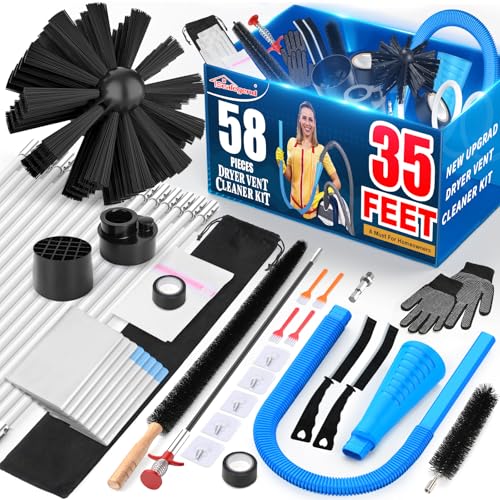
Sealegend’s 35-foot set differs from the other kits by bundling tools for more than the exhaust duct: it includes a dryer lint vacuum attachment, lint-trap brush, adapters, gloves, bags, and several additional brushes. The flexible rods work with a drill, and the set is intended for hard-to-reach areas. It suits households that want a broader dryer-cleaning assortment in one kit. Its 35-foot rod reach falls between Holikme 30-Foot Dryer Vent Kit and Sealegend 40-Foot Quick-Snap Kit, so it is not the longest option for an especially long run.
Bottom line: Choose this if you want accessories for the lint trap and other dryer areas alongside a vent brush.
How to Choose a Dryer Vent Cleaning Brush
Choose a brush kit by duct length, duct material, and whether the rod connections suit your cleaning approach. Residential dryer exhaust ducts are generally 4 inches in diameter, but elbows and transitions can make a run harder to clean than its straight-line length suggests. Flexible rods extend through bends, while a drill can rotate the brush to loosen lint; use manual operation if the duct or brush maker cautions against rotation. Measure the route from the dryer connection to the exterior outlet and select a kit that can reach it without forcing rods around a tight bend. Avoid choosing by maximum reach alone: the brush must move freely inside the duct.
Check Duct Material and Route Before Cleaning
Identify the duct material before inserting a brush, because thin foil or plastic transition duct can tear or collapse more readily than rigid metal duct. Dryer exhaust connections should use metal duct rather than plastic, and crushed sections restrict airflow and collect lint. Unplug the dryer before disconnecting the exhaust connection; if the dryer is gas-powered, avoid disturbing the gas line and seek qualified help if moving the appliance would strain it. Brush toward an accessible outlet, then remove loosened lint from both ends. Stop if the brush catches, rods separate, or the duct shifts instead of forcing the tool through.
Use a Dryer Vent Brush Without Damaging the Duct
Use short, controlled rod sections and keep the brush centered in the duct rather than pushing hard against an elbow. A typical residential exhaust duct is 4 inches across, so a brush that binds or folds over is a poor fit for that section. If using a drill, choose a low speed and follow the kit’s assembly direction; do not pull a rotating brush back through a duct if it snags. Clean lint from the dryer connection and exterior hood, then reconnect the duct securely and check that the exterior flap opens during operation. Never run the dryer with the exhaust duct disconnected indoors.
When to Clean a Dryer Exhaust Duct
Many households schedule dryer vent cleaning about once a year, with more frequent checks when laundry loads are heavy or drying takes longer than usual. A longer drying cycle, a hot laundry area, or weak airflow at the outside hood can indicate a clogged duct, but these signs can also have other causes. Clean the lint screen after every load; that routine does not replace cleaning lint from the exhaust duct. Keep the outside vent outlet clear of lint and debris, and ensure its flap can open freely. If the duct is crushed, unusually long, or inaccessible, a brush kit may not resolve the underlying airflow problem.
Frequently Asked Questions
How often should a dryer vent be cleaned?
A common schedule is once a year, with more frequent checks for heavy laundry use or longer drying times. Clean the lint screen after every load, since that does not remove lint from the exhaust duct.
Can I use a drill with a dryer vent brush?
Many kits are drill-compatible, but use low speed and stop if the brush binds. A fragile or damaged duct may need manual cleaning or professional attention instead of a rotating brush.
What diameter is a typical dryer vent duct?
A typical residential dryer exhaust duct is 4 inches in diameter. Check the duct itself before cleaning, since a crushed or narrowed section can snag a brush.
Can a dryer vent brush go through flexible foil duct?
Thin foil transition duct can tear or collapse under a brush, especially if it is crushed or sharply bent. Dryer exhaust connections should use metal duct; replace damaged sections rather than forcing a tool through them.
Should I disconnect the dryer before cleaning the vent?
Yes, unplug an electric dryer before disconnecting its exhaust duct. If moving a gas dryer could strain its gas line, do not move it yourself; have a qualified technician handle access.