
Best Stretch Cord for Bead Bracelets: 3 Options

FIVEIZERO Clear Elastic Cord, 6 Sizes is the best stretch cord for most bead bracelets because its six diameters, from 0.4 to 1 mm, let you match cord to different bead holes. Choose Stretch Magic Clear Cord, 0.5 mm instead for 0.5 mm polyurethane cord or JULIMAIDONG Clear Elastic Cord, 0.8 mm when you want a 200-foot roll of 0.8 mm cord.
Stretch cord is elastic string that holds beads and stretches over the hand or wrist; cord that is too thick for a bead hole will not thread smoothly.
We earn a commission if you buy through links on this page. As an Amazon Associate I earn from qualifying purchases. Products are compared on manufacturer specifications, not hands-on testing.
- Best overall: FIVEIZERO Clear Elastic Cord, 6 Sizes – Six round diameters from 0.4 to 1 mm suit a range of bead-hole sizes.
- Best for a long roll: JULIMAIDONG Clear Elastic Cord, 0.8 mm – The 0.8 mm round cord comes in a 200-foot roll.
- Best for polyurethane: Stretch Magic Clear Cord, 0.5 mm – The clear 0.5 mm cord is made of polyurethane and measures 32.8 feet.
| Product | Best for | Diameter or shape | Length | Material | Shop |
|---|---|---|---|---|---|
| FIVEIZERO Clear Elastic Cord, 6 Sizes | Mixed bead sizes | 0.4–1 mm, round | — | Elastic plastic rubber | Check Price on Amazon |
| JULIMAIDONG Clear Elastic Cord, 0.8 mm | Long 0.8 mm roll | 0.8 mm, round | 200 ft | Elastic polyester spandex | Check Price on Amazon |
| Stretch Magic Clear Cord, 0.5 mm | Fine polyurethane cord | 0.5 mm, round | 32.8 ft | Polyurethane | Check Price on Amazon |
| Paxcoo White Flat Elastic Cord | Flat cord projects | 1 mm wide × 0.7 mm thick, flat | 328 ft | Elastic polyester spandex | Check Price on Amazon |
Stretch Cord for Bead Bracelets
Compare cord diameter, shape, spool length, and material against your bead holes and project needs.
FIVEIZERO Clear Elastic Cord, 6 Sizes

Six diameters make this set the most adaptable choice for bracelets using beads with different hole sizes. The clear, round cord includes 0.4, 0.5, 0.6, 0.7, 0.8, and 1 mm sizes, so you can choose a thinner strand for smaller holes and a thicker one where the hole allows it. The maker says the material resists abrasion and aging. Its main limitation is that the maker gives no cord length for each roll, which matters if you need to estimate how many bracelets a set can make.
Bottom line: Choose this set if you work with varied bead-hole sizes and want several diameters on hand.
JULIMAIDONG Clear Elastic Cord, 0.8 mm

A 200-foot roll sets this cord apart for makers who expect to string many bracelets with one diameter. The clear round strand is 0.8 mm thick and made of elastic polyester spandex; the maker says it is easy to tie and helps conceal knots among beads. That single diameter is useful when your bead holes accept 0.8 mm cord, but it is less versatile than a multi-size assortment for projects mixing tiny and larger-hole beads. Check the actual bead holes before choosing a full roll.
Bottom line: Pick this roll for repeat projects whose beads accommodate 0.8 mm cord.
Stretch Magic Clear Cord, 0.5 mm

Polyurethane construction distinguishes this clear, 0.5 mm cord from the polyester-spandex options. Its 32.8-foot spool suits smaller batches and projects that call for a fine round strand. The maker describes it as durable, resilient, and non-fraying, and says it is latex-free. The smaller diameter can help with beads that have narrower holes, but it is not the right choice if your design specifically needs the 0.8 or 1 mm cord sizes. Match the cord to the tightest bead hole in the bracelet.
Bottom line: Choose this cord for projects that need a fine 0.5 mm polyurethane strand.
Paxcoo White Flat Elastic Cord
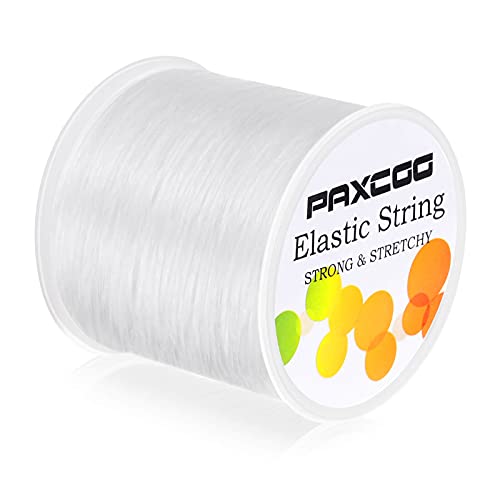
The flat profile and 328-foot roll make this the distinct choice for projects designed around flat cord rather than round string. It is white elastic polyester spandex, approximately 1 mm wide and 0.7 mm thick. The maker says the flexible cord is easy to knot and that the knot can be hidden among beads. Its shape may not pass through beads intended for round cord, so check both hole clearance and whether the flat profile suits your design before committing to the long roll.
Bottom line: Pick this roll when your bead holes and design suit flat white cord.
How to Choose Stretch Cord for Bead Bracelets
Start with the bead hole, then choose the cord that passes through it without force. A useful starting rule is to keep the cord diameter around one-half to two-thirds of the hole diameter; this leaves clearance for threading and is a practical fit guideline, not a universal standard. Bead holes can vary even within one style, so test the smallest hole in your project before cutting a full bracelet length. Thicker cord may suit larger-hole beads, while smaller diameters are easier to pass through narrow holes. Choose round cord for ordinary drilled holes; consider flat cord only when the hole and the bead’s internal shape accommodate its wider profile.
Round and Flat Bracelet Cord Fit
Round stretch cord is the more straightforward fit for typical drilled bead holes, while flat cord is wider than it is thick and needs suitable hole geometry. The round options range from 0.4 to 1 mm in diameter; the flat option measures 1 mm wide by 0.7 mm thick. When beads are already selected, measure a representative hole with a bead gauge or compare it with a known drill bit, then try threading a short cord sample. A cord that catches, compresses, or needs force is a poor fit. This table shows the sizes and shapes so you can narrow the choice before testing a sample.
| Cord style | Stated size | Good fit cue |
|---|---|---|
| Round assorted | 0.4–1 mm diameter | Different beads need different thicknesses |
| Round single size | 0.5 or 0.8 mm diameter | Bead holes suit one chosen diameter |
| Flat | 1 mm wide × 0.7 mm thick | Hole accepts a flat profile |
How to Tie and Finish Stretch Cord
A secure, low-bulk knot helps a bracelet stay together and sit comfortably. Leave enough working tail to tie a square or surgeon’s knot without pulling the beads off the cord; a surgeon’s knot adds an extra wrap on the first pass, which can help hold elastic while tightening. Tighten gradually rather than jerking the cord, since abrupt pulling can stress the elastic. Tuck the finished knot into a bead only if its hole is large enough to accept it without forcing. If using jewelry adhesive, choose one labeled for the cord material and let it cure fully before wearing; some solvents can damage plastics or elastic.
How Much Stretch Cord to Cut
Cut more cord than the finished bracelet circumference so you have tails to hold and tie. For a wrist circumference near 7 inches, a starting cut of roughly 10 to 12 inches leaves several inches for knotting and handling; bead size and knot style change the amount needed. Measure the wearer’s wrist with a flexible tape, then add the desired ease for the fit rather than assuming one circumference suits everyone. String a short sample first when working with unusually large beads, since their bead holes and spacing affect the total cord length. Avoid stretching the strand hard while measuring or tying, because a strong pre-pull can reduce its useful elasticity.
Frequently Asked Questions
How thick should stretch cord be for small beads?
A 0.4 or 0.5 mm cord is a sensible starting point for beads with small holes. The hole itself decides the fit, so test a short sample through the narrowest bead before stringing the bracelet.
Can 0.8 mm cord fit most bracelet beads?
A 0.8 mm strand fits only when the bead hole provides enough clearance; it is not universal across bead sizes. As a practical starting rule, look for a hole roughly 1.5 times the cord diameter or larger, then test the actual bead.
How long should I cut cord for a bracelet?
For a bracelet near a 7-inch wrist circumference, start with roughly 10 to 12 inches of cord to leave room for tying. Larger beads or a bulky knot can require more length, so test the arrangement before trimming.
Does flat stretch cord fit round bead holes?
Sometimes, but the hole must accommodate the cord’s full 1 mm width, not just its 0.7 mm thickness. Test the strand through the smallest hole; do not force it if it catches.
What knot works for elastic bead bracelets?
A square knot or a surgeon’s knot is commonly used to join elastic ends, with the surgeon’s knot adding an extra wrap on its first pass. Tighten it gradually and tuck it into a bead only when the hole accepts the knot without force.