
Best Carpet Stair Treads for Dogs: 3 Options Compared

KOOTETA 8 x 30-Inch Treads suits most dog-owning homes because its 8-by-30-inch size spans more stair width than the 28-by-9-inch alternative, and it has reusable adhesive backing. Choose COSY HOMEER 28 x 9-Inch Treads instead for smaller mats or MBIGM 8 x 30-Inch Treads if you want treads that can be cut to fit.
Carpet stair treads add a softer, grippier surface over hard steps, but the right choice depends on tread dimensions and whether the backing stays secure on your flooring.
We earn a commission if you buy through links on this page. As an Amazon Associate I earn from qualifying purchases. Products are compared on manufacturer specifications, not hands-on testing.
- Best overall: KOOTETA 8 x 30-Inch Treads – Its 8-by-30-inch format covers more stair width than the 28-by-9-inch option, with reusable adhesive backing.
- Best for custom sizing: MBIGM 8 x 30-Inch Treads – The maker says these 8-by-30-inch polyester treads can be cut with scissors.
- Best for smaller mats: COSY HOMEER 28 x 9-Inch Treads – Each 28-by-9-inch tread has a TPE back and can be washed repeatedly, according to the maker.
| Product | Best for | Size | Backing | Shop |
|---|---|---|---|---|
| KOOTETA 8 x 30-Inch Treads | Wide stair coverage | 8 x 30 in | TPR adhesive | Check Price on Amazon |
| MBIGM 8 x 30-Inch Treads | Trimmable stair fit | 8 x 30 in | TPR adhesive | Check Price on Amazon |
| COSY HOMEER 28 x 9-Inch Treads | Compact stair mats | 28 x 9 in | TPE non-skid | Check Price on Amazon |
Carpet Stair Treads for Dogs
Compare each tread’s dimensions and backing with your stair measurements and floor surface before choosing.
KOOTETA 8 x 30-Inch Treads

These 8-by-30-inch treads provide a longer walking surface across each step than the 28-by-9-inch mats in this group. The polyester surface and TPR adhesive backing are intended for indoor wooden stairs, and the maker describes the adhesive as reusable. Their dimensions suit buyers looking to cover more of each stair’s width for a dog’s approach and footing.
The limitation is fit: measure each step first, since a 30-inch tread may not suit narrow stairs or leave the edge coverage you want. The maker also describes comfort and noise benefits, but the product facts do not give a thickness measurement to compare.
Bottom line: Choose these for wooden stairs where an 8-by-30-inch tread fits your desired coverage.
MBIGM 8 x 30-Inch Treads
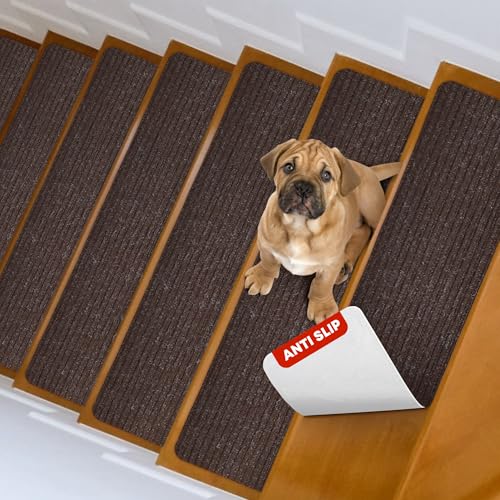
The maker says these 8-by-30-inch polyester treads can be cut with scissors, making them the option to consider when standard dimensions need trimming. The product features describe a layered construction with a polyester surface, nonwoven cushion and adhesive-backed nonslip base. That combination is intended for indoor steps where a softer surface and traction matter to household pets.
Cutting is useful only when the finished piece still covers the walking area you need; do not trim away so much that the dog’s usual landing spot lacks coverage. The product text uses both PP-grid and TPU/TPR descriptions for the base, so compare it by its adhesive backing rather than assuming a specific polymer construction.
Bottom line: Pick these if you need to trim an 8-by-30-inch tread to suit your steps.
COSY HOMEER 28 x 9-Inch Treads

Unlike the longer 30-inch options, each COSY HOMEER mat measures 28 by 9 inches, so this set suits buyers seeking a compact tread rather than a broad runner-style cover. The mat is polyester with a TPE non-skid backing, and the maker says the pieces can be washed repeatedly without affecting slip resistance. Its low-profile design is also described as helping doors clear the mat.
That compact footprint leaves more exposed stair surface than a 30-inch tread on many steps, so consider your dog’s stride and measure the landing area before choosing. The maker says the backing is intended for dry floors and can be repositioned without residue.
Bottom line: Choose these when a compact 28-by-9-inch mat is the intended coverage.
How to Choose Carpet Stair Treads for Dogs
Choose a tread that covers the area where your dog places its paws without creating a loose edge. Measure the stair’s usable width and depth, then compare those figures with each mat’s dimensions; for stairs wider than 30 inches, an 8-by-30-inch tread will leave uncovered side areas. Dogs need reliable footing at both the step edge and landing, so avoid placing a mat where its edge curls into the walking path.
Backing type also matters. Adhesive-backed products depend on a clean, dry surface for contact, while removable or reusable claims do not replace checking that each tread remains flat and secure. A dog that hesitates, slips, or avoids a stair may need a different route or supervision rather than simply more carpet.
How to Measure Stairs for Dog Treads
Measure each step’s width and the flat depth from the riser to the front edge; stair dimensions can vary even within one staircase. A 28-by-9-inch mat and an 8-by-30-inch tread cover different areas, so match the actual dimensions rather than relying on a general “fits most” claim. If you want coverage nearly across a 30-inch stair, the longer format is the closer match; if your stair is narrower, check whether the tread can be trimmed.
Keep the tread away from the stair nose if its placement would leave an unsecured lip. For a dog, a stable contact area matters more than filling the entire step: position mats consistently so the usable landing area is predictable from step to step.
Adhesive and Non-Skid Backings Compared
Adhesive-backed treads attach to the stair surface, while non-skid backs rely more on friction between the backing and floor. In this group, the products use TPE or TPR terms for their backing; materials and adhesive claims differ, so follow the specific product’s cleaning and repositioning directions. Dust, hair, floor finish and moisture can interfere with grip, making surface preparation and regular checks important.
Before a dog uses newly placed treads, press each one down and check the corners by hand. Remove hair and grit from the stairs before application, and recheck edges after cleaning or repositioning. Never treat a non-slip label as a substitute for a physical check: a shifted or curled tread can become a trip hazard for people and pets.
| Need | Consider | Decision point |
|---|---|---|
| More stair width covered | 8-by-30-inch tread | Measure usable width first |
| Compact footprint | 28-by-9-inch mat | Confirm it covers the dog’s usual footfall |
| Custom length | Maker says scissors can trim | Leave the walking area fully covered |
Care and Safety for Dog Stair Treads
Check stair treads weekly for curled corners, shifting, trapped hair and worn patches; a loose edge can catch a paw or foot. Vacuum or lift pet hair before it mats into carpet fibers, and clean the stair surface if dirt collects beneath a removable mat. Follow the product’s own washing and drying directions, since a damp backing or damp stair can reduce adhesion or friction.
For older, injured or unsteady dogs, supervise stair use and keep the route clear of toys and loose rugs. Treads do not make steep or poorly lit stairs risk-free. If a dog repeatedly slips despite secure mats, block stair access when unsupervised and seek a safer route rather than adding another loose layer.
Frequently Asked Questions
What size stair tread works for most dogs?
Match the tread to the usable width and depth of your own stair, since stair sizes vary. An 8-by-30-inch tread covers more width than a 28-by-9-inch mat, but can still leave side areas uncovered on wider steps.
Can carpet stair treads damage wood stairs?
Adhesives and finishes differ, so test a removable tread in an inconspicuous spot before covering the staircase. Clean, dry the surface first, and remove the tread slowly if the maker allows removal or repositioning.
How often should I check dog stair treads?
Inspect them at least weekly and after washing, moving or repositioning them. Check all corners and edges by hand; a corner that lifts or a tread that shifts should be secured or removed before stair use.
Should stair treads cover the stair edge?
Keep the tread flat and clear of any overhanging or curled lip at the stair nose. Measure the usable depth and position each piece consistently so its edge does not become a paw-catching or trip hazard.
Can I wash carpet stair treads with pet hair?
Remove loose hair first, then use the cleaning method allowed for that tread; one product here is described by its maker as washable. Let stairs and backing dry fully before replacing a tread, because moisture can compromise grip.