
Wood Repair Filler Sticks: 4 Kits Compared by Color

24-Color Wood Filler Sticks is the best starting point for most furniture touch-ups because its 24 shades provide the widest color range among these wax-stick kits. Choose a different kit if you want markers for color-on scratches or a sharpener alongside the sticks.
Wood repair filler sticks are wax crayons used to conceal surface blemishes; they are cosmetic touch-ups, not structural repairs.
We earn a commission if you buy through links on this page. As an Amazon Associate I earn from qualifying purchases. Products are compared on manufacturer specifications, not hands-on testing.
- Best overall: 24-Color Wood Filler Sticks – Its 24 colors offer the broadest shade choice among the wax-stick-only sets.
- Best for 20 shades: Uxney 20-Color Wax Crayons – It combines 20 wax crayon colors with instructions to melt wax for deeper cracks.
| Product | Best for | Color count | Included tools | Application | Shop |
|---|---|---|---|---|---|
| 24-Color Wood Filler Sticks | Wide shade choice | 24 colors | Brush | Wax stick and brush | Check Price on Amazon |
| Uxney 20-Color Wax Crayons | Crack touch-ups | 20 colors | None specified | Wax stick; melt for deeper cracks | Check Price on Amazon |
| Lifreer 16-Color Wood Filler Sticks | Named wood tones | 16 colors | None specified | Wax crayon | Check Price on Amazon |
| Guardsman 5-Color Wax Filler Sticks | Simple touch-ups | 5 colors | Sharpener | Wax stick | Check Price on Amazon |
Wood repair filler sticks compared
Compare shade range and kit contents, then choose a wax color that blends with the damaged area.
24-Color Wood Filler Sticks

The 24-color palette gives this set the broadest shade selection among the wax-stick-only options here. Its wax crayons are intended for scratches, scuffs, cracks, nail holes, and stains on wood floors, cabinets, tables, and doors, and the included brush helps spread wax across a blemish. That makes it a fit for household touch-ups where a close shade match matters. The limitation is that its wax application is a surface repair, not a way to restore broken or loose wood; larger damage needs a different repair method.
Bottom line: Choose this for touch-ups where having many shade options matters.
Uxney 20-Color Wax Crayons

Unlike the brush-equipped set, this 20-color kit describes direct crayon application for scratches and wiping away excess, with melting suggested for deeper cracks. It covers furniture, floors, cabinets, tables, doors, and wood panels, and the color range includes tones such as oak, walnut, mahogany, and gray. The melt-and-fill approach may suit a buyer tackling more than a light surface mark. Wax remains a cosmetic fill, however, and melting wax calls for care around heat; it is not appropriate for structural repairs.
Bottom line: Pick this if you want multiple shades and a melt-and-fill option for cracks.
Lifreer 16-Color Wood Filler Sticks

The Lifreer set names a range of familiar wood shades, including white oak, red oak, maple, cherry, walnut, and teak, rather than relying only on a total color count. Its wax crayons are intended for scratches, scuffs, cracks, stains, and holes on furniture, floors, cabinets, tables, and doors. That named palette can help narrow a choice when the finish is recognizably one of those tones. The set’s 16 colors are fewer than the 20- and 24-color alternatives, so unusual or mixed finishes may be harder to match.
Bottom line: Choose it when one of its named wood shades matches your finish.
Guardsman 5-Color Wax Filler Sticks
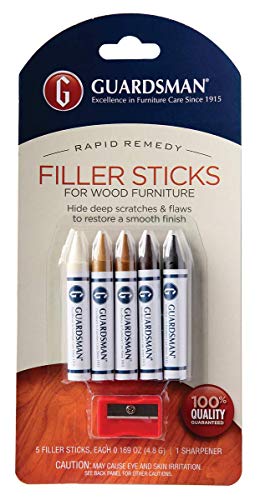
The Guardsman set is the only wax-stick option here that includes a sharpener, and its five color blends make it a smaller, simpler palette than the other stick-only kits. The maker says the wax fills and conceals deep scratches and protects exposed wood against moisture; the sticks are intended for floors, cabinets, chairs, and furnishings. This is a compact choice when the available blends suit the finish. Five shades offer less flexibility for fine color matching, so a broader palette may be more useful for varied wood tones.
Bottom line: Pick this when a small palette and included sharpener suit your repair needs.
How to choose wood repair filler sticks
Choose a wax stick kit by matching the finish and the type of blemish, not by color count alone. Wood color shifts with grain, stain, sheen, and age, so test a small, inconspicuous spot before filling the visible mark. For a shallow scratch, a crayon can lay wax directly into the mark; holes and cracks may need careful packing and smoothing. Wax touch-ups conceal surface defects but do not restore strength to a split, loose joint, or missing structural section. If the damaged area is larger than a small surface blemish or the wood flexes, use a repair method intended for rebuilding or fastening the wood instead.
Matching the wax shade to wood grain
Match the repair to the darker and lighter tones in the grain, since a single flat shade can look different from a stained, patterned surface. Start with the closest color and apply a little at a time; excess wax can make the repair look raised or smeared. A useful rule is to test two nearby shades on an unseen area when the finish has strong grain variation, then compare them under the room lighting where the furniture or floor sits. Avoid judging the match while the wax is still spread beyond the scratch. Matte, satin, and glossy finishes reflect light differently, so shade alone cannot guarantee an invisible repair.
Wax sticks versus markers and wood filler
Wax sticks suit small cosmetic scratches and shallow holes because the material can be rubbed into a blemish and smoothed. Markers add color to thin scratches but do not provide the same filling material as a stick; kits combining both can handle more than one type of touch-up. Traditional wood filler is generally a separate repair material used to fill larger gaps before sanding and refinishing, while wax is not a substitute for structural repair. Use the table to match the repair method to the task, and avoid treating a cosmetic concealment as a load-bearing fix.
This quick guide separates surface coloring from filling and rebuilding.
| Need | Typical choice | Limit |
|---|---|---|
| Color a thin scratch | Wood marker | Little or no fill |
| Conceal a small surface blemish | Wax repair stick | Cosmetic, not structural |
| Rebuild a larger missing area | Wood filler intended for rebuilding | Usually needs surface preparation |
Applying wax filler without making a mess
Apply wax in small amounts, concentrating the stick on the scratch or hole rather than coating the surrounding finish. Smooth or wipe away excess promptly, since a raised wax ridge can catch light and look more noticeable than the original mark. On floors, keep the repair area clean and dry before applying wax; grit trapped in a scratch can interfere with a neat fill. If the kit calls for melting wax, use heat carefully and keep the hot material away from skin and combustible items. Stop if the defect reveals loose, split, or unstable wood, because wax will not make that damage safe or sound.
Frequently Asked Questions
Do wood repair filler sticks fix deep cracks?
Wax sticks can conceal some cracks, but they do not restore structural strength. For a crack that is wider than a small surface blemish or that moves under pressure, use a repair method designed to rebuild or secure the wood.
How do I choose the right wax color?
Match the stick to the wood’s underlying tone and grain, then test it in an inconspicuous spot. Strongly varied grain may need testing two nearby shades under the same lighting as the finished surface.
Can wax filler sticks be used on floors?
The kits here are intended for wood floors as well as furniture and cabinets. Apply only to a clean, dry blemish and remember that wax conceals surface damage rather than repairing a loose or split floorboard.
Are wax sticks the same as wood filler?
Wax sticks are crayons for cosmetic touch-ups; wood filler is a separate material generally used to fill gaps before sanding or refinishing. Do not use a wax stick as a structural repair.
Should I melt a wax filler stick?
Only consider melting when the particular kit calls for it; one kit here suggests melting for deeper cracks. Hot wax can burn skin, so keep it away from hands and combustible materials while applying.