
iFi Audio iPower Elite 5V Power Supplies Compared

iFi iPower Elite 5V Black is the named iFi Audio iPower Elite 5V choice, with a 5V/5A output and a black finish. Choose iFi iPower Elite 5V Gray if you want the same Elite voltage model in gray; consider an iPower X only if you want that different power-supply line.
These are DC power supplies for compatible audio and electronic equipment. Before ordering, confirm your device needs 5V and that the adapter’s connector and polarity match.
We earn a commission if you buy through links on this page. As an Amazon Associate I earn from qualifying purchases. Products are compared on manufacturer specifications, not hands-on testing.
- Best overall: iFi iPower Elite 5V Black – The black Elite combines a 5V/5A rating with the finish indicated in its name.
- Best for gray finish: iFi iPower Elite 5V Gray – It is the gray-finish Elite 5V option and shares the 5V/5A rating.
- Best for alternate model: iFi iPower X 5V Black – The iPower X is a different iFi low-noise supply line, with 5V compatibility.
| Product | Best for | Model | Output | Color | Shop |
|---|---|---|---|---|---|
| iFi iPower Elite 5V Black | Black finish | iPower Elite | 5V/5A | Black | Check Price on Amazon |
| iFi iPower Elite 5V Gray | Gray finish | iPower Elite | 5V/5A | Gray | Check Price on Amazon |
| iFi iPower X 5V Black | Black iPower X | iPower X | 5V | Black | Check Price on Amazon |
| iFi iPower X 5V Cream | Cream iPower X | iPower X | 5V | Cream | Check Price on Amazon |
iFi Audio iPower Elite 5V power supplies
Compare the Elite color options with the related iPower X models before matching an adapter to your equipment.
iFi iPower Elite 5V Black
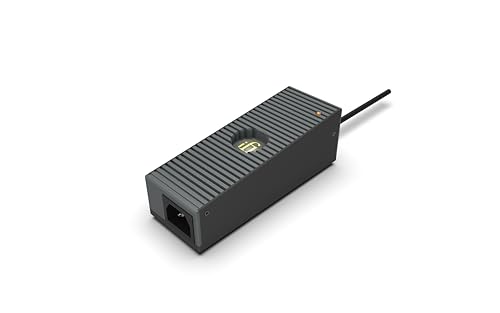
iFi iPower Elite 5V Black is the black-finish Elite 5V model, distinguishing it from the gray Elite and the iPower X alternatives. Its output is 5V/5A, and the maker says its transformer design and Active Noise Cancellation² are intended to reduce unwanted electrical noise. That makes it a fit to consider for compatible DACs, streamers, phono stages, or routers. The key limitation is compatibility: the 5V output alone does not establish that the connector fits your device, so buyers with a different voltage requirement should choose another supply.
Bottom line: Pick this if you need a compatible 5V/5A supply and prefer a black finish.
iFi iPower Elite 5V Gray

iFi iPower Elite 5V Gray provides the gray-finish alternative within the Elite 5V line. It shares the 5V/5A output rating with the black model, while its compact stated measurements are 5.8 inches wide, 2.2 inches long, and 1.3 inches high. The maker says Active Noise Cancellation² filters spurious frequencies and describes the unit as an upgrade over noisy stock supplies. Its 5V rating is not a universal fit: equipment requiring another voltage, or using an incompatible connector, needs a different match.
Bottom line: Choose this for the Elite 5V/5A model when gray is your preferred finish.
iFi iPower X 5V Black
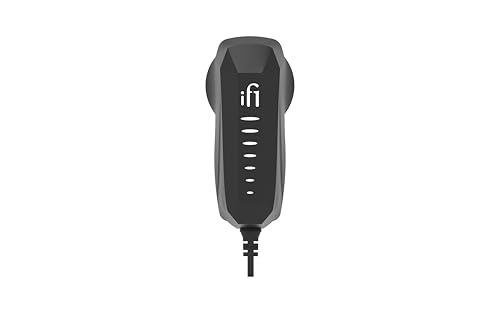
iFi iPower X 5V Black is an iPower X rather than an iPower Elite, so it suits shoppers comparing iFi’s other low-noise supply line. This black version is identified as 5V and includes multiple barrel tips; its features also mention optional micro-USB and USB-C support for the 5V model. The maker says its Active Noise Cancellation² reduces interference. The facts do not establish a 5A output, so buyers who specifically need the Elite’s 5V/5A rating should stay with an Elite model rather than assume the X has the same capacity.
Bottom line: Choose this if you want a black iPower X and its connector options suit your device.
iFi iPower X 5V Cream

iFi iPower X 5V Cream is the cream-finish iPower X alternative, not an Elite model. Its use spans compatible devices such as turntables, media streamers, phono stages, routers, DACs, audio interfaces, and LED studio lighting. The maker says Active Noise Cancellation² filters unwanted frequencies. The model is identified as 5V, but the input fields do not establish the Elite’s 5V/5A rating; that distinction matters when a device requires a particular current capacity. Check the device’s voltage and power requirements rather than selecting by finish or product family alone.
Bottom line: Pick this if you want the cream iPower X and its 5V output fits your equipment.
How to choose an iFi 5V power supply
Match voltage first, then check current capacity and the physical connection. A DC supply’s voltage should match the device’s required voltage; a 5V label does not make an adapter suitable for equipment that needs 12V. For current, the supply’s available amperage should meet or exceed the device’s requirement, provided voltage and connector are also correct. The Elite options here are specified at 5V/5A, while the iPower X entries are identified as 5V without a confirmed current figure in the specifications. Also check polarity, commonly shown as a center-positive or center-negative symbol. If any of those requirements differ, do not treat the products as interchangeable.
iPower Elite and iPower X differences
The Elite and X are separate iFi power-supply lines, even where both are 5V models. The Elite entries have a 5V/5A rating, while the X entries emphasize included barrel tips and, for the black 5V version, optional USB connector support. Use this comparison to narrow the type, then match the exact power connection to your equipment.
| Need | Model to consider | Check before choosing |
|---|---|---|
| 5V/5A output | iPower Elite | Device voltage and connector fit |
| iPower X line | iPower X 5V | Required current and connector type |
| Different voltage requirement | Neither 5V option | Find the device’s required voltage |
Connector options do not override electrical compatibility. A barrel tip that physically fits can still have the wrong polarity or voltage, so compare the device label or manual before connecting a replacement supply.
Check voltage, current and connector fit
Read the equipment’s power label before choosing an adapter. A 5V device needs a 5V supply; the available current capacity should be at least the device’s current draw. A 5A supply does not force 5A into the device, but the voltage and wiring must be correct. Barrel plugs need matching outer diameter, inner diameter, and polarity, while USB connectors must match the device’s supported input. Many DC devices show polarity with a small diagram near the input jack. If the device’s required voltage or connector cannot be confirmed, pause rather than guessing: mismatched power can prevent operation or damage electronics.
Use low-voltage adapters safely
Audio power adapters convert household AC into lower-voltage DC, but the wall side still carries hazardous mains electricity. Keep the adapter and its plug dry, use an undamaged outlet, and stop using it if the housing, cable, or plug is cracked or frayed. Ventilation matters too: avoid covering a power adapter or trapping it under soft furnishings, which can impede heat dissipation. Disconnect power before changing a barrel connector, and never force a tip that does not fit smoothly. A replacement supply should match the equipment’s voltage, polarity, connector, and current needs before it is plugged in.
Frequently Asked Questions
Can a 5V adapter replace a 12V power supply?
No. The device’s required voltage must match the adapter output; a 5V supply is not a substitute for a 12V supply. Check the device label before connecting a replacement.
Does a 5A power supply force 5A into equipment?
No, a correctly matched supply makes current capacity available while the device draws what it needs. Its voltage, polarity, and connector still must match, and its current capacity should meet or exceed the device requirement.
How do I check a barrel plug’s polarity?
Look for the polarity diagram near the device’s power input or in its manual; the symbol identifies whether the center contact is positive or negative. Match that symbol to the adapter before connecting it.
Can iPower X tips fit an iPower Elite?
The iPower X black 5V version includes multiple barrel tips, but that alone does not confirm compatibility with an Elite or a particular device. Match the exact plug dimensions and polarity to the equipment’s input.
Is it safe to cover a power adapter?
No; keep a power adapter uncovered and ventilated so heat can dissipate. Do not use one with a damaged cable, plug, or housing.