
Best Door Hardware for Salt Air: 4 Picks Compared

The white stainless steel hook latch suits most people seeking door hardware for salt air because it is made for wet or salty environments and is sized for straightforward gate or door use. Choose the beech wood pull for a handle rather than a latch, or select the keyed shed kit when locking an outbuilding is the priority.
We earn a commission if you buy through links on this page. As an Amazon Associate I earn from qualifying purchases. Products are compared on manufacturer specifications, not hands-on testing.
- Best overall: Stainless Steel Gate Hook Lock, White – Stainless steel construction and salt-air resistance suit coastal gates and doors.
- Best for a pull handle: Beech Wood Door Pull, 12 in – A 12-inch beech wood handle avoids metal corrosion concerns.
- Best for keyed shed security: WRINGKIT Shed Door Latch Kit – The kit combines a keyed T-handle lock and two spring-loaded latches.
| Product | Best for | Hardware type | Material / finish | Length | Shop |
|---|---|---|---|---|---|
| Stainless Steel Gate Hook Lock, White | Coastal gates | Hook latch | Stainless steel, white | 5.79 in | Check Price on Amazon |
| Beech Wood Door Pull, 12 in | Nonmetal pull | Pull handle | Beech wood, wood color | 12 in | Check Price on Amazon |
| WRINGKIT Shed Door Latch Kit | Shed security | Keyed latch kit | Black | 5.5 in stem | Check Price on Amazon |
| Baldwin 85327.056.ENTR Handle Set | Entry handleset | Entrance handleset | Lifetime satin nickel PVD | 19.9 in | Check Price on Amazon |
Door Hardware for Salt Air
Match each piece to the job first: a pull handle, hook latch, keyed shed lock, or entrance handleset serves a different purpose.
Stainless Steel Gate Hook Lock, White

This hook latch is the most direct match for salty or humid settings because its maker describes its stainless steel construction as corrosion-resistant for coastal use. The white finish and 5.79-inch length suit buyers who need a simple way to hold a gate or door in place, rather than a keyed entry lock. It comes as a two-set option. A hook latch is not a substitute for a lock when controlled access matters, so choose another type for securing a shed or home entrance.
Bottom line: Choose this for a basic coastal gate or door hold, not keyed security.
Beech Wood Door Pull, 12 in
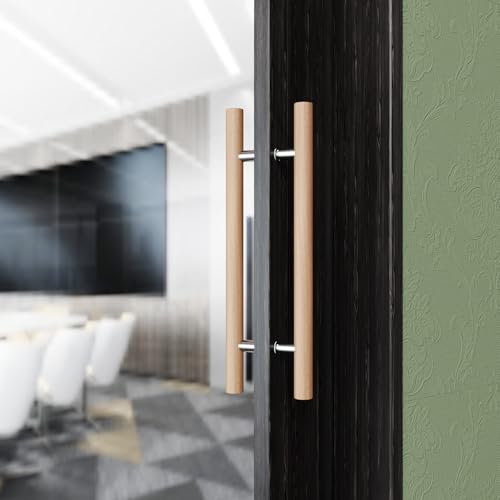
This 12-inch beech wood pull provides a nonmetal touch point for coastal or spa settings where metal discoloration is a concern. It is a double-sided H-shape handle with a solid connector, and its maker says the wooden handle will not rust. The 3-inch height gives the pull a projecting profile suited to a door that needs a graspable handle. The package includes one handle, not a latch or lock, so buyers needing privacy or keyed access should choose locking hardware instead.
Bottom line: Pick this when a door needs a corrosion-free pull rather than a latch.
WRINGKIT Shed Door Latch Kit

This kit is the choice for outbuildings that need keyed access, unlike the simple hook latches. It includes a T-handle lock, five identical keys, and two adjustable spring-loaded barrel bolts; the stem measures 5.5 inches. The maker says it fits doors up to 4.5 inches thick, a useful fit limit to check against a shed or coop door before ordering. The specifications do not establish salt-air resistance, so coastal buyers who prioritize corrosion protection should select a material-confirmed option.
Bottom line: Choose this for a keyed shed door when its thickness and exposure suit the installation.
Baldwin 85327.056.ENTR Handle Set

This Baldwin handleset is an entrance-trim option rather than a gate hook or shed latch, and it includes a single-cylinder function with an interior knob. Its finish is Lifetime satin nickel with PVD, and the set uses Bethpage sectional trim with a 5437 Bethpage knob. Choose it when the door calls for a coordinated entrance handle set. Unlike the other picks, the specifications do not establish salt-air suitability, so verify that the finish and lock are appropriate for the exposure before choosing it for a coastal door.
Bottom line: Choose this for entrance trim only after confirming coastal finish suitability.
How to Choose Coastal Door Hardware
Start with the job: a pull handle moves a door, a hook latch holds it shut, and a keyed handleset controls entry. Salt spray and humid air accelerate corrosion on exposed metal, especially around fasteners and moving joints. Stainless steel and PVD finishes are common corrosion-conscious choices, but alloy grade, finish coverage, and installation exposure all matter. For a simple coastal gate hold, choose a latch whose maker identifies salt-air resistance; for a shed that needs keys, choose a locking kit and confirm its material is suitable. Wood avoids metal rust at the grip, but it still needs suitable exterior sealing and care. Do not treat a hook latch as security hardware.
Measure the Door Before Selecting Hardware
Measure thickness, clearance, and the space available for the handle or latch before drilling. The shed kit’s fit limit is 4.5 inches of door thickness, while the wood pull is 12 inches long and projects 3 inches in height. Compare those measurements with the door edge, trim, and nearby wall so the hardware can move without obstruction. For a replacement handleset, also check the existing bore and backset against the lock’s fit requirements; a matching exterior style alone does not guarantee a fit. Mark the mounting points carefully, and use corrosion-resistant fasteners in coastal locations to reduce rust around the hardware.
Hook Latches, Pulls, and Locks Compared
Choose the hardware type based on whether you need a grasp, a hold, or controlled entry. Hook latches are simple and useful for holding gates or doors closed, but they do not provide keyed security. Pull handles provide leverage without a locking function. A keyed T-handle kit adds access control for a shed and includes separate spring bolts. This table separates those jobs so the choice follows the function rather than appearance.
| Need | Hardware type | Key consideration |
|---|---|---|
| Grip and pull | Door pull handle | Confirm projection and mounting clearance |
| Hold a gate closed | Hook latch | Not keyed security |
| Lock a shed | Keyed T-handle kit | Door thickness up to 4.5 inches |
| Finish an entry door | Handleset | Confirm finish and lock fit |
Reduce Corrosion After Installation
Rinse salt deposits from exposed hardware with fresh water, then dry the surfaces and joints; salt left behind can keep attacking metal even when the material resists corrosion. Inspect fasteners, moving joints, and finish edges regularly, especially on doors directly facing the sea. Lubricate lock cylinders and latch pivots with a product intended for that hardware, and avoid harsh abrasives that can damage a finish. Coastal exposure varies sharply between a sheltered porch and an ocean-facing gate, so shorten inspection intervals as exposure increases. Replace rusted fasteners before corrosion spreads to the surrounding door or hardware.
Frequently Asked Questions
Does stainless steel resist salt air outdoors?
Stainless steel is generally more corrosion-resistant than ordinary carbon steel, but salt deposits can still cause surface staining or pitting. Rinse exposed hardware with fresh water and inspect it more often on ocean-facing doors.
Can a hook latch secure a shed by itself?
For a shed where keys matter, use a locking mechanism and confirm the door thickness falls within its fit range.
How often should coastal door hardware be rinsed?
Rinse hardware after visible salt buildup or heavy spray, then dry it to keep deposits from lingering. Ocean-facing hardware needs more frequent checks than hardware under a sheltered porch.
What should I measure before installing a shed latch?
Measure the door thickness and the mounting area before drilling. A kit rated for doors up to 4.5 inches thick will not fit a thicker door without a different solution.