
Techron Marine Fuel System Treatment: 3 Options Compared

For a marine-specific formula with a fuel-stability period of up to two years, choose Chevron Techron Protection Plus Marine, 4 oz; Chevron Techron Marine Cleaner & Stabilizer, 10 oz, 2-Pack is another marine treatment, while Chevron Techron Concentrate Plus, 12 oz, 6-Pack is a general gasoline-engine cleaner rather than a marine-specific product.
Choose a product by its use and package size, and confirm the correct dose for your tank before adding any fuel treatment.
We earn a commission if you buy through links on this page. As an Amazon Associate I earn from qualifying purchases. Products are compared on manufacturer specifications, not hands-on testing.
- Best overall: Chevron Techron Protection Plus Marine, 4 oz – Its marine formula is alcohol-free and emulsifier-free, with corrosion protection and fuel stabilization up to two years.
- Best for a two-pack: Chevron Techron Marine Cleaner & Stabilizer, 10 oz, 2-Pack – This marine cleaner and stabilizer comes in two 10-ounce bottles and is described for gasoline engines.
- Best for broader engine use: Chevron Techron Concentrate Plus, 12 oz, 6-Pack – The 12-ounce cleaner is described for automobiles and other gasoline engines, including boats.
| Product | Best for | Package size | Pack count | Product type | Shop |
|---|---|---|---|---|---|
| Chevron Techron Protection Plus Marine, 4 oz | Marine corrosion protection | 4 oz | 1 | Marine treatment | Check Price on Amazon |
| Chevron Techron Marine Cleaner & Stabilizer, 10 oz, 2-Pack | Two-bottle marine supply | 10 oz each | 2 | Marine cleaner and stabilizer | Check Price on Amazon |
| Chevron Techron Concentrate Plus, 12 oz, 6-Pack | Mixed gasoline engines | 12 oz each | 6 | General fuel-system cleaner | Check Price on Amazon |
Techron Marine Fuel System Treatment Options
Compare the marine-specific formulas with a general Techron gasoline-engine cleaner before choosing.
Chevron Techron Protection Plus Marine, 4 oz

Chevron Techron Protection Plus Marine, 4 oz is the only option here whose features explicitly call out an alcohol-free, emulsifier-free marine formula and corrosion protection in fresh and salt water. Chevron says it stabilizes fuel for up to two years and cleans carbon, gum, and varnish deposits while helping prevent new deposits. The single 4-ounce bottle suits a buyer who wants a marine-specific treatment with those stated protections. Its package is smaller than the two-bottle option, so buyers planning to treat more than one tank should verify the required dose and bottle quantity for their use.
Bottom line: Pick this if marine corrosion protection and the two-year fuel-stability claim are your priorities.
Chevron Techron Marine Cleaner & Stabilizer, 10 oz, 2-Pack

Chevron Techron Marine Cleaner & Stabilizer, 10 oz, 2-Pack stands apart with two 10-ounce bottles, giving a larger total package than the single-bottle marine option. Its features describe cleaning deposits and protecting gasoline fuel systems against ethanol- and water-related concerns, and its name identifies it as a marine cleaner and stabilizer. Those claims make it relevant for a buyer seeking a marine-oriented additive in a multi-bottle package. The features do not give a dose rate or storage-stability duration, so this choice does not establish how much fuel one package treats; check the product label for your tank volume before use.
Bottom line: Choose this if you want a marine cleaner and stabilizer supplied as two 10-ounce bottles.
Chevron Techron Concentrate Plus, 12 oz, 6-Pack
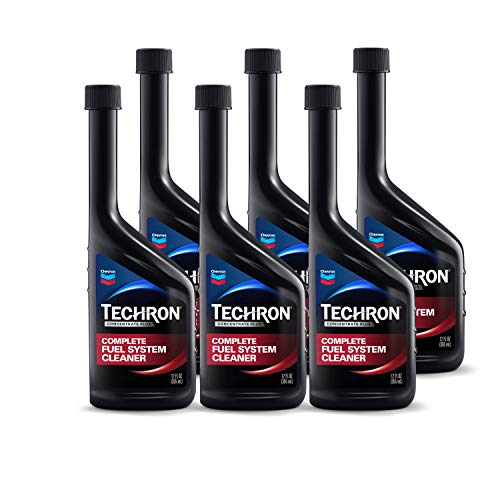
Chevron Techron Concentrate Plus, 12 oz, 6-Pack differs from the marine-specific treatments: it is Techron Concentrate Plus, a general gasoline-engine cleaner supplied in six 12-ounce bottles. Its features name fuel injectors, carburetors, intake valves, and combustion chambers, and say it can be used as needed in boats and other non-automotive gasoline engines. That makes it a related option for someone maintaining several kinds of gasoline equipment, rather than a substitute for a marine product chosen specifically for marine corrosion protection. The features mention fuel stability up to one year, shorter than Chevron Techron Protection Plus Marine, 4 oz’s stated period.
Bottom line: Pick this for mixed gasoline-engine maintenance when a marine-specific formula is not your requirement.
How to choose a Techron marine fuel treatment
Choose a marine-specific formula when the label’s marine use and protection claims match your needs. Gasoline can oxidize during storage, while ethanol-blended fuel can take up water; water contamination can contribute to phase separation, so water-related protection matters in marine fuel systems. Compare the treatment purpose, package volume, and storage-stability claim rather than treating every fuel-system cleaner as interchangeable. A general gasoline-engine cleaner may be suitable for boats if its directions say so, but that does not make it a marine corrosion treatment. For seasonal storage, use the product only at its labeled dose and make sure the amount covers the fuel volume you intend to store.
Marine fuel treatment and package size
Package volume alone does not tell you how much fuel a bottle treats; treatment rates vary by formulation and must come from the product label. For scale, one U.S. gallon is 128 fluid ounces, but that conversion is not a dosing instruction. Compare the 4-ounce single bottle, two 10-ounce bottles, and six 12-ounce bottles by the unit size and intended use, then calculate treatment capacity only from the label’s dose rate. Do not assume a larger bottle is more concentrated or that products with similar names have the same dose. If the dose rate or suitability for your engine type is unclear, confirm it before pouring treatment into the tank.
Marine cleaner versus general gasoline cleaner
A marine fuel treatment is selected for boat-fuel concerns, while a general gasoline cleaner primarily targets deposits in fuel-system components. Marine engines may sit unused for extended periods, so storage stabilization and corrosion protection can be decision points beyond deposit cleaning. Gasoline cleaners can address components such as injectors or carburetors when their directions include those engines, but their presence alone does not prove marine corrosion protection. Use the product’s engine compatibility and storage claims to separate these roles. For saltwater use, corrosion protection is a particularly relevant stated attribute; for routine deposit cleaning, the component coverage may be more important.
| Need | What to compare | Decision cue |
|---|---|---|
| Seasonal fuel storage | Storage-stability duration and dose | Use only the duration and dosing printed for that formula |
| Saltwater environment | Marine corrosion-protection claim | Prefer a formula that explicitly addresses marine corrosion |
| Deposit cleaning | Engine compatibility and components covered | Match injector or carburetor coverage to your engine |
Safe use and common fuel-treatment mistakes
Follow the container’s dosage and engine-compatibility directions; overdosing is not a reliable way to increase protection. Fuel additives also do not replace correct fuel handling: keep gasoline in an approved, closed container and away from ignition sources, because gasoline vapors ignite readily. Avoid mixing multiple additives unless their labels allow it, since overlapping formulas may not be compatible. Separate fuel treatment from two-stroke oil: an additive is not a substitute for the engine’s required oil-and-fuel mix or oil-injection system. Before treating a tank, identify whether the engine uses gasoline and verify the dose for the amount of fuel in it.
Frequently Asked Questions
Does marine fuel treatment prevent ethanol phase separation?
Some marine fuel treatments claim water or ethanol-related protection, but an additive cannot guarantee that contaminated gasoline will remain usable. Ethanol-blended gasoline can absorb water, so keep fuel dry and follow the product label’s compatibility and dosing directions.
How much Techron marine treatment should I add?
Use the dose printed on the specific bottle for the volume of fuel being treated. Bottle size alone does not establish treatment capacity, and the formulations here have different package sizes.
Can a general Techron cleaner be used in a boat?
The general Techron Concentrate Plus product here says it can be used as needed in boats and other gasoline engines. That stated use does not establish marine-specific corrosion protection, so choose according to the protection your fuel system requires.
Does fuel treatment replace two-stroke engine oil?
No; fuel treatment is not a substitute for required two-stroke oil. Use the oil-and-fuel ratio or oil-injection setup specified for the engine, and dose any additive separately according to its label.
How should gasoline be stored for a boat?
Store gasoline in an approved, tightly closed container away from heat, sparks, and flames because gasoline vapors ignite readily. For fuel kept in a tank, use only a stabilizer labeled for that fuel and follow its storage and dosage directions.