
Salt Guard Concrete Sealer Options for Salt Protection

For salt-exposed concrete, Siloxa-Tek 8500 Ready to Use is the strongest fit because its maker says it resists chloride and deicing-salt damage and has DOT approval. Salt Guard itself is not among these products; choose Rain Guard Concrete Sealer, 5 Gallon if you need a five-gallon container, or MasonryDefender Concrete Sealer, 1 Gallon for a one-gallon driveway and patio sealer.
Penetrating silane/siloxane sealers soak into porous masonry rather than forming a surface coating, so they are intended to repel water while retaining a natural look.
We earn a commission if you buy through links on this page. As an Amazon Associate I earn from qualifying purchases. Products are compared on manufacturer specifications, not hands-on testing.
- Best overall: Siloxa-Tek 8500 Ready to Use – Its maker says it resists chloride and deicing salts, and the formula is DOT approved.
- Best for larger jobs: Rain Guard Concrete Sealer, 5 Gallon – The five-gallon ready-to-use container suits more area than the one-gallon options.
- Best for driveways: MasonryDefender Concrete Sealer, 1 Gallon – It is a one-gallon penetrating sealer specifically described for driveways, sidewalks and patios.
| Product | Best for | Container size | Finish | Shop |
|---|---|---|---|---|
| Siloxa-Tek 8500 Ready to Use | Salt exposure | 1 gallon | Natural appearance | Check Price on Amazon |
| Rain Guard Concrete Sealer, 5 Gallon | Larger surfaces | 5 gallons | Natural finish | Check Price on Amazon |
| MasonryDefender Concrete Sealer, 1 Gallon | Driveways and patios | 1 gallon | Clear, non-glossy | Check Price on Amazon |
Salt Guard Concrete Sealer Alternatives
These penetrating sealers differ most in container size and the salt-protection claims their makers provide.
Siloxa-Tek 8500 Ready to Use
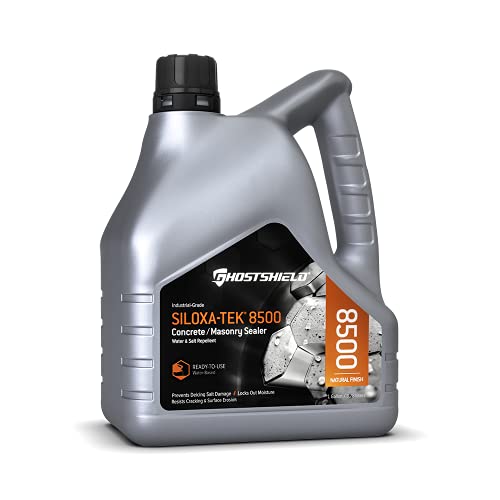
Salt resistance and DOT approval distinguish this one-gallon water-based formula. Its maker says it resists damage from chlorides and deicing salts and mitigates freeze-thaw surface damage; it also describes the formula as low VOC, breathable and non-film-forming. The product is intended for concrete, pavers, brick and stone, making it the broadest material fit among these choices. Its natural appearance suits buyers who do not want a visible coating. The limitation is container size: a single gallon may be inconvenient for a large driveway or several surfaces.
Bottom line: Choose this for salt-exposed concrete or mixed masonry surfaces when a one-gallon container is sufficient.
Rain Guard Concrete Sealer, 5 Gallon

The five-gallon container sets this ready-to-use silane/siloxane waterproofer apart from the one-gallon alternatives. Its maker says it penetrates unpainted and unsealed concrete and protects against water and salt damage while leaving a natural, no-gloss finish. Suggested surfaces include driveways, garage floors, pool decks, patios, walkways and walls, so it fits buyers treating multiple concrete areas. The key limitation is its surface condition: painted or already sealed concrete is outside the described use. Confirm the surface is suitable before applying.
Bottom line: Choose this when treating substantial unpainted, unsealed concrete and a natural finish is preferred.
MasonryDefender Concrete Sealer, 1 Gallon

Driveway, sidewalk and patio use is the clearest distinction for this one-gallon silane/siloxane sealer. Its maker says the clear treatment repels water while allowing concrete to breathe, and identifies ice-melt salts, chloride ions, freeze-thaw cycles and efflorescence as concerns it is intended to defend against. Application guidance calls for thoroughly cleaned concrete and a low-pressure garden sprayer. That makes surface preparation part of the job, not an optional shortcut. The product is a smaller-container choice; buyers covering broad areas may prefer the five-gallon format of Rain Guard Concrete Sealer, 5 Gallon.
Bottom line: Choose this for a small outdoor concrete area when you can thoroughly clean and spray the surface.
How to choose a concrete sealer for salt
For salt exposure, prioritize a penetrating silane/siloxane water repellent and a clear statement about chloride or deicing-salt resistance. Deicing salts can draw water into concrete; repeated freezing and thawing can then contribute to scaling and surface damage. Penetrating repellents reduce liquid-water absorption but are not a substitute for repairing cracks or controlling drainage. Avoid treating a sealer as a cure for structurally damaged concrete. Check that the surface is bare and porous: coatings and prior sealers can prevent absorption. For this selection, Siloxa-Tek 8500 Ready to Use has a specific maker claim for chloride and deicing salts, while Rain Guard Concrete Sealer, 5 Gallon and MasonryDefender Concrete Sealer, 1 Gallon describe salt-related protection in broader terms. Match the claim to the exposure and surface rather than choosing by container size alone.
Concrete preparation and application conditions
Clean, dry, absorbent concrete is the practical starting point for a penetrating sealer. Remove dirt, oil, curing compounds and loose material; residue can block penetration and leave uneven protection. Concrete commonly needs about 28 days to cure before sealing, though the product label and site conditions govern timing. Apply only when the surface and forecast meet the maker’s temperature and rain requirements; fresh rain can interfere with curing or absorption. Use a low-pressure sprayer or roller only where the product directions allow, and avoid puddling. Wear eye protection and chemical-resistant gloves, keep people and pets off the work area during application, and provide ventilation for indoor work. Test a small inconspicuous patch first to check absorption and appearance.
Penetrating sealer versus film-forming coating
Penetrating sealers enter the pores and generally leave little visible change, while film-forming coatings sit at the surface and can create sheen or a thicker barrier. Silane/siloxane repellents are commonly selected for exterior concrete exposed to rain and salts because they aim to reduce water absorption without hiding the concrete texture. A coating may suit a decorative or stain-control goal, but coatings can wear, peel or require more visible upkeep; a penetrating treatment does not create the same surface film. This comparison concerns penetrating products, not decorative coatings. The table helps match the available formats to a basic job size; actual coverage varies with concrete porosity and application.
| Need | Choice | Reason |
|---|---|---|
| Salt-specific claim | Siloxa-Tek 8500 Ready to Use | Maker cites chlorides and deicing salts |
| More material in one container | Rain Guard Concrete Sealer, 5 Gallon | Five-gallon size |
| Small outdoor area | MasonryDefender Concrete Sealer, 1 Gallon | One gallon; driveways, sidewalks and patios |
Common concrete sealing mistakes
Sealing damp or contaminated concrete is a common cause of uneven results; confirm dryness and remove oil, dust and loose deposits before starting. Applying too much can leave residue or patchy appearance, especially when a porous slab absorbs unevenly, so follow the specified application rate and remove excess as directed. Do not apply a penetrating sealer over paint or another coating unless the maker confirms compatibility. A sealer also cannot fix active leaks, moving cracks or poor drainage: address those conditions first. For an exposed driveway, plan around weather and keep traffic off until the product has cured for the period on its directions. Compare salt exposure, slab condition and area, then select a suitable product and container.
Frequently Asked Questions
How often should concrete sealer be reapplied?
Penetrating concrete water repellents commonly need reapplication every 3 to 5 years, but traffic, weather and surface absorption change the interval. Reapply when water no longer beads or the concrete absorbs it quickly after cleaning and drying.
Can I seal concrete that already has a coating?
A penetrating silane/siloxane sealer needs access to open concrete pores, so paint or an intact film coating can block absorption. Test a small area or remove the coating before sealing, and confirm compatibility with the product directions.
How long should new concrete cure before sealing?
New concrete is commonly allowed to cure for about 28 days before sealing. Cool weather, slab conditions and the product’s requirements can change the appropriate wait, so do not seal until the concrete meets its cure and dryness conditions.
Does concrete sealer stop freeze-thaw damage completely?
No sealer should be treated as a complete freeze-thaw safeguard; reducing water entry can lower one contributor to surface damage, but cracks and drainage problems still matter. Repair defects and direct runoff away from the slab before sealing.
Can concrete sealer be applied with a garden sprayer?
Some penetrating sealers can be applied with a low-pressure garden sprayer, and MasonryDefender Concrete Sealer, 1 Gallon specifically describes that method. Use only the applicator and coverage approach permitted by the product directions, and prevent puddles or overspray.