
Best Wallet to Avoid Pickpockets: 4 Safer Fits

VULKIT Hidden Travel Wallet is the best fit for most travelers because it can be concealed under clothing and holds passports, cards, and cash. If you want a daily wallet instead, Big Skinny Curve Bi-Fold is a slim front-pocket bifold; Hidden Underarm Shoulder Bag is an underarm bag, while LOUEBICA RFID Blocking Card blocks RFID signals rather than physically concealing valuables.
A wallet cannot prevent theft on its own: carry it where you can keep it in sight or feel it, and avoid a back pocket in crowded places.
We earn a commission if you buy through links on this page. As an Amazon Associate I earn from qualifying purchases. Products are compared on manufacturer specifications, not hands-on testing.
- Best overall: VULKIT Hidden Travel Wallet – Conceals under clothing and holds 1–2 passports, 4–8 cards, and folded cash.
- Best for front-pocket carry: Big Skinny Curve Bi-Fold – A curved, 0.12-inch-thick bifold designed for front-pocket carriers.
- Best for underarm carry: Hidden Underarm Shoulder Bag – A concealed underarm strap and hidden compartments provide a different carry style.
- Best for RFID blocking: LOUEBICA RFID Blocking Card – A credit-card-sized shield is designed to block RFID scans, not physical theft.
| Product | Best for | Carry style | Capacity or format | Dimensions | Shop |
|---|---|---|---|---|---|
| VULKIT Hidden Travel Wallet | Concealed travel carry | Under clothing or clipped | 1–2 passports; 4–8 cards | 5.91 × 4.41 × 0.39 in | Check Price on Amazon |
| Big Skinny Curve Bi-Fold | Slim front pocket | Front-pocket bifold | Up to 25 cards | 4.69 × 3.23 × 0.12 in | Check Price on Amazon |
| Hidden Underarm Shoulder Bag | Underarm storage | Concealed underarm strap | Double pockets | 10.8 × 6.1 × 10.8 in | Check Price on Amazon |
| LOUEBICA RFID Blocking Card | RFID scan blocking | Wallet insert card | 1 card | Credit-card size; 0.03 in thick | Check Price on Amazon |
Wallets and concealed carry options to avoid pickpockets
Choose by where you can keep valuables secure and monitored, not by an anti-theft label alone.
VULKIT Hidden Travel Wallet

VULKIT Hidden Travel Wallet is the only option here designed as a concealed travel wallet: it can sit at the waist under clothing or clip to a belt loop or backpack. Its capacity is 1–2 passports, 4–8 cards, folded cash, coins, SIM cards, or keys, and it uses RFID-blocking materials. At about 5.91 × 4.41 inches, it is larger than a conventional card wallet, so it suits travel essentials more than quick-access daily use. A concealed pouch still needs to stay secure and comfortable under your clothing.
Bottom line: Choose this for carrying travel documents and cash beneath clothing.
Big Skinny Curve Bi-Fold

Big Skinny Curve Bi-Fold is a conventional bifold rather than a hidden travel pouch, with a curved shape intended for front-pocket carry. It has three card pockets, two extra-large hidden pockets, an ID pocket, and a full-size billfold area; the maker says it holds up to 25 cards. Its 0.12-inch thickness makes it the thinnest measured option here, but loading many cards can still make any wallet bulge. The nylon microfiber body has rubber-coated pockets to help cards stay put, but carrying it in a front pocket does not make it theft-proof.
Bottom line: Pick this for a slim everyday wallet carried in a front pocket.
Hidden Underarm Shoulder Bag
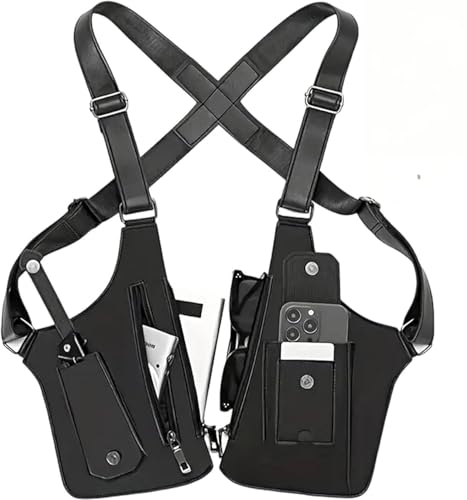
Hidden Underarm Shoulder Bag is a concealed underarm shoulder bag, not a wallet, so it suits buyers who want more storage than a pocket-sized pouch. The product name specifies double pockets and an adjustable strap; the dimensions are 10.8 × 6.1 × 10.8 inches. It is intended to hold items such as a phone, keys, and cash beneath clothing. Unlike a front-pocket wallet, this carry style involves a strap and a larger form, which may be less convenient for quick access. Confirm that the bag’s fit works with your clothing before relying on concealed carry.
Bottom line: Choose this if underarm storage for several small essentials suits your outfit.
LOUEBICA RFID Blocking Card

LOUEBICA RFID Blocking Card is a card-shaped RFID shield, not a wallet or physical anti-pickpocket solution. At 0.03 inch thick and standard credit-card size, it is designed to sit with contactless cards and block electronic scanning signals. That makes it relevant to concerns about RFID skimming, a different risk from someone taking a wallet from a pocket or bag. The product claims protection for RFID-enabled cards and passports; a single shield does not secure belongings physically or change where you carry them. Choose it only if contactless-signal blocking is the concern you want to address.
Bottom line: Choose this for an RFID-blocking insert, not physical theft protection.
How to choose a wallet to avoid pickpockets
Choose a carry style that keeps the wallet under clothing or in a pocket you can monitor. A concealed pouch is useful when carrying passports and travel cash; a slim front-pocket wallet is easier for daily access. In crowded transit or queues, keep your bag or pocket in front of you and avoid placing valuables in an exposed back pocket. RFID shielding addresses electronic scanning, not a person reaching into a pocket. A practical rule: if you cannot feel or see your wallet while standing in a crowd, move it to a secure inner or front pocket before entering. Carry only the cards and cash needed for the outing, and keep a backup separately.
Concealed travel wallet versus front-pocket wallet
A concealed travel wallet prioritizes storage beneath clothing, while a front-pocket wallet prioritizes routine access. Travel pouches can hold passports and folded cash, but they are bulkier than a slim everyday wallet. Bifolds keep cards and bills together, though added cards create thickness even in a thin design. Underarm bags offer another concealed carry option, but they are bags rather than wallets and require a suitable fit under clothing. Use this comparison to match the carry format to what you actually need to carry.
| Carry need | Suitable format | Tradeoff |
|---|---|---|
| Passport and travel cash | Concealed travel pouch | More bulk than a card wallet |
| Daily cards and bills | Slim front-pocket bifold | Bulks up as cards are added |
| Phone, keys, and cash | Concealed underarm bag | Needs a comfortable strap fit |
| Contactless signal blocking | RFID shield card | Does not stop physical theft |
Where to carry a wallet in crowded places
A front or inner pocket is generally easier to monitor than a back pocket, especially in a crowded train, market, or queue. Keep a bag zipped and positioned in front of your body; avoid hanging it loosely behind you. Do not move valuables to a concealed location you cannot access comfortably, since repeated adjustments can draw attention and make the carry less secure. Separate backup cash or a spare payment card from your primary wallet, so one loss does not remove every payment option. For travel documents, carry only what you need for that day and keep the rest secured elsewhere.
RFID blocking and physical pickpocketing
RFID blocking is intended to reduce electronic reading of compatible contactless cards; it does not stop someone from taking a wallet. Physical theft prevention depends more on placement, access, and awareness: a wallet inside a secured pocket is harder to reach unnoticed than one in an open or back pocket. Do not treat a shielding card as a substitute for keeping a wallet close. If your concern is only RFID scanning, choose a shield designed for the cards you carry; if your concern is pickpocketing, prioritize a carry location you can monitor and a secure closure where relevant.
Frequently Asked Questions
Is a front-pocket wallet harder to pickpocket?
A front-pocket wallet is generally easier for you to monitor than one in a back pocket. In a dense crowd, keep your hand or attention near the pocket and avoid leaving it open.
Does RFID blocking prevent someone stealing a wallet?
No, RFID blocking addresses electronic scanning rather than physical theft. Keep the wallet in a secure pocket or a closed bag positioned where you can monitor it.
Where should I carry a passport while traveling?
Carry a passport in a secure inner pocket or concealed pouch when you do not need it for inspection. Keep a separate backup payment method apart from the passport and main wallet.
How many cards should I carry in a travel wallet?
Carry only the cards needed for the trip or outing, plus a backup payment option kept separately. Fewer cards reduce what you must replace if the wallet goes missing.
Can I use an underarm bag as a wallet?
An underarm bag can carry small essentials such as a phone, keys, and cash, but it is larger than a wallet. Check that its strap and concealed fit work comfortably with your clothing before carrying valuables in it.