
Best Radiator Stop Leak for Plastic: 3 Options Compared

Bar’s Leaks Liquid Aluminum Stop Leak is the best fit for most drivers because its packaging specifically says it seals leaks in plastic, aluminum and metal radiators. Choose another option if you prefer a pellet, tube or tablet format, or if you need a product with a clearly stated coolant-compatibility claim.
Radiator stop leak is a sealant added to engine coolant to address small leaks; it is not a substitute for replacing a cracked tank or repairing a major leak.
We earn a commission if you buy through links on this page. As an Amazon Associate I earn from qualifying purchases. Products are compared on manufacturer specifications, not hands-on testing.
- Best overall: Bar’s Leaks Liquid Aluminum Stop Leak – Its packaging explicitly identifies plastic radiators as compatible.
- Best for coolant flexibility: Bar’s Leaks Radiator Stop Leak 11 oz – The maker says it works with all coolant types and colors or water.
- Best for tube format: Visbella Radiator Stop Leak Sealer – A tube format may suit buyers who prefer it over a bottle or tablets.
| Product | Best for | Format | Amount | Shop |
|---|---|---|---|---|
| Bar’s Leaks Liquid Aluminum Stop Leak | Plastic radiator leaks | Liquid | 16.9 oz | Check Price on Amazon |
| Bar’s Leaks Radiator Stop Leak 11 oz | Coolant flexibility | Pelletized liquid | 11 oz | Check Price on Amazon |
| Visbella Radiator Stop Leak Sealer | Tube-format preference | Tube | — | Check Price on Amazon |
Radiator Stop Leak for Plastic
Compare the formula and plastic-compatibility claims before choosing a sealant for a radiator leak.
Bar’s Leaks Liquid Aluminum Stop Leak
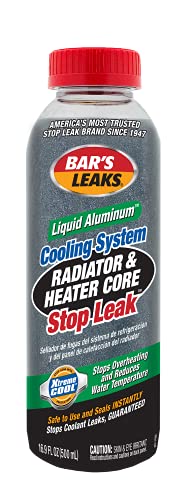
Bar’s Leaks Liquid Aluminum Stop Leak stands out for its explicit plastic-radiator claim and liquid format. The maker says the formula seals radiator, freeze-plug, gasket and heater-core leaks, including in plastic, aluminum and metal radiators. The 16.9-ounce container is the largest amount among these products. It suits buyers who want a plastic-compatible claim in a liquid product. Stop leak is intended for minor leaks, not a cracked radiator tank or a leak that rapidly empties the system; those problems call for repair rather than sealant.
Bottom line: Choose this if a plastic-radiator claim and liquid format are your priorities.
Bar’s Leaks Radiator Stop Leak 11 oz

Bar’s Leaks Radiator Stop Leak 11 oz differs with its dissolved-pelletized formula and a broad coolant-compatibility claim. The maker says it works with plastic, aluminum and metal radiators and with conventional, OAT and HOAT antifreeze, regardless of color, or straight water. It also says the formula lubricates the water-pump seal and inhibits rust and scale. This 11-ounce option suits drivers who need a range of coolant compatibility. Its amount is smaller than Bar’s Leaks Liquid Aluminum Stop Leak, so it may be a less natural fit when a larger stated container is the deciding factor.
Bottom line: Pick this when broad stated coolant compatibility matters more than container size.
Visbella Radiator Stop Leak Sealer

Visbella Radiator Stop Leak Sealer is the tube-format choice, with a maker claim covering plastics, metals, rubber, hoses and connections. The maker also says it is compatible with all antifreeze types, lubricates the water pump and is a one-step formula for cars, buses, trucks, vans, SUVs and RVs. That breadth may appeal when the vehicle is not a passenger car. As with other sealants, it is not a repair for a broken tank.
Bottom line: Choose this if you prefer a tube and want broad stated material compatibility.
How radiator stop leak works
Radiator stop leak circulates with coolant and is intended to seal small leak paths, rather than restore broken parts. Plastic radiator tanks are commonly made from glass-reinforced nylon, and a leak at a seam or hairline crack is different from a split tank or failed hose. Sealant cannot replace damaged plastic. A practical decision rule is to use sealant only when coolant loss is slow and the leak is minor; if the system empties quickly or the engine temperature rises, stop driving and arrange a mechanical repair. Do not open a hot radiator cap: pressurized coolant can spray and cause severe burns. Let the engine cool completely before working near the cap or coolant.
Choosing a plastic radiator sealant
Start with the product’s compatibility, then match the format and coolant claim to the vehicle. A label that names plastic radiators is a clearer fit than a general radiator-seal claim, while broad antifreeze compatibility is useful when the coolant chemistry is uncertain. Coolant colors alone do not identify chemistry; conventional, OAT and HOAT formulas can use different inhibitor packages. Use only one sealant, and follow its package dosage for the cooling-system capacity rather than estimating by container size. If the leak is at a hose, clamp, tank seam or radiator core, locating the leak first helps distinguish a minor seep from a failed component that requires replacement.
Liquid, pellet and tablet formats compared
Format changes how a sealant is introduced, but it does not prove that the product suits every radiator. Liquid and pelletized products are poured into the cooling system, while tablets are placed according to their package directions. The comparison below shows the main practical tradeoffs; check the specific vehicle and product directions before use.
| Format | Useful when | Check before choosing |
|---|---|---|
| Liquid | You want a pour-in product | Plastic and coolant compatibility |
| Pelletized | You prefer a dissolved-pellet formula | Coolant compatibility and dose |
| Tube | You prefer a tube format | Application directions and dose |
| Tablets | You specifically want tablets | Plastic compatibility and dose |
When stop leak is the wrong repair
Stop leak is a poor substitute for mechanical repair when coolant loss is rapid, a tank is cracked open, or a hose or connection has failed. A cooling system must hold pressure to manage engine heat; a leaking system can lose coolant and overheat before a sealant can address the leak. Never remove a radiator cap while the engine is hot, and do not continue driving if the temperature gauge climbs or a warning light appears. After the engine is fully cool, inspect for the leak source and check the coolant level. Persistent leakage after a sealant application is a reason to have the cooling system diagnosed, not to keep adding products.
Frequently Asked Questions
Can radiator stop leak seal a plastic radiator tank?
Some products claim compatibility with plastic radiators, but sealant is intended for minor leaks rather than a split tank or major crack. If coolant loss is rapid, use a mechanical repair instead.
Can I add stop leak to hot engine coolant?
No; wait until the engine has cooled completely before opening the cooling system. A hot system can be pressurized, and escaping coolant can cause severe burns.
Does coolant color tell me which type I have?
Conventional, OAT and HOAT coolants use different inhibitor packages, so check the vehicle and coolant labels for compatibility.
How much radiator stop leak should I use?
Use the package dose for the cooling-system capacity rather than estimating from the container size. Too much sealant is not a substitute for diagnosing a leak or repairing damaged parts.
When should I stop driving with a radiator leak?
Stop if the engine temperature rises, a warning appears, or coolant is escaping quickly. Continuing with inadequate coolant can lead to overheating; let the engine cool before checking the system.