
Heaters for Horse Water Troughs: 4 Models Compared

For most horse owners, 500W Stock Tank Heater is the clearest fit because it is a 500W submersible heater sized for 41- to 100-gallon tanks. Choose Qanskm 500W Utility De-Icer for smaller 5- to 50-gallon containers or 1500W Rubbermaid Stock Tank Heater if you have a compatible Rubbermaid tank; tank fit and drain-hole size decide whether that model works.
A trough de-icer warms water to help prevent ice formation, but wattage, weather exposure and water volume affect how well a heater can keep up.
We earn a commission if you buy through links on this page. As an Amazon Associate I earn from qualifying purchases. Products are compared on manufacturer specifications, not hands-on testing.
- Best overall: 500W Stock Tank Heater – Its 41- to 100-gallon range directly covers many horse trough sizes.
- Best for Rubbermaid tanks: 1500W Rubbermaid Stock Tank Heater – It is designed for Rubbermaid tanks from 50 to 300 gallons, subject to the drain-hole fit.
- Best for small containers: Qanskm 500W Utility De-Icer – Its intended 5- to 50-gallon range suits smaller waterers and containers.
| Product | Best for | Wattage | Tank fit | Body material | Shop |
|---|---|---|---|---|---|
| 500W Stock Tank Heater | Mid-size troughs | 500W | 41–100 gal | Painted PTFE aluminum | Check Price on Amazon |
| 1500W Rubbermaid Stock Tank Heater | Rubbermaid tanks | 1500W | 50–300 gal Rubbermaid | — | Check Price on Amazon |
| 500W Cast Aluminum De-Icer | Farm waterers | 500W | Poultry, horse or cattle containers | Cast aluminum | Check Price on Amazon |
| Qanskm 500W Utility De-Icer | Small waterers | 500W | 5–50 gal | — | Check Price on Amazon |
Heaters for horse water troughs compared
Match the heater’s wattage and tank fit to your trough before choosing a model.
500W Stock Tank Heater

The 41- to 100-gallon tank range is the key distinction of this 500W submersible heater. Its aluminum body has a painted PTFE finish, and the built-in thermostat is described as turning on below 50°F and shutting off around 95°F. That makes it a straightforward match for a horse trough in its volume range. The limitation is the capacity boundary: a tank smaller than 41 gallons or larger than 100 gallons falls outside the fit, so owners should choose a different match rather than assume the same performance.
Bottom line: Choose this when your trough holds 41 to 100 gallons.
1500W Rubbermaid Stock Tank Heater

Rubbermaid compatibility, rather than a general tank range, sets this 1500W submersible heater apart. It is intended for 50-, 70-, 100-, 150- and 300-gallon Rubbermaid tanks, and the drain-plug opening must be wider than 1.75 inches for the fit described. This narrow fit is useful for owners with a matching Rubbermaid tank, but it is not the pick for a trough from another manufacturer or a tank without the required opening.
Bottom line: Choose this for a compatible Rubbermaid tank with a drain opening wider than 1.75 inches.
500W Cast Aluminum De-Icer

Cast aluminum construction distinguishes this 500W de-icer from the painted aluminum and unspecified-body options. It is described for poultry buckets as well as horse and cattle water containers, and its automatic thermostat cycles heating without manual temperature adjustment.
Bottom line: Choose this if cast aluminum and broad farm-container use matter more than a tank-size range.
Qanskm 500W Utility De-Icer
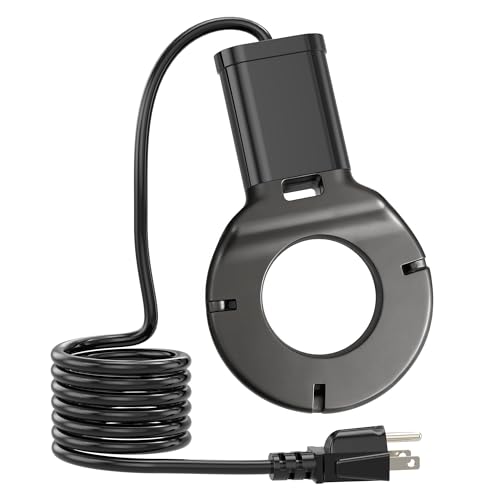
The 5- to 50-gallon range makes this 500W de-icer the small-container option among these choices. It is described for buckets, small animal waterers and birdbaths, and also names horses among the animals it can serve. Its thermostat is said to start below 35°F and shut off at 77°F, and the unit has a 10-foot power cord. That narrower capacity is the main limitation for horse owners: choose it for a smaller waterer, not a large trough that exceeds 50 gallons.
Bottom line: Choose this for a horse waterer holding 5 to 50 gallons.
How to choose a horse trough heater
Start with the trough’s actual water capacity, then match the heater to that volume and the winter conditions. The options here range from 500W units for containers up to 100 gallons to a 1500W model for Rubbermaid tanks up to 300 gallons; those product ranges are not a universal wattage chart. Water freezes at 32°F, and wind and exposed surfaces increase heat loss, so a trough in a sheltered barn may need less heat than the same volume outdoors. A useful decision rule is to favor a heater with a capacity range that includes your trough rather than extrapolating from wattage alone. Also confirm the heater’s fit and thermostat behavior before relying on it during freezing weather.
Choose by fit: the Rubbermaid model requires a drain opening wider than 1.75 inches, while the smaller-container model is intended for 5- to 50-gallon vessels.
| Need | Suitable stated fit |
|---|---|
| 41–100 gallons | 500W stock tank heater |
| 50–300 gallon Rubbermaid tank | 1500W Rubbermaid heater; opening wider than 1.75 inches |
| 5–50 gallons | 500W utility de-icer |
| Horse container with no stated capacity range | 500W cast aluminum de-icer; verify wattage for conditions |
Safe installation around water and electricity
Use a ground-fault circuit interrupter (GFCI) on outdoor power serving a water trough, and keep plugs and connections out of standing water. A GFCI is designed to cut power when it detects current leaking from the circuit, reducing shock risk; it does not make damaged cords or wet connections safe. Submersible heaters must remain in the water as intended, since operating a heating element out of water can create a burn or fire hazard. Secure the cord so horses cannot chew, snag or pull it, and check it regularly for cracked insulation. The heater’s thermostat does not replace daily attention: verify water remains available and the device is positioned as intended, especially after a cold night or when the trough level drops.
Thermostats and freezing conditions
A thermostatic de-icer cycles on and off instead of heating continuously, but the activation and shutoff temperatures differ by model. Among these options, one unit is described as turning on below 50°F and shutting off around 95°F, while another starts below 35°F and stops at 77°F. Those temperatures describe when the controls operate, not a guarantee that every trough will stay ice-free in every weather condition. Wind, trough shape, water volume and how often animals drink all change heat loss. Place the heater where its thermostat can respond to the water conditions, and check the trough during the coldest part of the day when temperatures remain below freezing.
Common horse trough heater fit mistakes
The most common fit mistake is choosing by wattage while ignoring tank capacity or mounting geometry. A 500W unit intended for 5 to 50 gallons is not automatically suitable for a large trough, and a heater designed for a Rubbermaid drain opening may not fit another tank style. Measure the trough’s approximate usable volume and, for a drain-mounted model, measure the opening before purchase. Another mistake is testing a thermostatic unit while it is already warm: the Rubbermaid model’s instructions say to chill it in a freezer for about 10 minutes before testing. Finally, do not let a falling water level expose a submersible heater. Keep enough water to cover the element and inspect the cord and housing as part of routine winter checks.
Frequently Asked Questions
At what temperature does trough water freeze?
Water freezes at 32°F under ordinary conditions. Wind and exposure can increase heat loss, so an exposed trough may need more heating than a sheltered one.
How many watts does a horse trough heater need?
There is no single wattage that fits every trough; these choices include 500W units for specified ranges up to 100 gallons and a 1500W Rubbermaid model for tanks up to 300 gallons. Match the tank to the heater’s fit and account for cold, wind and exposure rather than relying on wattage alone.
Can I use a Rubbermaid heater on another tank?
The 1500W unit is described for specified Rubbermaid tanks and requires a drain-plug opening wider than 1.75 inches. Measure the opening and verify the tank is compatible before choosing it.
Do thermostatic trough heaters run all the time?
A thermostat cycles heating on and off at its control temperatures rather than running continuously. For example, the models here give different control points: below 50°F with shutoff around 95°F, or below 35°F with shutoff at 77°F.
Is a GFCI needed for a trough heater?
Use GFCI protection for outdoor electrical power around a water trough to reduce shock risk from ground faults. Keep connections dry and inspect cords, since GFCI protection does not make damaged or submerged connections safe.