
Faux Leather Spray Paint: 4 Options Compared

NADAMOO Black Leather & Vinyl Spray is the strongest fit for most faux leather touch-ups because it is a black spray made for leather and vinyl, while SM Arnold Tan Refinishing Spray is the tan aerosol option. Faux leather is commonly a coated fabric, such as vinyl or polyurethane, so a coating intended for leather or vinyl is a closer match than general-purpose spray paint.
Choose Furniture Clinic Dark Brown Repair Paint if you want a small bottle that can be sprayed, brushed or sponged; choose FORTIVO Dark Brown Recoloring Balm for a hand-applied balm rather than an aerosol.
We earn a commission if you buy through links on this page. As an Amazon Associate I earn from qualifying purchases. Products are compared on manufacturer specifications, not hands-on testing.
- Best overall: NADAMOO Black Leather & Vinyl Spray – A 13-ounce black semi-gloss spray made for leather and vinyl.
- Best for tan: SM Arnold Tan Refinishing Spray – An 11-ounce tan aerosol formulated for leather and several automotive surfaces.
- Best for flexible application: Furniture Clinic Dark Brown Repair Paint – A 1.7-ounce paint that can be applied by brush, sponge or spray.
| Product | Best for | Color | Amount | Application | Shop |
|---|---|---|---|---|---|
| NADAMOO Black Leather & Vinyl Spray | Black upholstery | Black, semi-gloss | 13 oz | Aerosol spray | Check Price on Amazon |
| SM Arnold Tan Refinishing Spray | Tan automotive trim | Tan | 11 oz | Aerosol spray | Check Price on Amazon |
| Furniture Clinic Dark Brown Repair Paint | Small brown repairs | Dark brown | 1.7 oz | Brush, sponge or spray | Check Price on Amazon |
| FORTIVO Dark Brown Recoloring Balm | Hand-applied brown color | Dark brown | — | Balm | Check Price on Amazon |
Faux Leather Spray Paint and Color Restorers
Match the coating color and application format to the surface and size of the repair.
NADAMOO Black Leather & Vinyl Spray

For a black aerosol specifically aimed at leather and vinyl, this NADAMOO can is the direct match among these choices. The 13-ounce can has a semi-gloss finish, and the brand says its coating is flexible and crack-resistant. That makes it a candidate for larger seat, couch or shoe surfaces where a brush-free application is useful. The limitation is its single black color and semi-gloss sheen; it is a poor match when the original material is tan, brown or matte, or when a precise small-area touch-up is the priority.
Bottom line: Pick this for black leather or vinyl areas where a spray format and semi-gloss finish suit the project.
SM Arnold Tan Refinishing Spray

The tan color separates this automotive refinishing aerosol from the black option, and the 11-ounce can is intended for leather as well as carpet, metal and several plastics. SM Arnold says the formula is non-cracking and fade-resistant. Its broader material range can suit a mixed-material interior project, but color matching matters: tan names cover many shades, so compare against an inconspicuous section before coating a visible panel. This is not the best format for a tiny scratch, where overspray can extend beyond the repair.
Bottom line: Choose this when tan color and automotive materials are the main requirements.
Furniture Clinic Dark Brown Repair Paint
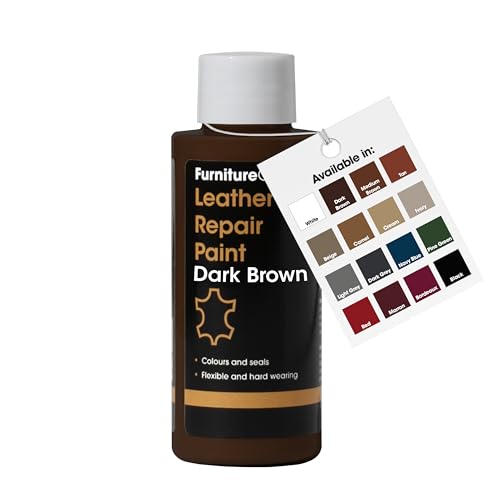
Unlike the aerosol options, this dark brown repair paint comes in a 1.7-ounce bottle and supports brush, sponge or spray application. Furniture Clinic says the paint dries flexible and recommends a 24-hour cure before use. The small container and several application methods suit localized worn or faded areas, or a project where aerosol overspray is undesirable. It is not an aerosol can, and its dark brown shade will not suit black or tan upholstery. The brand also gives a full-cure interval, so immediate use after application is not the right plan.
Bottom line: Pick this for a small dark brown repair where you want control over the application method.
FORTIVO Dark Brown Recoloring Balm

FORTIVO is a dark brown recoloring balm, not spray paint, making it the hand-applied alternative for leather or vinyl color work. The compact container weighs about 0.53 pound, and its balm format may be preferable when you want to work directly on a localized surface rather than spray a larger area. Its limitation is the format: it does not provide aerosol coverage, and the dark brown color is specific. Buyers seeking an even spray finish over a broad faux leather panel should choose an aerosol made for leather or vinyl instead.
Bottom line: Choose this when you prefer hand application and need dark brown recoloring balm.
How to choose faux leather spray paint
Start with the surface material and color, then select the application format. Faux leather commonly uses a polyurethane or PVC coating over fabric; a coating made for leather or vinyl is a more relevant match than general-purpose paint intended for hard surfaces. Aerosols cover broad panels quickly, while brushable paint or balm gives more control on a small worn patch. Color names are not reliable shade standards, so compare a sample with the existing surface in daylight. With a repair smaller than a few inches across, use a controlled brush or sponge method when available to limit overspray. A glossy coating can also look different from matte or textured upholstery, so test an inconspicuous area before treating a visible panel.
| Project need | Better format |
|---|---|
| Broad matching panel | Leather or vinyl aerosol in a matching color |
| Small localized area | Brush, sponge or balm application |
| Mixed automotive materials | Formula explicitly intended for those surface types |
Prepare faux leather before applying color
Surface preparation is central to adhesion: remove loose dirt and oily residue, then let the coating dry fully before adding color. Do not sand aggressively through the thin decorative layer; exposed fabric or a peeling topcoat may not accept a cosmetic coating evenly. Apply a small test patch in a hidden location and check its color, sheen and flexibility after it cures. For an aerosol, keep the can moving and use light overlapping passes instead of one heavy coat; heavy application can pool in seams and texture. Mask surrounding trim and use the product only in a well-ventilated area, away from flames, sparks and heat sources. Aerosol propellants and many coatings are flammable.
Match the finish and repair size
Finish and repair scale can change the result as much as color. A semi-gloss spray will stand out against a matte seat, while a textured or pebbled surface may remain visibly different if coating fills its grain. Use a test patch to evaluate sheen from normal viewing distance, not only close up. For large, continuous areas, an aerosol can create a more uniform coat than repeated dabs, provided the surface is masked and the spray distance remains steady. For narrow seams, small scuffs or edges, a brush or sponge can keep color off adjacent trim. A color mismatch across a broad panel is harder to disguise than one on a small spot, so confirm the shade before treating the full area.
Use and cure leather color coatings safely
Allow coating to cure before returning upholstery to regular use; the 24-hour cure recommendation for the brushable repair paint illustrates why dry-to-touch and ready-for-use are not always the same. Check the container’s own application and cure directions, especially before sitting on a treated seat or folding a coated shoe. Ventilate the work area and keep aerosol cans away from heat, sparks and open flame. Protect nearby glass, fabric and plastic from overspray, and do not spray toward people or pets. If the faux leather is peeling, cracked through, or exposing its fabric backing, recoloring alone will not rebuild the damaged layer; repair or replacement may be needed for a durable appearance.
Frequently Asked Questions
Can spray paint be used on faux leather?
Yes, use a coating made for leather or vinyl rather than assuming general-purpose paint will adhere to a flexible coated surface. Test a hidden patch first for color, sheen and flexibility before covering a visible area.
How many coats of faux leather paint should I apply?
Use light, even coats rather than one heavy pass, because excess coating can pool in seams and texture. The proper number depends on coverage, so stop when the test area matches without obscuring the surface grain.
How long should faux leather paint cure?
Cure time depends on the specific coating and conditions; one brushable repair paint recommends 24 hours before use. Keep upholstery out of service until the coating’s cure period has passed, even if the surface feels dry sooner.
How do I keep spray paint off nearby surfaces?
Mask adjacent trim and cover a wider area than the repair, since aerosol mist travels beyond the target. Apply outdoors or with strong ventilation, keep the can moving, and avoid flames, sparks and hot surfaces.
Can I spray paint a peeling faux leather seat?
A coating can change color but cannot restore a peeling top layer or rebuild exposed fabric backing. If the surface is lifting or cracked through, address the material damage rather than relying on recoloring alone.