
1 Inch Air Impact Guns: 5 Models Compared

The Ingersoll Rand 2850MAX Ingersoll Rand 2850MAX suits many buyers because it combines 2,100 ft-lb of reverse torque with a 19.43-lb body that is shorter than the other options. Choose a different model if you need a longer anvil for reach or a specified forward-torque rating.
A 1-inch air impact gun is a pneumatic wrench for large fasteners; compressor capacity and air delivery must match the tool’s requirements.
We earn a commission if you buy through links on this page. As an Amazon Associate I earn from qualifying purchases. Products are compared on manufacturer specifications, not hands-on testing.
- Best overall: Ingersoll Rand 2850MAX – Its 19.43-lb weight and 13.1-inch length make it the lightest and shortest option, with up to 2,100 ft-lb reverse torque.
- Best for tire service: Chicago Pneumatic CP7782-6 – The D-handle and side handle are designed for tire-changing and industrial applications.
- Best for extra reach: VEVOR 1-Inch Air Impact Wrench, 8-Inch Anvil – Its 8-inch anvil extends farther than the 6-inch anvils on the other models.
| Product | Best for | Anvil length | Weight | Shop |
|---|---|---|---|---|
| Ingersoll Rand 2850MAX | lighter handling | — | 19.43 lb | Check Price on Amazon |
| Ingersoll Rand 285B-6 | forward torque | 6 in | 27.8 lb | Check Price on Amazon |
| Chicago Pneumatic CP7782-6 | tire service | 6 in | 25.6 lb | Check Price on Amazon |
| VEVOR 1-Inch Air Impact Wrench, 8-Inch Anvil | extended reach | 8 in | 33.95 lb | Check Price on Amazon |
| VEVOR 1-Inch Air Impact Wrench, 5,175 ft-lb | high reverse torque | 8 in | 46 lb | Check Price on Amazon |
1 Inch Air Impact Guns Compared
Compare torque direction, anvil reach, and weight to match a wrench to your work and handling needs.
Ingersoll Rand 2850MAX

At 19.43 lb and 13.1 inches long, Ingersoll Rand 2850MAX is the lightest and shortest wrench here. Ingersoll Rand says it produces up to 2,100 ft-lb of reverse torque. Its rotating D-handle can be adjusted to suit the work angle, and the swivel-hose connection is intended to reduce hose tangling. This form suits mechanics who want a shorter tool for assembly, disassembly, and suspension work. The air compressor and accessories are not included, so buyers without compatible shop air will need to account for that separately.
Bottom line: Choose this if low tool weight and shorter reach matter more than an extended anvil.
Ingersoll Rand 285B-6
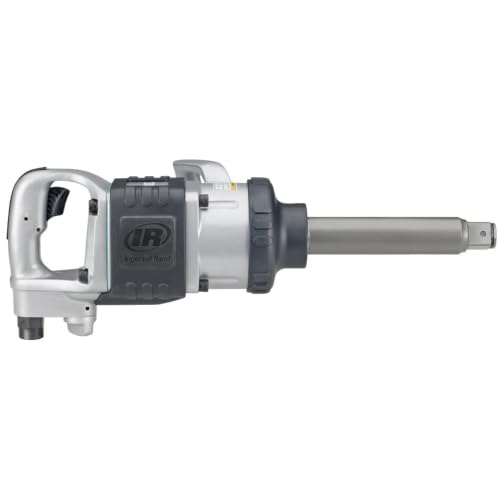
Unlike the reverse-torque figures on several other wrenches here, Ingersoll Rand 285B-6 specifies up to 1,475 ft-lb of forward torque. Ingersoll Rand says its 6-inch extended anvil, dual handles, three-position power regulator, and feather-touch trigger support access and control in heavy-duty automotive work. The 20.4-inch tool weighs 27.8 lb, so its longer reach comes with more handling burden than the shorter 2850MAX. It is sold individually, without an air compressor or accessories; factor in the air supply and the weight before choosing it for frequent overhead or extended use.
Bottom line: Pick this when forward-torque output and a 6-inch extended anvil fit the job.
Chicago Pneumatic CP7782-6

Chicago Pneumatic CP7782-6 combines a D-handle with a side handle, a grip arrangement suited to tire-changing work and industrial tasks. Chicago Pneumatic says the wrench delivers up to 1,920 ft-lb of maximum torque in reverse; it also uses a pinless, closed reinforced rocking-dog mechanism. The 6-inch extended anvil provides reach while keeping the overall length to 23 inches, and the tool weighs 25.6 lb. This is a reasonable fit for a shop prioritizing two-hand control. Its torque figure is specifically for reverse, so do not compare it directly with a forward-torque figure as if they measured the same direction.
Bottom line: Choose this for tire-changing work where the D-handle and side handle suit your grip.
VEVOR 1-Inch Air Impact Wrench, 8-Inch Anvil

VEVOR 1-Inch Air Impact Wrench, 8-Inch Anvil has an 8-inch anvil, two inches longer than the 6-inch options, for reaching fasteners farther inside a wheel or assembly. VEVOR says the wrench produces up to 2,900 ft-lb of torque and 3,160 ft-lb of breakaway torque. Its D-shaped handle cavity and rubber anti-slip strip are intended to aid control, while the aluminum body weighs 33.95 lb. The longer reach may help where access is the priority, but this tool is heavier than the shorter IR and Chicago Pneumatic choices; consider handling demands if work involves repeated repositioning.
Bottom line: Choose this when an 8-inch anvil provides useful access to recessed fasteners.
VEVOR 1-Inch Air Impact Wrench, 5,175 ft-lb

VEVOR 1-Inch Air Impact Wrench, 5,175 ft-lb pairs an 8-inch anvil with the highest torque figures in this group: VEVOR says it delivers up to 4,950 ft-lb and reaches 5,175 ft-lb breakaway torque. Its D-shaped handle cavity, rubber anti-slip strip, and pinless clutch mechanism are intended for heavy-duty machinery and vehicle work. At 46 lb and 25.6 inches long, it is also the heaviest and longest option here. That size can be a drawback for frequent repositioning or cramped bays, so reserve it for work where its reach and stated output are more important than easy handling.
Bottom line: Pick this for heavy-duty work when its 8-inch reach and larger stated torque figures are priorities.
How to choose a 1-inch air impact gun
Choose by drive size, torque direction, reach, and the work cycle rather than by the largest torque number alone. A 1-inch drive is intended for large fasteners and heavy service; the torque figures across these tools are not directly comparable when one is forward torque and another is reverse or breakaway torque. For routine wheel or machinery work, match the anvil length to how recessed the fasteners are, then consider tool weight if you reposition it often. A model weighing 40 lb or more is a substantial handling commitment compared with one near 20 lb. Before selecting any pneumatic wrench, confirm the compressor can maintain the tool maker’s specified pressure and airflow while the wrench is running; tank size alone does not determine sustained air delivery.
Air supply and compressor fit
Many pneumatic impact wrenches are designed around 90 psi of inlet pressure, but airflow demand differs by model and duty cycle. A compressor must supply the required cubic feet per minute (CFM) at that pressure, not merely reach the pressure briefly; a small tank can cause pressure to sag during repeated impacts. Use a properly sized hose and fittings, since restrictive or long hoses can reduce air delivered at the tool. Check the wrench’s required pressure and CFM against the compressor’s delivered output before buying, especially for shop use with repeated fasteners. Drain moisture from the compressor tank, and use the air-line lubrication method specified for the tool. Disconnect the air supply before servicing or changing sockets.
Anvil length and handling
Anvil length controls how far the socket can reach past the body, while overall tool length and weight affect maneuvering. A 6-inch extended anvil is a useful middle ground for recessed wheel fasteners; an 8-inch anvil adds reach but may make a wrench longer and harder to control in a tight bay. If the available clearance is under 4 inches around the fastener, measure the approach path and socket clearance before choosing an extended-anvil tool, since added length does not guarantee the body itself will fit. Larger impact wrenches can transmit substantial reaction force, so maintain a two-hand grip where handles are provided and keep other people clear of the work area.
Torque ratings and safe fastener work
Torque output, reverse torque, and breakaway torque are different measures; a breakaway figure describes loosening force, not a final tightening setting. Use an impact-rated socket sized to the fastener, because standard chrome sockets can crack under impact loading. For wheel nuts and other critical fasteners, use the vehicle or equipment manufacturer’s specified torque and finish tightening with a calibrated torque wrench rather than relying on an impact wrench’s power setting. Wear eye and hearing protection around pneumatic impact tools, and secure the workpiece before applying torque. A torque regulator helps control the tool but does not replace a measured final torque value.
Frequently Asked Questions
What compressor size does a 1-inch impact wrench need?
Compressor sizing depends on the wrench’s required CFM at its specified inlet pressure, not just the tank’s gallon capacity. Many impact tools use about 90 psi, but confirm the individual tool’s air requirement and allow enough delivered CFM for the duty cycle.
Can an impact wrench tighten lug nuts accurately?
An impact wrench is not a reliable final torque gauge, even when it has a power regulator. Tighten lug nuts to the vehicle maker’s torque specification with a calibrated torque wrench, and recheck in the sequence the maker recommends.
What socket should I use on a 1-inch impact gun?
Use a correctly sized impact-rated socket with a 1-inch drive. Impact sockets use thicker walls and tougher material than common chrome sockets, which can fracture under repeated impact loading.
How long should an extended anvil be?
Choose the shortest anvil that reaches the fastener with room for the socket and tool body. A 6-inch extension suits many recessed applications, while an 8-inch anvil can help when fasteners sit farther inside an assembly.
Why does a pneumatic impact wrench lose power?
Low pressure or insufficient airflow at the tool commonly reduces impact performance. Check the regulator, hose and fittings for restrictions, then compare the running pressure and compressor CFM with the wrench’s specified requirements.