
2-Hole Paper Punches Compared by Capacity and Effort

For most people, Officemate 50-Sheet 2-Hole Punch is the best fit because its 50-sheet capacity suits larger batches while its adjustable guide helps align pages. Choose Officemate 30-Sheet 2-Hole Punch or 30-Sheet Punch with 3.15-Inch Spacing for a smaller 30-sheet capacity; Bostitch EZ Squeeze 2-Hole Punch suits people prioritizing reduced effort, while Swingline 28-Sheet 2-Hole Punch combines reduced effort with a 28-sheet limit.
A 2-hole paper punch makes paired holes for filing, but hole spacing and diameter matter when pages must fit an existing binder or folder.
We earn a commission if you buy through links on this page. As an Amazon Associate I earn from qualifying purchases. Products are compared on manufacturer specifications, not hands-on testing.
- Best overall: Officemate 50-Sheet 2-Hole Punch – The 50-sheet capacity is the largest here, and an adjustable guide supports alignment.
- Best for standard spacing: 30-Sheet Punch with 3.15-Inch Spacing – Its 3.15-inch spacing and 9/32-inch holes are specified.
- Best for low effort: Bostitch EZ Squeeze 2-Hole Punch – EZ Squeeze technology is said to require 5% less force.
- Best for reduced effort: Swingline 28-Sheet 2-Hole Punch – Its reduced-effort design is said to require 50% less manual force than traditional punches.
| Product | Best for | Capacity | Hole diameter | Shop |
|---|---|---|---|---|
| Officemate 50-Sheet 2-Hole Punch | Larger batches | 50 sheets | — | Check Price on Amazon |
| Officemate 30-Sheet 2-Hole Punch | Guided daily filing | 30 sheets | — | Check Price on Amazon |
| 30-Sheet Punch with 3.15-Inch Spacing | Known hole spacing | 30 sheets | 9/32 in | Check Price on Amazon |
| Swingline 28-Sheet 2-Hole Punch | Reduced-effort batches | 28 sheets | 1/4 in | Check Price on Amazon |
| Bostitch EZ Squeeze 2-Hole Punch | Compact small batches | 20 sheets | — | Check Price on Amazon |
2 hole paper punches
Compare capacity, alignment features and stated effort claims to match the punch to your filing routine.
Officemate 50-Sheet 2-Hole Punch
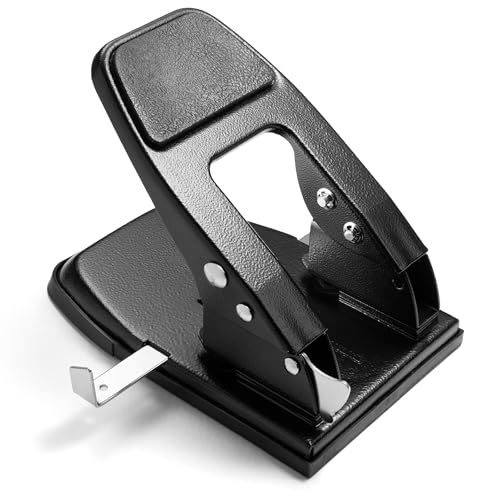
Officemate 50-Sheet 2-Hole Punch separates itself with a 50-sheet capacity, the largest among these punches, for people who regularly prepare substantial stacks. Its adjustable paper guide helps align pages, and padded handles are intended to reduce hand fatigue during repeated punching. The punch has a metal base and heads and an easy-clean chip tray. The medium-duty design is a better match for frequent office or classroom work than for someone who only needs a compact punch for occasional, small batches.
Bottom line: Choose this for the largest capacity and frequent batch filing.
Officemate 30-Sheet 2-Hole Punch

Officemate 30-Sheet 2-Hole Punch offers a straightforward 30-sheet capacity with a metal body, adjustable paper guide and removable chip tray. The guide helps keep pages aligned, while the tray makes collected paper scraps easier to empty. At 6.22 inches long and 4.53 inches wide, it has a defined footprint for a desk or shared work area. Its 30-sheet limit is below Officemate 50-Sheet 2-Hole Punch’s 50 sheets, so buyers preparing larger stacks should expect to split them into more batches.
Bottom line: Choose this for routine filing in batches of up to 30 sheets.
30-Sheet Punch with 3.15-Inch Spacing

30-Sheet Punch with 3.15-Inch Spacing is the only option here with both hole spacing and hole diameter specified: 3.15 inches between holes and 9/32-inch holes. Those measurements make it easier to compare against an existing filing system before punching a stack. It also has a 30-sheet capacity, an adjustable guide, non-slip base and waste tray. The spacing is useful only if it matches the binder or folder you need; confirm the required spacing before buying for a nonstandard setup.
Bottom line: Pick this when matching a filing system with 3.15-inch spacing and 9/32-inch holes.
Swingline 28-Sheet 2-Hole Punch
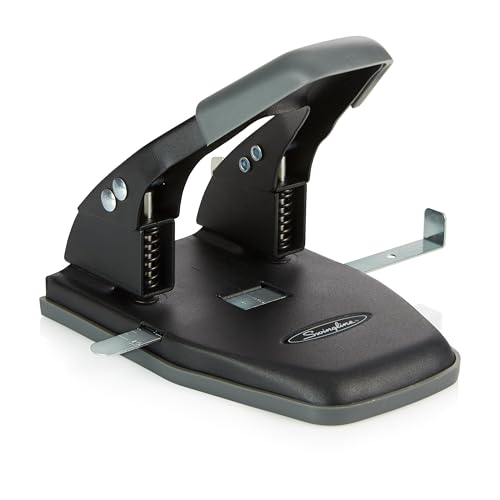
Swingline 28-Sheet 2-Hole Punch pairs a 28-sheet capacity with a comfort handle and an alignment guide. The maker says the design requires 50% less manual force than traditional hole punches, a claim that may matter when punching repeated batches. Its holes are 1/4 inch, and the punch has a removable tray and a handle that locks closed for storage. The capacity is slightly below the 30-sheet models, so it is less suited to buyers who want to minimize the number of separate punches for a large stack.
Bottom line: Choose this if a reduced-effort design matters more than maximum stack size.
Bostitch EZ Squeeze 2-Hole Punch

Bostitch EZ Squeeze 2-Hole Punch is the smallest-capacity option, with an EZ Squeeze mechanism and a locking handle for storage. The maker says its technology requires 5% less force, and it also describes the punch as no-jam. Its all-metal design, adjustable guide, non-slip base and easy-clean chip tray serve basic desk filing needs. At a 20-sheet limit, it is better suited to smaller stacks than bulk preparation; buyers who routinely punch more should compare the 28-, 30- and 50-sheet capacities instead.
Bottom line: Pick this for compact storage and small batches with a reduced-force mechanism.
How to choose a 2 hole paper punch
Choose capacity by your usual stack size, then check that the holes match the filing system. A punch rated for 20 sheets handles smaller batches; a 50-sheet capacity can reduce how often a large stack must be divided. Paper weight changes practical capacity: ratings are commonly based on standard 20-pound copy paper, and heavier stock makes the same stack harder to punch. Adjustable paper guides help keep pages aligned, but they do not establish hole spacing or diameter. If you file into an existing binder, compare the punched holes against its rings before processing a full batch. For stacks above the capacity, split the paper rather than forcing the handle.
Hole spacing and size for two-hole filing
Hole geometry determines whether pages sit properly on the rings. The specified measurements for 30-Sheet Punch with 3.15-Inch Spacing are 3.15 inches between holes and 9/32 inch in diameter, while Swingline 28-Sheet 2-Hole Punch specifies 1/4-inch holes. A 1/32-inch diameter difference can affect how freely paper moves on a ring, and spacing mismatch can prevent pages from fitting at all. Use the existing binder or folder as the reference when its required pattern is known; do not assume every two-hole punch makes interchangeable holes. This table isolates the measurements available among these choices.
| Measurement | Value | Use |
|---|---|---|
| 30-Sheet Punch with 3.15-Inch Spacing spacing | 3.15 in | Compare with the binder pattern |
| 30-Sheet Punch with 3.15-Inch Spacing hole diameter | 9/32 in | Compare with ring clearance |
| Swingline 28-Sheet 2-Hole Punch hole diameter | 1/4 in | Compare with ring clearance |
Capacity, effort and safe punching
Sheet capacity and handle design answer different needs: capacity limits batch size, while a padded or reduced-effort handle concerns the force used per punch. Punch ratings generally refer to ordinary copy paper, so reduce stack size for cardstock or mixed materials instead of pressing harder. A two-hole punch uses sharp metal cutters; keep fingers clear of the punch heads and never reach underneath the handle while pressing. Emptying a chip tray before it overfills helps avoid scraps interfering with the base or making cleanup harder. For frequent batches, prioritize a capacity that comfortably exceeds the stack you normally process rather than operating continuously at the maximum.
Paper alignment and cleanup
An adjustable guide helps repeat a chosen paper position, but it cannot guarantee compatibility with every filing format. Standard US letter paper measures 8.5 by 11 inches, and its edge should be seated squarely against the guide before punching; a skewed stack creates visibly uneven holes. Punch a single test sheet first when setting up a new filing pattern, then check it against the folder or binder. Chip trays catch paper chads and should be emptied before they become packed. A non-slip base can help hold position on a desk, while a locking handle reduces the space a punch occupies during storage.
Frequently Asked Questions
How many sheets should I punch at once?
Stay at or below the punch’s capacity, and use smaller stacks for thick or mixed-weight paper. Most capacities here range from 20 to 50 sheets, so check the model’s rating before pressing.
Are two-hole punch holes always the same distance apart?
No; verify the spacing against the binder or folder you plan to use. One option specifies 3.15 inches between holes, but that measurement should not be assumed for every punch.
What hole diameter fits a two-ring folder?
Match the hole diameter to the folder’s rings and the clearance you want. The specified options include 1/4-inch and 9/32-inch holes, so the two sizes are not identical.
Can a paper punch handle cardstock?
Capacity ratings are generally for standard copy paper, and cardstock is thicker and harder to cut. Use a small test stack and stop if the handle requires excessive force.
How can I keep punched holes aligned?
Square the paper edge against the adjustable guide and keep the stack from shifting during the press. A one-sheet test helps confirm placement before punching a larger batch.