
Best Lower Back Brace for Under Clothes: 3 Picks

For most people seeking a lower back brace under clothes, Realtop Ultra Thin Lumbar Support Brace is the clearest fit because it is described as ultra-thin and breathable mesh. Choose Sparthos Back Brace with Lumbar Pad or Lightweight Dual-Strap Lumbar Brace if their specific support features matter more; a brace with more structure or thicker materials may be harder to conceal under fitted clothing.
A lumbar brace wraps around the waist to provide compression and support; it does not replace medical care for persistent or severe back pain.
We earn a commission if you buy through links on this page. As an Amazon Associate I earn from qualifying purchases. Products are compared on manufacturer specifications, not hands-on testing.
- Best overall: Realtop Ultra Thin Lumbar Support Brace – Its ultra-thin profile and breathable mesh are specifically suited to discreet wear.
- Best for lightweight wear: Lightweight Dual-Strap Lumbar Brace – Its weight is about 4.2 ounces, with a neoprene bottom strap and dual elastic straps.
- Best for lumbar padding: Sparthos Back Brace with Lumbar Pad – It includes an adjustable lumbar pad and vertical support stays.
| Product | Best for | Support features | Size | Weight | Shop |
|---|---|---|---|---|---|
| Realtop Ultra Thin Lumbar Support Brace | Discreet daily wear | Mesh; dual-layer compression | Medium | — | Check Price on Amazon |
| Lightweight Dual-Strap Lumbar Brace | Lightweight support | Neoprene bottom strap; dual elastic straps | Medium | 4.2 oz | Check Price on Amazon |
| Sparthos Back Brace with Lumbar Pad | Padded lumbar support | Adjustable lumbar pad; vertical stays | Small | 13.8 oz | Check Price on Amazon |
Lower Back Braces for Under Clothes
Compare the support style, size, and stated weight to find a brace that suits your clothing and wear needs.
Realtop Ultra Thin Lumbar Support Brace

Designed around a slimmer profile, this brace is the most directly tailored to wearing beneath clothing. The maker describes breathable mesh, dual-layer compression, and adjustable straps with a hook-and-loop closure, so the wearer can adjust tightness. Its uses include work, sitting, and light activity. It suits someone who prioritizes a less bulky feel over a named lumbar pad or support stays. The specifications do not establish a size range, so confirm the fit for your waist before ordering.
Bottom line: Pick this if a discreet profile and adjustable compression are your priorities.
Lightweight Dual-Strap Lumbar Brace

At about 4.2 ounces, this is the lightest option with a weight, and its bottom strap is neoprene. The maker says the dual elastic straps provide adjustable compression and are intended to move with the body during bending, twisting, and sitting or standing. That combination may suit someone looking for a lightweight belt for daily activities beneath clothes. The materials and strap design are more specific than the fit guidance supplied, so check the waist sizing and return fit before relying on it for a particular outfit.
Bottom line: Choose this if low stated weight and dual adjustable straps matter most.
Sparthos Back Brace with Lumbar Pad
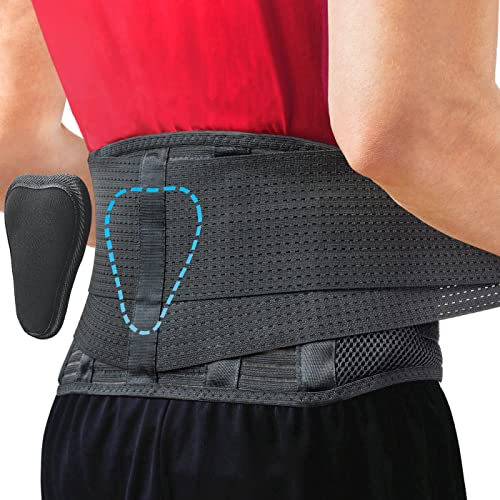
The adjustable lumbar pad and vertical support stays distinguish this brace from the lighter, mesh-focused options. The maker says the pad adds compression and the stays help stabilize the back; breathable fabric and an adjustable fit are also cited for wearing under clothes. It may suit someone who wants a more structured feel with a focused pad. At about 13.8 ounces, it is substantially heavier than the other brace with a weight, which may matter under close-fitting clothing. Check that the small size fits your waist.
Bottom line: Pick this if you want a lumbar pad and support stays in a structured brace.
How to Choose a Lower Back Brace for Under Clothes
Start with the brace profile and the clothing you plan to wear over it. A low-profile, flexible belt is generally easier to conceal under a fitted shirt than a tall or rigid support. Compare the closure, strap layout, and any pads or stays: added structure can change the shape under fabric. Fit matters too; measure your waist where the brace will sit and use the maker’s size range rather than choosing by clothing size. If a brace creates sharp pressure, restricts breathing, or causes tingling, loosen or remove it. A brace should feel secure, not painfully tight.
What to Check for Fit Under Clothing
Measure around the waist at the brace’s intended position, and check the maker’s sizing method before choosing a size. The products here provide limited comparable size guidance, so confirm the waist range before ordering. A practical fit check is to sit, stand, and bend gently while wearing the brace over a thin layer: if the edges roll or the closure shifts, the fit or placement may be wrong. Smooth, lightweight clothing can show less bulk than a fitted or thin fabric. Avoid sizing down to make a brace feel more supportive; extra tightness can cause discomfort without guaranteeing better support.
Brace Materials and Support Styles
Mesh favors airflow, while neoprene is stretchy and close-fitting; neither material alone establishes how much support a brace provides. Strap systems let wearers adjust compression, while a lumbar pad concentrates pressure in one area and stays add structure. Use the features table as a way to narrow the design, not as a ranking of medical effectiveness. For discreet wear, consider the garment layers and the brace’s profile; for structured support, consider whether a pad or stays are important to you. A brace that fits securely without restricting breathing is a more sensible choice than one tightened to its limit.
| Need | Feature to compare | Trade-off |
|---|---|---|
| Less visible under clothes | Thin profile and flexible construction | May offer fewer structured features |
| Adjustable compression | Elastic straps or hook-and-loop closure | Requires correct tension and placement |
| More structured feel | Lumbar pad or support stays | Can be more noticeable beneath clothing |
Safe Wear and Common Fit Mistakes
Wear a lumbar brace snugly enough to stay in place, but not so tightly that breathing or movement is restricted. A brace is an external support, not a cure for the cause of back pain; ongoing, severe, or worsening pain warrants guidance from a health professional. Do not assume that stronger compression means better support, and do not keep wearing a brace that causes numbness, tingling, or skin irritation. Check the skin after removing it, especially when wearing it for an extended period. Avoid using a brace to justify lifting a load beyond your ability or ignoring safe lifting technique.
Frequently Asked Questions
How should a lower back brace fit under clothes?
A brace should sit securely against the waist without rolling, slipping, or restricting breathing. Test it while sitting and standing, then loosen or remove it if it causes tingling or sharp pressure.
Can a lumbar brace be worn all day?
There is no single wear schedule that suits everyone, and the specifications here do not set one. Extended wear can cause discomfort or skin irritation, so take it off if symptoms develop and ask a clinician about ongoing use.
Should a back brace go over or under a shirt?
Either placement may work if the brace stays in position and does not irritate the skin. A thin layer beneath the brace can reduce rubbing, while wearing it over a shirt can make cleaning easier; check that the fabric does not cause slipping.
Does a tighter back brace provide more support?
No; the brace should feel secure without making breathing difficult or causing numbness or tingling. Tightening beyond a comfortable fit can cause problems rather than reliably adding useful support.
How do I measure for a lower back brace?
Measure around your waist where the brace will sit, following the maker’s specified measurement point. Waist measurements can differ from pants size, so use the brace’s size range and check the fit while moving gently.