
Activator Spray for Super Glue: 3 Options Compared

A fine-mist aerosol makes Starbond CA Glue Accelerator Spray, 6 oz a strong starting point for super glue accelerator, especially when controlled application and visible finishes matter. Choose Y’allCanDIY CA Activator Spray, 2-Pack for a two-can supply, or Magic Chems CA Glue Accelerator, 13.5 fl oz if you want a single 13.5 fl oz can; liquid activators are a different format.
These sprays accelerate cyanoacrylate (CA) adhesive curing; they are not a substitute for the glue itself. Confirm the spray is compatible with your adhesive and materials before use.
We earn a commission if you buy through links on this page. As an Amazon Associate I earn from qualifying purchases. Products are compared on manufacturer specifications, not hands-on testing.
- Best overall: Starbond CA Glue Accelerator Spray, 6 oz – Its fine-mist aerosol is designed for controlled application and to help minimize white residue.
- Best for a two-can supply: Y’allCanDIY CA Activator Spray, 2-Pack – The package contains two 13.5 fl oz cans.
- Best for a single large can: Magic Chems CA Glue Accelerator, 13.5 fl oz – The product is a 13.5 fl oz spray in a one-pack.
| Product | Best for | Size | Application | Shop |
|---|---|---|---|---|
| Y’allCanDIY CA Activator Spray, 2-Pack | Two-can supply | 2 × 13.5 fl oz | Spray | Check Price on Amazon |
| Starbond CA Glue Accelerator Spray, 6 oz | Visible finish work | 6 oz | Fine mist | Check Price on Amazon |
| Magic Chems CA Glue Accelerator, 13.5 fl oz | Single large can | 13.5 fl oz | Fine mist | Check Price on Amazon |
Activator Spray for Super Glue
Compare these CA accelerators by package size and the spray application each one offers.
Y’allCanDIY CA Activator Spray, 2-Pack

The two-can package distinguishes this activator from the single-can sprays. The maker describes it as a fast-drying accelerator for cyanoacrylate adhesives and names woodworking, repairs, crafts, and DIY projects among its uses. The compatible materials include wood, plastic, metal, rubber, ceramic, glass, leather, and MDF. It is an activator only, not glue, so you need separate CA adhesive for the bond. This is a practical fit when you want two cans on hand; choose a smaller package if you prefer less product in storage.
Bottom line: Choose this if a two-can supply and broad material compatibility suit your work.
Starbond CA Glue Accelerator Spray, 6 oz
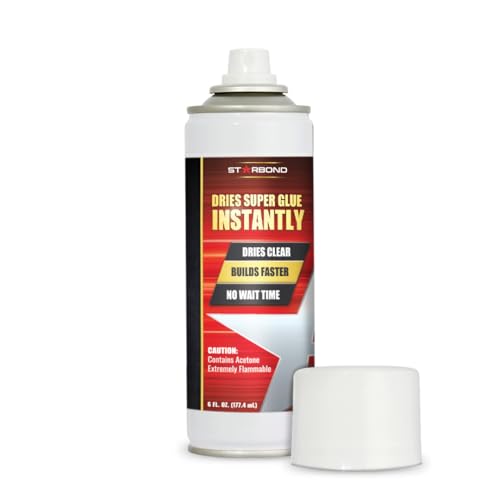
The fine-mist aerosol and emphasis on visible finishes set this spray apart. The maker says its formula cures CA glue in seconds and is intended to help minimize white residue and foaming on fills, inlays, and showpieces; those are performance claims, not guarantees for every glue or surface. A mist-control nozzle is also described. The 6-ounce can suits hobby and finish work where measured application matters more than a two-can package. Accelerator can still affect appearance and cure behavior, so test a small hidden area when the finish is critical.
Bottom line: Choose this for visible work where a fine, controlled spray is the priority.
Magic Chems CA Glue Accelerator, 13.5 fl oz

A single 13.5 fl oz can makes this the largest one-can option among the sprays. The maker describes the accelerator as a fine-mist aerosol for cyanoacrylate adhesives and says it is suitable for indoor and outdoor use. It is positioned for crafts, repairs, and DIY applications. That larger can can suit a workbench that uses accelerator regularly, while occasional users may prefer a smaller can to limit leftover product. As with other CA accelerators, apply sparingly: excess liquid can affect a joint’s appearance or how it cures.
Bottom line: Choose this if you want one larger can for recurring repair or craft work.
How to choose super glue activator spray
Choose by spray control, amount, and the surface finish you need. A fine mist can distribute accelerator more evenly than a heavy application, which is useful around visible fills and inlays; test first when appearance matters. Match the activator to cyanoacrylate glue, since CA adhesives are the chemistry these products are designed to accelerate. Most CA joints need only a small amount of adhesive, and extra glue can make a joint messier rather than stronger. For a visible repair, start with a small, hidden test area; for routine shop assembly, package size may matter more than mist control. Do not treat accelerator as adhesive: the glue makes the joint, while accelerator changes its cure speed.
How to apply CA accelerator
Apply a light mist rather than soaking a joint, because excess accelerator can cause a fast surface cure before adhesive spreads through the joint. Many CA workflows put glue on one mating surface and accelerator on the other, then bring the parts together; some products also allow spraying after assembly, so check that specific product’s directions. Keep the pieces aligned before joining, since accelerator can sharply shorten working time. Use ventilation and avoid breathing the mist. CA adhesive can bond skin and eyes rapidly, so keep it away from your face and wear eye protection when spraying; never pull bonded skin apart by force.
Activator spray versus liquid accelerator
Sprays are useful when a mist is preferable, while liquid activators can be applied more precisely with a nozzle or applicator. Neither format is automatically right for every joint: a broad, open surface may tolerate a mist, while a small seam may need careful placement to avoid overspray. Aerosol cans should be used as directed and kept away from heat; do not assume an indoor setting removes the need for ventilation. Use this guide to match the format to the task before selecting a product.
| Need | Format to consider | Reason |
|---|---|---|
| Broad or repeat application | Spray | Mist covers an area without touching the joint with an applicator. |
| Small, targeted application | Liquid | Placement can be more localized. |
| Visible finish | Fine-mist spray | Controlled application may help limit excess around the joint. |
Safety and storage for super glue accelerator
Use CA glue and its accelerator with ventilation, eye protection, and care around skin. CA adhesives can bond skin and eyes quickly; keep fingers clear of wet glue and do not force apart bonded skin. Aerosol mist can irritate, so spray away from your face and other people. Store products closed and out of children’s reach, and keep aerosol cans away from heat. Accelerator may react differently across plastics and finishes, so test a hidden spot when the surface matters. If adhesive contacts an eye or skin, follow the product’s first-aid directions and seek medical help for eye exposure.
Frequently Asked Questions
Does super glue activator spray work with every CA glue?
These sprays are intended for cyanoacrylate adhesives, but formulations can differ. Test a small joint first if the glue brand or material is unfamiliar.
Should accelerator go on the glue or the other surface?
A common method is glue on one side and accelerator on the other before joining. Some products permit spraying after assembly, so follow the directions for the specific accelerator.
How much accelerator should I spray on a joint?
Use a light mist rather than saturating the joint. Excess can make the surface cure too quickly and may affect appearance or bonding.
Can I use CA accelerator on plastic?
Some accelerators are marketed for plastic, but plastics and finishes can respond differently. Test an inconspicuous area first, especially on a visible part.
What safety precautions matter when using CA accelerator?
Work with ventilation and eye protection, and keep both glue and mist away from skin and eyes. CA adhesive can bond skin rapidly, so avoid contact and never pull stuck skin apart by force.