
Bed Sheet Tucker Tool: 5 Models Compared by Fit

The Berkland Sheet Tucker Tool is the best fit for most people who want extra reach: its 14.5-inch length extends farther than the 12.6- and 13.5-inch options. A sheet tucker is a wedge-style aid that creates space beneath a mattress edge so fabric can slide underneath.
Choose another model if you need a longer tool, prefer wood, or need to check compatibility with a raised frame edge; the Bed MadeEZ specifically warns that raised edges and obstructing furniture can prevent use.
We earn a commission if you buy through links on this page. As an Amazon Associate I earn from qualifying purchases. Products are compared on manufacturer specifications, not hands-on testing.
- Best overall: Berkland 14.5-Inch Sheet Tucker – Its 14.5-inch length offers more reach than the shorter 12.6- and 13.5-inch options.
- Best for extra length: Bed MadeEZ Mattress Lifter – At 16 inches, it is the longest tool among these choices.
- Best for acacia wood: Acacia Wood Tucker, 13.5-Inch – Its 13.5-inch body is identified as premium acacia wood.
| Product | Best for | Length | Weight | Shop |
|---|---|---|---|---|
| Berkland 14.5-Inch Sheet Tucker | Extra reach | 14.5 in | — | Check Price on Amazon |
| Bed MadeEZ Mattress Lifter | Long tool | 16 in | 0.9 lb | Check Price on Amazon |
| Original Bed Sheet Tucker, 12.6-Inch | Compact length | 12.6 in | — | Check Price on Amazon |
| Acacia Wood Tucker, 13.5-Inch | Wood construction | 13.5 in | 0.22 lb | Check Price on Amazon |
| The Bed Sheet Tucker, Single | Simple dimensions | 13.7 in | 0.35 lb | Check Price on Amazon |
Bed Sheet Tucker Tools Compared
Compare these tools by their dimensions and construction, then consider whether your mattress edge is accessible enough for a wedge to slide beneath it.
Berkland 14.5-Inch Sheet Tucker
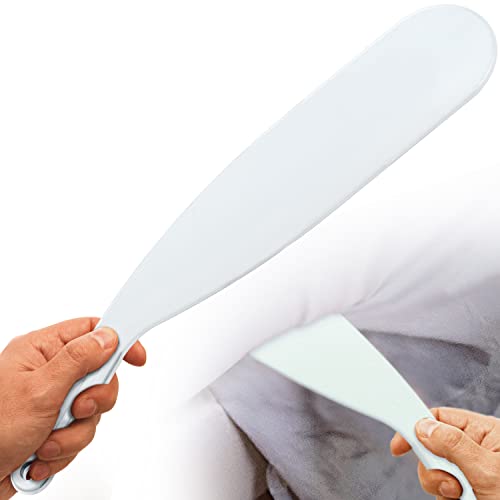
The 14.5-inch length is the key distinction of this sheet tucker, reaching farther than the 12.6- and 13.5-inch choices here. Berkland says the reinforced design is intended to reach beneath the mattress and help tuck fitted sheets, flat sheets and bed skirts. The wedge-style tip is also presented as a mattress-lifting aid, which may suit someone who wants one tool for several bed-making tasks.
The tool still needs an accessible mattress edge and room to slide between mattress and support; a tightly enclosed frame can make insertion difficult. Its weight and construction material are not part of the specifications, so buyers prioritizing either should choose based on confirmed specifications.
Bottom line: Pick this if extra reach and use with several types of bedding matter most.
Bed MadeEZ Mattress Lifter

At 16 inches long, the Bed MadeEZ is the longest tool in this comparison, and its dimensions are 16 by 3 by 5.5 inches. The maker describes it as a mattress lifter that can hold a mattress up while sheets or bed skirts are tucked. That combination may suit people seeking more working space beneath the mattress edge.
Compatibility is the important limitation: the maker says it will not work with a high-lipped or raised-edge frame, slats supporting the box spring, or furniture blocking the sides or foot. The maker also cautions that foam mattresses may lift less. Check the frame layout and clearance before choosing this model.
Bottom line: Choose this if you want the longest option and have an unobstructed, flat mattress edge.
Original Bed Sheet Tucker, 12.6-Inch

The 12.6-inch length makes this the shortest option with a length in the comparison. Its compact size may appeal to someone who wants a smaller tool for routine sheet tucking rather than the longer reach of the 14.5- or 16-inch designs. The product is described as an ergonomic bed-making aid with a handle intended to improve control.
The specifications do not identify a specific construction material, so buyers who want a wood or other particular material should verify that before ordering. Like other wedge-style tuckers, it needs enough room at the mattress edge to slide in; a frame lip or furniture pressed against the bed can limit access.
Bottom line: Pick this if a shorter tool is preferable to the longer designs.
Acacia Wood Tucker, 13.5-Inch
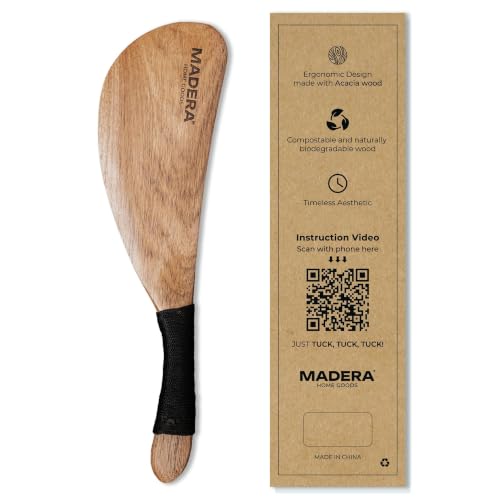
Acacia wood construction sets this 13.5-inch tucker apart from the other options, and its weight is 0.22 pound. The maker presents the tool as a one-hand mattress lifter and sheet tucker, intended for tucking bedding while reducing the need to lift a mattress by hand. Its length sits between the compact 12.6-inch tool and the 14.5-inch Berkland.
A low-clearance edge or raised frame lip can still make wedge insertion awkward, so inspect the bed edge before choosing based on material alone.
Bottom line: Choose this if acacia wood construction matters more than maximum length.
The Bed Sheet Tucker, Single
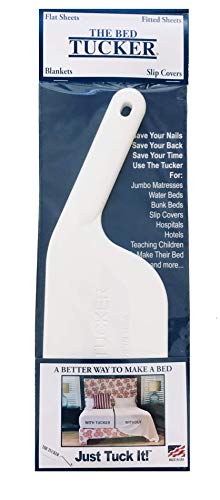
The Bed Sheet Tucker measures about 13.7 inches long and weighs 0.35 pound, placing it between the 12.6-inch and 14.5-inch options by length. The single-pack format suits a buyer seeking one sheet-tucking tool rather than a multi-tool set. Its dimensions offer a useful middle ground for someone who does not need the longest design in this comparison.
As with any tucker, the bed needs an accessible edge and enough space to slide the tool between mattress and support; a high frame rim may obstruct that movement.
Bottom line: Pick this if a single tool with a mid-range length suits your bed.
How to Choose a Bed Sheet Tucker Tool
Choose a tucker by matching its length and shape to the space at your mattress edge. A wedge slips between mattress and support, creating a small opening for fabric; a longer handle can extend reach, but it cannot overcome a frame rim or furniture blocking the edge. Compare listed tool lengths in inches, then check that the bed has an accessible side or foot where the wedge can enter.
Also decide which bedding you tuck most often. Flat sheets can be tucked along the sides and finished with hospital corners at the foot; fitted sheets rely on elastic around the mattress corners, so the tucker is mainly useful for excess fabric along the edges. A tool that lifts or holds the mattress may be useful when working alone, but the frame layout determines whether it can be positioned safely.
Mattress and Frame Fit for Sheet Tucker Tools
Frame clearance is the first fit check: the wedge needs a gap at the edge, and a tall lip, side rail, or nearby furniture can block insertion. The Bed MadeEZ maker specifically warns against raised-edge frames, slats supporting the box spring, and obstructed sides or foot. Foam mattresses may also lift less with that device, according to its maker.
Before using any tucker, check whether the mattress sits flat on a box spring, platform, or other support and whether an edge is reachable. Do not force the wedge against a frame rail; reposition to a clear edge or tuck by hand. If lifting the mattress causes it to shift, pause and stabilize the bed rather than putting fingers beneath a moving load.
Sheet Tucking Methods and Tool Choices
Flat sheets and fitted sheets need different finishing steps. A flat sheet has loose corners, so the classic hospital corner folds the foot-end fabric diagonally under the mattress and folds the remaining side fabric over it. A fitted sheet stays anchored by elastic at the corners; tuckers can help manage loose side fabric but do not replace correctly aligned elastic corners.
Use this need-to-choice guide to compare the basic task with the tool feature that helps:
| Need | Useful feature | Fit check |
|---|---|---|
| Reach farther under edge | Longer handle or body | Clear access beneath edge |
| Hold mattress while tucking | Lift-and-hold design | Frame and mattress compatibility |
| Finish loose flat-sheet corners | Wedge tip for fabric insertion | Room to fold and tuck fabric |
A tucker does not make a hospital corner automatically; the fold still needs to be formed and smoothed by hand.
Safe Use and Care of a Sheet Tucker
Keep fingers out from under a mattress that is being lifted or held, because the mattress can shift and pinch them. Slide the tool in from a clear edge, keep your hand on the handle, and remove the tool before settling the mattress fully. If the wedge slips or the bed support moves, stop and reset rather than pushing harder.
Use only enough lift to create space for the sheet, then check that the mattress sits evenly on its support. Tuck fabric in small sections instead of pulling sharply on a corner, which can dislodge a fitted-sheet elastic edge. For care, wipe the tool clean and dry it before storage; wood tools should not be left wet, since moisture can affect wood surfaces.
Frequently Asked Questions
Can a sheet tucker work with a platform bed?
A sheet tucker can work with a platform bed if there is an accessible edge and enough clearance to slide the wedge beneath the mattress. A raised rim or obstructing side rail can prevent insertion; Bed MadeEZ specifically cautions against raised-edge frames and slats supporting the box spring.
How do you tuck a flat sheet with a tool?
Place the flat sheet evenly, slide the tucker between the mattress and support, push a section of fabric underneath, then withdraw the tool. At the foot corners, fold the sheet diagonally into a hospital corner before tucking the side fabric under the mattress.
Do sheet tuckers work with foam mattresses?
They may, but lifting response can differ with mattress construction. The Bed MadeEZ maker cautions that foam mattresses may raise to a lower height, so check that the tool creates enough clearance without forcing the mattress.
Can a sheet tucker replace hospital corners?
No; a tucker helps move fabric beneath the mattress, while a hospital corner is a fold made at the foot of a flat sheet. Form the diagonal corner fold by hand, then use the tool to tuck the remaining loose fabric.
How much space does a sheet tucker need?
The tool needs a clear opening between the mattress edge and its support, plus an unobstructed path for the wedge to slide in and out. A frame lip or furniture pressed against the bed can block that path, so test access at the side or foot before use.