
Under Armour Men’s Surge 3 Running Shoes Compared

Under Armour Surge 3DISC is the closest match for Under Armour men’s Surge 3 running shoes, with its 9-ounce weight, cushioned EVA midsole, and 8mm offset. Choose a different model if you want Charged Cushioning or Charged+ foam instead; those are different models, not Surge 3 versions.
Running shoes combine an upper, midsole, and outsole to support a runner’s stride. Match the shoe to your fit and running needs, since the models here differ in foam and weight.
We earn a commission if you buy through links on this page. As an Amazon Associate I earn from qualifying purchases. Products are compared on manufacturer specifications, not hands-on testing.
- Best overall: Under Armour Surge 3DISC – The Surge 3DISC has a cushioned EVA midsole, 8mm offset, and 9-ounce weight.
- Best for Charged+ foam: Under Armour Surge 5 – This Surge 5 uses Charged+ cushioning and weighs 9.4 ounces.
- Best for Charged Cushioning: Under Armour Charged Surge 4 – This Surge 4 pairs Charged Cushioning with an 8mm offset.
| Product | Best for | Weight | Offset | Midsole | Shop |
|---|---|---|---|---|---|
| Under Armour Surge 3DISC | Surge 3 shoppers | 9 oz. | 8 mm | Cushioned EVA | Check Price on Amazon |
| Under Armour Surge 5 | Charged+ cushioning | 9.4 oz. | — | Charged+ | Check Price on Amazon |
| Under Armour Charged Surge 4 | Charged cushioning | 10.05 oz. | 8 mm | Charged | Check Price on Amazon |
| Under Armour Charged Surge 4, Size 14 | Size 14 option | 10.05 oz. | 8 mm | Charged | Check Price on Amazon |
| Under Armour Charged Assert 9 | Assert alternative | — | — | Charged | Check Price on Amazon |
Under Armour Men’s Surge 3 Running Shoes
Compare the Surge 3 with related Under Armour models by weight, offset, and midsole cushioning.
Under Armour Surge 3DISC

Under Armour Surge 3DISC is the Surge 3 model among these options, using a lightweight EVA midsole rather than the Charged Cushioning foams in the Surge 4 models or Charged+ in the Surge 5. The shoe also has a breathable mesh upper, padded ankle collar, and rubber outsole pods intended to limit weight while adding durability. Its 9-ounce weight and 8mm offset suit runners looking for a straightforward neutral shoe. One tradeoff is the EVA midsole; runners seeking a Charged foam setup should compare the other models instead.
Bottom line: Choose this if you want the Surge 3 model with an EVA midsole.
Under Armour Surge 5

Under Armour Surge 5 is the newer Surge-series alternative here, with Charged+ midsole cushioning rather than the EVA midsole of the Surge 3. The breathable mesh upper has synthetic overlays, and the rubber outsole is designed for traction and durability. Its stack height is 20.8mm, a useful comparison point when midsole height matters to your choice. The model is a neutral shoe for runners seeking a balance of flexibility and cushioning. Its key limitation for Surge 3 shoppers is that it is a different model, and the maker does not give its offset.
Bottom line: Pick this if Charged+ cushioning matters more than matching the Surge 3.
Under Armour Charged Surge 4

Under Armour Charged Surge 4 combines Charged Cushioning with an 8mm offset, making it a Surge-series alternative for runners who want that foam rather than the Surge 3’s EVA. The shoe has a breathable mesh upper with synthetic overlays, a sockliner that molds to the foot, and a rubber outsole with flexible toe-off areas. Its 10.05-ounce weight is higher than the Surge 3’s 9 ounces. That difference may matter to runners prioritizing a lighter shoe; the Charge Surge 4 is not a Surge 3 replacement by model.
Bottom line: Choose this if you prefer Charged Cushioning and do not mind the added weight.
Under Armour Charged Surge 4, Size 14
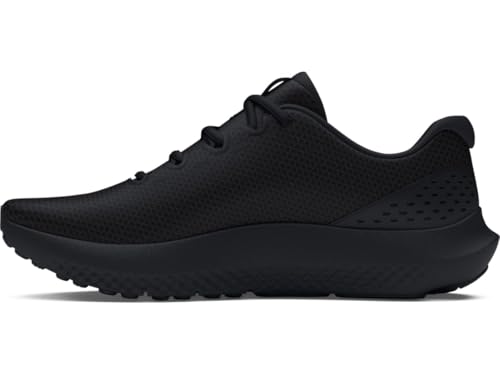
Under Armour Charged Surge 4, Size 14 is another Charged Surge 4, here in size 14, with the same 10.05-ounce weight and 8mm offset as the other Surge 4 option. Its black colorway and size are the distinguishing details, while its construction includes mesh, synthetic overlays, a molded Comfort System sockliner, and a flexible rubber outsole. This neutral shoe suits a runner who wants those features in size 14. It is still a Surge 4 rather than a Surge 3, so shoppers seeking the specific Surge 3 model should favor Under Armour Surge 3DISC.
Bottom line: Pick this if you need the size 14 Surge 4.
Under Armour Charged Assert 9
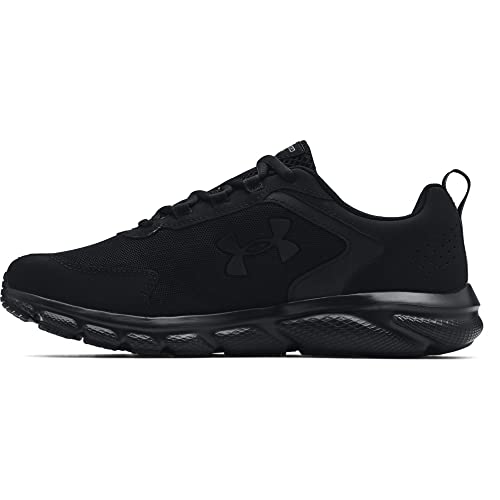
Under Armour Charged Assert 9 is the Assert-series alternative, not a Surge shoe, and its upper uses mesh with leather overlays for midfoot stability. The midsole uses compression-molded Charged Cushioning, while an EVA sockliner provides step-in cushioning. Its outsole places solid rubber in high-impact areas to add durability with less weight. Consider it if you are open to a different Under Armour model and want these construction features.
Bottom line: Consider this only if you are open to the Assert series.
How to choose a running shoe
Choose first by fit and intended use, then compare cushioning and weight. Running shoes generally use a flexible upper over a foam midsole, with outsole rubber in areas that need ground contact and wear resistance. Neutral shoes aim to balance flexibility and cushioning; they are not the same as stability shoes, which are built to guide motion. For a first fit check, leave about a thumb’s width of space beyond the longest toe while standing, and make sure the heel does not slip. Try shoes later in the day, when feet may be slightly larger. If your toes touch the front when standing or descending a ramp, try a longer size or a different shape rather than relying on a break-in period.
What shoe weight and offset mean
Shoe weight is the mass of one shoe, and offset is the height difference between heel and forefoot. An 8mm offset means the heel sits 8mm higher than the forefoot; it does not describe total cushioning or stack height. A higher stack can add material underfoot without necessarily changing the offset, so do not treat the two measurements as interchangeable. Shoe weights can vary by size, and a weight should be read in the context of its specified size when available. If you are transitioning from a shoe with a very different offset, increase running time gradually rather than making a sudden switch. Compare the same unit and measurement before choosing between models.
How long running shoes usually last
Many running shoes are replaced after roughly 300 to 500 miles, though body weight, surface, gait, and foam construction can shorten or extend that range. Mileage is a guide, not a guarantee: flattened cushioning, new aches, or visibly uneven outsole wear are practical reasons to reassess a pair. Rotating two pairs can give foam time to recover between runs, but it does not restore worn tread or damaged uppers. Keep shoes dry at room temperature after wet runs; direct heat can deform adhesives and materials. For safety, replace a shoe with a split midsole or outsole that is separating, even if it has not reached the typical mileage range.
Surge and Assert models compared
The Surge models here differ most clearly by model generation and midsole foam: the Surge 3 uses cushioned EVA, the Surge 4 uses Charged Cushioning, and the Surge 5 uses Charged+. The Assert 9 is a separate line and also uses Charged Cushioning. Use the table as a quick model-level distinction, then choose by fit, weight, and any measurements that matter for your stride. Do not assume that foam names alone establish which shoe feels softer; fit, geometry, and personal preference also affect the ride.
| Model type | Midsole | Distinguishing point |
|---|---|---|
| Surge 3 | Cushioned EVA | 8mm offset |
| Surge 4 | Charged Cushioning | 8mm offset |
| Surge 5 | Charged+ | 20.8mm stack height |
| Assert 9 | Charged Cushioning | Leather overlays |
Frequently Asked Questions
How much room should running shoes have at the toes?
Leave about a thumb’s width between your longest toe and the shoe’s front while standing. Check both feet, since one foot may be longer, and try a larger size if toes touch during a downhill step.
What does an 8mm running shoe offset mean?
An 8mm offset means the heel is 8mm higher than the forefoot. It is a heel-to-toe height difference, not the shoe’s total midsole stack height.
How many miles do running shoes usually last?
A common replacement range is about 300 to 500 miles. Rough pavement, heavier use, uneven wear, or flattened cushioning can make replacement sensible earlier.
Can I wash running shoes in a washing machine?
Hand-clean running shoes with mild soap and a soft brush, then air-dry them at room temperature. Machine agitation and dryer heat can damage foam, adhesives, or the upper.
When should I replace worn running shoes?
Replace shoes when cushioning feels flattened, the outsole wears unevenly, or the sole begins separating, even below 300 miles. Mileage alone cannot account for surface, gait, or wear patterns.