
Champion Dual Fuel Generator 9375: Models Compared

The Champion 9375 is the right match when you want a portable dual-fuel generator with 7,500 running watts on gasoline and 6,750 on propane. Choose a smaller generator for lighter-duty needs, a larger one for more output, or the carburetor only if you need a replacement part rather than a complete generator.
We earn a commission if you buy through links on this page. As an Amazon Associate I earn from qualifying purchases. Products are compared on manufacturer specifications, not hands-on testing.
- Best overall: Champion 9375-Watt Dual Fuel Generator – It is the exact model match, with 7,500 running watts on gasoline and 6,750 on propane.
- Best for camping: Champion 4750-Watt Dual Fuel Generator – It is a smaller dual-fuel generator with 3,800 running watts on gasoline and a 68 dB(A) operation.
- Best for higher output: Champion 11,500-Watt Dual Fuel Generator – It provides 9,200 running watts on gasoline and 8,280 on propane.
| Product | Best for | Gasoline running watts | Propane running watts | Weight | Shop |
|---|---|---|---|---|---|
| Champion 9375-Watt Dual Fuel Generator | Home backup | 7,500 W | 6,750 W | 205 lb | Check Price on Amazon |
| Champion 11,500-Watt Dual Fuel Generator | More backup output | 9,200 W | 8,280 W | 209 lb | Check Price on Amazon |
| Champion 4750-Watt Dual Fuel Generator | Camping and RVs | 3,800 W | 3,420 W | 133 lb | Check Price on Amazon |
| P28-4-H Replacement Carburetor | Carburetor replacement | — | — | — | Check Price on Amazon |
Champion Dual Fuel Generator 9375 Options
Compare the exact 9375-watt model with related generators and a replacement part by output and intended use.
Champion 9375-Watt Dual Fuel Generator

The 9375 is the exact-match generator here, with more running output than the 4750-watt model and less than the 11,500-watt model. It runs on gasoline or propane and has a 439cc engine, electric start with battery included, Intelligauge, Volt Guard, and CO Shield auto shutoff. Champion gives starting output separately: 9,375 watts on gasoline and 8,400 watts on propane. Its 205-pound weight is a meaningful drawback if you need to move it often or lift it without help; choose a lighter model for frequent transport.
Bottom line: Choose this if you want the named 9375 model and its dual-fuel output.
Champion 11,500-Watt Dual Fuel Generator

The 11,500-watt model raises running output above the 9375, reaching 9,200 watts on gasoline and 8,280 on propane. It uses a 459cc engine, electric start, Intelligauge, Volt Guard, and CO Shield; starting output is 11,500 watts on gasoline and 10,350 on propane. The tradeoff is that it is also a large, heavy portable generator at 209 pounds, so its higher output does not make it easier to transport. Choose it when your connected loads require more running watts than the 9375 provides, rather than relying on starting watts alone.
Bottom line: Pick this if your planned loads need more running output than the exact-match model provides.
Champion 4750-Watt Dual Fuel Generator
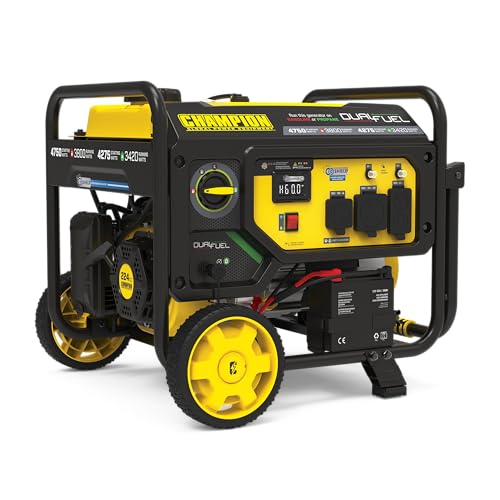
The 4750 is the smaller, lighter generator in this group, weighing 133 pounds and producing 3,800 running watts on gasoline or 3,420 on propane. Its 224cc engine has electric start, Intelligauge, and CO Shield, and the specifications gives operation as 68 dB(A). Champion says it can run up to 14 hours on gas or 10.5 hours on propane, though actual runtime changes with load. Its lower output makes it a poor substitute when a home-backup setup needs the 9375’s capacity; it better suits limited loads and travel use.
Bottom line: Choose this for lower-output travel needs, not as a like-for-like 9375 replacement.
P28-4-H Replacement Carburetor

The P28-4-H is a replacement carburetor, not a complete generator, so it is relevant only if you are repairing compatible equipment. Its fit claims include Champion 9375/7500-watt dual-fuel generators and several part and model numbers, including 100155 and 71530. The text also mentions multiple engine sizes, so match the existing carburetor’s part number and generator model before choosing this part; a mismatch can make installation or operation unsuitable. The specifications describes it as a direct replacement intended to address a clogged or dirty carburetor, but that does not establish fit for every Champion 9375 variant.
Bottom line: Pick this only when its part number matches the generator you are repairing.
How to Choose a Champion Dual Fuel Generator
Choose by running watts first: starting watts cover brief motor surges, while running watts are the sustained output available to connected equipment. Add the running-watt requirements of loads that will operate at the same time, then allow for startup surges from motors such as refrigerators or pumps. A generator’s gasoline and propane ratings can differ, so size the setup around the fuel you expect to use. For the exact 9375 model, the relevant running figures are 7,500 watts on gasoline and 6,750 on propane; do not treat its 9,375-watt gasoline starting figure as continuous capacity. Avoid loading a generator to its limit when simultaneous startup demands could exceed its starting rating.
Generator Safety and CO Shield
Run any portable generator outdoors at least 20 feet from doors, windows, and vents, with exhaust directed away from buildings. Carbon monoxide is odorless and can build up indoors or in partially enclosed spaces, including garages and porches. A CO auto-shutoff system is an added safeguard, not permission to run a generator indoors or closer to the home. Keep the generator dry and use it only in conditions that prevent water contact; wet hands or equipment increase shock risk. Connect appliances directly with suitable outdoor-rated cords, or have a transfer switch installed by a qualified electrician rather than backfeeding a home outlet.
When to Choose a Smaller or Larger Generator
Generator size should follow the loads you plan to run together, not the largest starting-watt number on a label. The 4750 model’s 3,800 gasoline running watts suit a smaller load plan than the 9375’s 7,500; the 11,500 model raises that figure to 9,200. A simple choice rule is to total the running watts for essential simultaneous loads and compare that sum with the rating for your chosen fuel, then check that startup surges stay below starting watts. The lighter 133-pound option is easier to reposition than 205- or 209-pound units, but portability does not compensate for insufficient output. For well pumps, HVAC, or other hard-starting equipment, verify both running and surge requirements.
Fuel and Runtime Planning
Dual-fuel generators can operate on gasoline or propane, but output and runtime may change between fuels. The figures show a lower propane running-watt rating than gasoline for each complete generator here, so use the propane rating when planning to rely on propane. Runtime depends on load, and a smaller connected load generally extends operation. Keep fuel away from ignition sources, allow a hot engine to cool before refueling, and store gasoline only in an approved container. Secure propane cylinders upright and follow applicable local storage rules.
Frequently Asked Questions
How many running watts does the Champion 9375 produce?
The 9375 produces 7,500 running watts on gasoline and 6,750 on propane. Its starting ratings are higher, at 9,375 and 8,400 watts respectively, and are not sustained output.
Can a portable generator run inside a garage?
No. Generators produce carbon monoxide, so operate one outdoors at least 20 feet from doors, windows, and vents, with exhaust pointed away from the building.
Does propane reduce generator output compared with gasoline?
For all three complete generators compared here, the propane running-watt rating is lower than the gasoline rating. Size your load plan using the rating for the fuel you intend to use.
How do I know whether a replacement carburetor fits?
Match the carburetor part number and generator model before installation. This replacement names several Champion models and part numbers, so do not assume that every 9375 variant uses the same carburetor.
Should I size a generator by starting or running watts?
Use running watts to size the loads you need to power continuously, then check that motor startup surges remain within the starting-watt rating. Add only the equipment expected to run at the same time.