
Folding Knife With Sheath: 4 Models Compared

Buck 110 Folding Hunter is the strongest all-around fit for a folding knife with a sheath because its 3.75-inch blade is longer than the 3-inch blades on the other options. Choose a 3-inch model instead if a shorter blade is your priority.
Folding knives pivot into the handle for storage, while a sheath covers the closed knife for carry. Before carrying one on a belt, check local rules for blade length and concealed carry.
We earn a commission if you buy through links on this page. As an Amazon Associate I earn from qualifying purchases. Products are compared on manufacturer specifications, not hands-on testing.
- Best overall: Buck 110 Folding Hunter – Its 3.75-inch blade is longer than the 3-inch blades on the other sheath-included options.
- Best for Damascus steel: UA KNIVE Damascus Rosewood & Bullhorn – It pairs a 3-inch Damascus blade with two leather sheaths.
- Best for D2 steel: Handmade D2 Camel Bone Folder – Its 3-inch D2 blade and dual leather sheaths suit buyers seeking those materials.
| Product | Best for | Blade length | Blade steel | Sheath | Shop |
|---|---|---|---|---|---|
| Buck 110 Folding Hunter | Longer blade | 3.75 in | 420HC stainless steel | Leather sheath | Check Price on Amazon |
| UA KNIVE Damascus Rosewood & Bullhorn | Two sheaths | 3 in | Damascus steel | Two leather sheaths | Check Price on Amazon |
| Handmade D2 Camel Bone Folder | D2 blade | 3 in | D2 steel | Two leather sheaths | Check Price on Amazon |
| Blue Pakka Wood Damascus Folder | Blue handle | 3 in | Damascus steel | Leather sheath | Check Price on Amazon |
Folding Knives With Sheaths
Compare blade length, steel, and included sheath style before choosing a folding knife for outdoor or everyday carry.
Buck 110 Folding Hunter

Buck 110 Folding Hunter stands apart with the longest blade among these sheath-included choices at 3.75 inches. Its 420HC stainless steel clip-point blade opens with a nail notch and uses a lockback design; the handle combines ebony with brass bolsters. Buck says the blade undergoes heat treatment and performance testing. The maker identifies it as made in the USA.
Choose this model if you want a traditional hunting-style folder and a longer blade. Its 7.2-ounce weight may matter to buyers prioritizing a lighter pocket carry.
Bottom line: Choose this traditional folder if a 3.75-inch blade matters more than minimizing carry weight.
UA KNIVE Damascus Rosewood & Bullhorn

UA KNIVE Damascus Rosewood & Bullhorn is the only option here that explicitly includes two leather sheaths and a sharpening rod. Its 3-inch hand-forged Damascus blade sits in a contoured rosewood-and-bullhorn handle, and a lockback secures the open blade. The maker says the blade has 256 layers and describes the knife as individually crafted.
This is a fit for buyers who want the Damascus-and-natural-handle combination with a spare sheath. The 3-inch blade is shorter than the Buck option, so choose another model if blade length is your deciding factor.
Bottom line: Pick this if two leather sheaths and a Damascus blade are your priorities.
Handmade D2 Camel Bone Folder

Handmade D2 Camel Bone Folder differentiates itself with a D2 steel blade and camel bone handle. The 3-inch blade uses a lockback mechanism, and the knife has a 6.5-inch overall length. Two leather sheaths are included for storage and belt carry.
Choose this model when D2 steel and a light-colored bone handle match your preferences. Its blade is 3 inches, so it does not offer the extra reach of the 3.75-inch Buck. The maker describes the construction as handmade; buyers who prefer a different handle material should compare the wood-handled options.
Bottom line: Choose this when D2 steel and a camel bone handle are the deciding features.
Blue Pakka Wood Damascus Folder
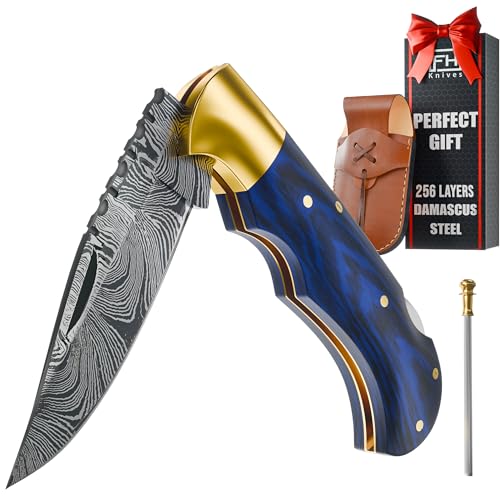
Blue Pakka Wood Damascus Folder is the blue-handle choice, pairing a 3-inch Damascus blade with blue pakka wood and brass linings. It includes a leather sheath and sharpening rod, and its handle has filework along the back. The maker describes the blade as forged from 1080 and 15N20 high-carbon steels.
This model suits buyers who want a colorful handle and traditional-looking details alongside the sheath. Its blade is shorter than the Buck’s 3.75-inch option, and the blade-layer count varies within the product wording, so layer count is not a useful basis for comparing it.
Bottom line: Pick this for a blue pakka wood handle with a Damascus blade and leather sheath.
How to Choose a Folding Knife With a Sheath
Start with blade length and the kind of cutting you expect, then compare steel, lock, and carry style. A 3-inch blade is a compact choice among these options; the 3.75-inch blade gives more edge length but adds carry bulk. For a folder, the lock should engage fully before use, and fingers should stay clear of the blade path while opening and closing.
Handle comfort is personal: contoured wood, bone, and composite materials feel different in the hand. If you expect wet or dirty work, prioritize a grip you can hold securely and a blade you can dry and maintain promptly. For belt carry, select a sheath that retains the closed knife securely and does not shift when you move.
Blade Length and Carry Fit
Blade length is measured from the tip to the front of the handle when the knife is open; the four sheath-included options here use either 3-inch or 3.75-inch blades. A 3-inch blade is the clear choice if you want to stay at or below that length, while a 3.75-inch blade suits buyers who specifically want a longer cutting edge. These measurements do not establish whether carry is lawful in a particular place.
Carry rules can differ by state and locality, including limits on blade length, locking folders, and concealed carry. Confirm the rules where you plan to carry before selecting a belt or pocket setup. A practical decision rule: if your intended carry location has a blade-length limit below 3.75 inches, choose a compliant shorter blade and verify the applicable definition locally.
Steel and Lockback Care
Steel choice affects upkeep as well as edge maintenance: stainless steels generally resist rust better than high-carbon steels, while no blade should be left wet or dirty. Dry the blade and pivot after exposure to water, then apply a very small amount of knife-safe oil to the pivot if it begins to feel stiff. Keep oil off surfaces that will contact food.
A lockback folder holds its blade open with a locking bar; it is not a substitute for careful handling. Keep fingers away from the closing path, and do not use the blade as a pry bar. For routine sharpening, many pocket knives use a bevel around 15 to 20 degrees per side; maintain the existing bevel rather than forcing a new angle. Use a stable surface and keep the edge directed away from your hand.
Folding Knife Sheath Types Compared
Leather and synthetic sheaths differ most in upkeep and moisture handling. Leather can conform with use but may retain moisture, so let a damp sheath dry fully before storing a knife in it. Synthetic sheaths typically dry more quickly and are easier to rinse, but their fit and retention depend on the particular design. A sheath is useful only when it fits the closed knife securely.
Use this comparison to match the carry setup to your routine rather than assuming every sheath works the same way.
| Sheath type | Useful trait | Care point |
|---|---|---|
| Leather | Traditional belt carry | Dry fully after moisture |
| Synthetic | Typically quick drying | Check retention and fit |
| Pocket clip | Direct pocket carry | Confirm secure attachment |
Frequently Asked Questions
How should a folding knife sheath fit?
A sheath should retain the closed knife without allowing it to fall out when turned upside down. Check the fit before belt carry, and do not force a knife into a sheath that pinches or exposes the edge.
Can a leather knife sheath get wet?
Brief moisture exposure is manageable, but leather can hold water against a blade. Remove the knife, dry both parts completely, and avoid storing the knife in a damp sheath.
What blade length is easier to carry daily?
A 3-inch blade is shorter than a 3.75-inch blade and may be easier to fit in a compact carry setup. Local blade-length and carry rules can further limit the appropriate choice.
How often should I oil a folding knife pivot?
Oil the pivot when it feels stiff or after cleaning and drying the knife, using only a small amount of knife-safe lubricant. Wipe away excess oil so it does not attract grit or transfer to surfaces.
Is a lockback folding knife safe to close?
A lockback must be released deliberately before the blade can fold, but fingers still need to stay out of the closing path. Keep the edge pointed away from your hand and never force a resistant lock.