
Best Travertine Floor Cleaner: 5 Options Compared

Natural Stone Cleaner, 1 Gallon is the best travertine floor cleaner for most homes because its pH-neutral concentrate is designed for sealed and unsealed natural stone. Choose Travertine Daily Care Cleaner, 16.91 fl oz instead for routine care limited to sealed floors, or Stone & Tile Intensive Cleaner, 1 Quart when deeper cleaning is the priority.
Travertine is a calcium-based stone, so acidic cleaners such as vinegar can etch its surface; use a stone-safe cleaner and a well-wrung mop.
We earn a commission if you buy through links on this page. As an Amazon Associate I earn from qualifying purchases. Products are compared on manufacturer specifications, not hands-on testing.
- Best overall: Natural Stone Cleaner, 1 Gallon – Its pH-neutral concentrate is formulated for sealed and unsealed natural stone.
- Best for broad floor coverage: Granite Gold Stone & Tile Floor Cleaner – The maker says one 32-ounce bottle can clean up to 12,000 square feet.
- Best for deeper cleaning: Stone & Tile Intensive Cleaner, 1 Quart – It is positioned for intensive cleaning and is free of acids, alkalis and abrasives.
| Product | Best for | Stone compatibility | Dilution | Volume | Shop |
|---|---|---|---|---|---|
| Natural Stone Cleaner, 1 Gallon | Sealed or unsealed stone | Sealed and unsealed stone | 24 oz per gallon | 128 fl oz | Check Price on Amazon |
| Natural Stone Cleaner, 1 Quart | Small cleaning jobs | Sealed and unsealed stone | 2–4 oz per gallon | 32 fl oz | Check Price on Amazon |
| Granite Gold Stone & Tile Floor Cleaner | Large floor areas | Sealed stone and ceramic tile | — | 32 fl oz | Check Price on Amazon |
| Travertine Daily Care Cleaner, 16.91 fl oz | Sealed daily care | Sealed stone | — | 16.91 fl oz | Check Price on Amazon |
| Stone & Tile Intensive Cleaner, 1 Quart | Intensive soil removal | Natural stone and tile | Up to 8 gal per 32 oz | 32 fl oz | Check Price on Amazon |
Travertine Floor Cleaners Compared
Compare each formula’s use and dilution before choosing for your floor’s finish and cleaning routine.
Natural Stone Cleaner, 1 Gallon

Natural Stone Cleaner, 1 Gallon stands out for covering both sealed and unsealed stone, so it suits homes where the floor finish or adjacent stone surfaces vary. Its pH-neutral concentrate is intended for routine dirt, dust and everyday grime, and the maker says it needs no rinse. The gallon container gives more concentrate than the quart options here. Mix 24 ounces with a gallon of water. That ratio is less concentrated than the 2-to-4-ounce-per-gallon guidance for the matching quart formula, so confirm the intended dilution for the specific container before mixing.
Bottom line: Choose this for routine cleaning across sealed and unsealed stone surfaces.
Natural Stone Cleaner, 1 Quart
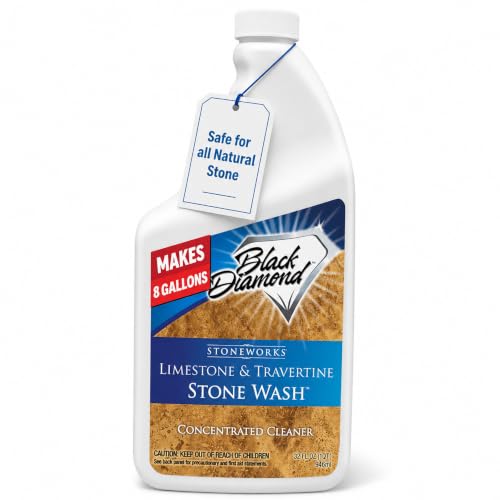
Natural Stone Cleaner, 1 Quart offers the same broad natural stone compatibility as the gallon version in a smaller 32-ounce container. The maker describes it as pH-neutral and no-rinse, for everyday dirt, dust and grime on sealed or unsealed travertine and other stone floors. The dilution range is 2 to 4 ounces per gallon of water, distinct from the gallon product’s 24 ounces per gallon. That discrepancy matters: use only the ratio associated with the container in hand, and do not assume the two sizes share the same directions. This quart is a practical fit when a smaller amount is enough.
Bottom line: Pick this quart for a smaller supply and its 2-to-4-ounce dilution.
Granite Gold Stone & Tile Floor Cleaner

Granite Gold Stone & Tile Floor Cleaner is the only option here with a maker-stated coverage figure: up to 12,000 square feet from its 32-ounce concentrated bottle. Its no-rinse formula is made for sealed granite, marble, travertine and ceramic tile, and the maker says it breaks down dirt and oils while maintaining shine. The broad surface range can suit a home with both stone and ceramic floors. Its use is specified for sealed floors, unlike the formulas that explicitly include unsealed stone, so owners of unsealed travertine should choose a cleaner intended for that finish.
Bottom line: Choose this for sealed floors when the maker’s coverage figure is useful.
Travertine Daily Care Cleaner, 16.91 fl oz

Travertine Daily Care Cleaner, 16.91 fl oz is specifically framed as a daily-care cleaner for sealed travertine, with everyday dirt, dust, footprints and light messes in view. It is also intended for sealed limestone, slate and marble, including honed and tumbled stone. The formula is designed to dry without a sticky feel or cloudy film, making it relevant to buyers focused on routine mopping and residue. Its narrowest fit is also its limitation: it is aimed at sealed surfaces, so it is not the match for unsealed travertine or intensive soil removal.
Bottom line: Pick this for regular cleaning of sealed travertine and similar stone.
Stone & Tile Intensive Cleaner, 1 Quart

Stone & Tile Intensive Cleaner, 1 Quart is the intensive-cleaning choice, with a concentrate yield of up to 8 gallons from 32 ounces. Its formula excludes acids, alkalis, abrasives and petroleum solvents, and is intended for polished and honed natural stone as well as grout and tile. The range includes travertine, marble, limestone, slate, ceramic and porcelain. That broad scope makes it useful when grime extends beyond a travertine floor to grout or other surfaces. It is positioned for deeper cleaning rather than a specific no-rinse daily routine, so it may not suit buyers seeking an explicitly no-rinse formula.
Bottom line: Choose this for intensive cleaning across stone, tile and grout.
How to choose a travertine floor cleaner
Choose a pH-neutral, non-abrasive cleaner made for natural stone; travertine contains calcite and acids can etch its surface. Vinegar, lemon juice and many bathroom descalers are poor choices because they are acidic. Match the formula to the floor’s finish: sealed-stone formulas are not automatically suitable for unsealed stone, while a cleaner explicitly covering both gives broader flexibility. For light dust and footprints, use a routine-care formula; reserve intensive cleaners for heavier soil or grout. A practical rule: if the floor is unsealed, exclude products that specify sealed surfaces only. Sweep or dust-mop first so grit does not scratch stone during wet mopping.
Travertine sealing and cleaner compatibility
Sealers reduce absorption but do not make travertine acid-proof, so even sealed stone can etch from acidic spills. Travertine is porous, and sealers are typically reapplied based on wear and absorption rather than a fixed calendar; water beading less readily than before can signal that the surface needs assessment. Test any new cleaner in a discreet spot, especially on honed or tumbled finishes where residue can be more visible. Use a soft microfiber mop and clean water, then wring it well: standing water can enter pores and joints. Keep grout in mind too, because a cleaner safe for stone may not remove embedded grout soil without separate targeted care.
Cleaner types and dilution at a glance
Concentrates require accurate measuring, while ready-to-use products do not; these choices are concentrates, but their mix instructions differ. Introduce a measuring cup or marked dosing bottle to avoid over-concentration, which can leave residue even with a no-rinse product. The table pairs the use case with the relevant choice and stated mixing or coverage facts.
| Need | Choice | Mix or coverage |
|---|---|---|
| Sealed or unsealed stone | Natural Stone Cleaner, 1 Gallon | 24 oz per gallon |
| Small supply, broad stone use | Natural Stone Cleaner, 1 Quart | 2–4 oz per gallon |
| Sealed stone and tile coverage | Granite Gold Stone & Tile Floor Cleaner | Up to 12,000 sq ft per 32 oz |
| Sealed daily care | Travertine Daily Care Cleaner, 16.91 fl oz | — |
| Intensive stone and grout cleaning | Stone & Tile Intensive Cleaner, 1 Quart | Up to 8 gallons per 32 oz |
Safe mopping and common travertine mistakes
Remove loose grit before mopping and use a damp, not dripping, mop to limit water in travertine’s pores and grout joints. Avoid abrasive pads, scouring powders and acidic household cleaners; they can scratch or etch the surface. Work in small sections and change dirty rinse water so soil is not redistributed. Concentrate dosing is another common mistake: follow the directions for the exact container, since even similar formulas can call for different amounts. Blot spills promptly rather than rubbing grit across the stone. A neutral cleaner handles routine soil, but persistent stains may need stain-specific stone treatment rather than repeated stronger mopping.
Frequently Asked Questions
Can vinegar clean a travertine floor?
No; vinegar is acidic and can etch calcite-based travertine, including sealed stone. Use a pH-neutral cleaner made for natural stone instead.
How often should travertine floors be mopped?
Damp-mop as needed for tracked-in dirt and spills, while dust-mopping daily in busy areas helps remove grit before it scratches. Frequency depends on foot traffic and soil, not a universal calendar.
Should travertine be wet mopped or steam cleaned?
Use a damp mop rather than leaving standing water on the stone and grout. Avoid steam unless the stone and sealer manufacturer specifically approves it, because heat and moisture can affect finishes and joints.
How can I tell whether travertine needs resealing?
Test a discreet area with a few drops of water; if the stone darkens or absorbs the water rather than beading, its sealer may be wearing. Sealers differ, so assess the whole surface and finish before applying more.
What mop is safest for travertine tile?
A soft microfiber mop is a suitable routine choice because it lifts dust without an abrasive pad. Rinse or replace the pad when it carries grit, and wring it thoroughly to avoid pooling water.