
Best Markers for Scrapbooking: 4 Types Compared

For most scrapbookers, ARTISTRO 24 Dual-Tip Acrylic Markers is the most versatile pick because its 1 mm fine tip handles small writing while its 1–5 mm dot tip adds decorative accents.
A scrapbook marker is a pen for adding handwriting, color, or decoration to page elements; acrylic paint markers lay down paint, while alcohol markers use alcohol-based ink.
We earn a commission if you buy through links on this page. As an Amazon Associate I earn from qualifying purchases. Products are compared on manufacturer specifications, not hands-on testing.
- Best overall: ARTISTRO 24 Dual-Tip Acrylic Markers – A 1 mm fine tip and 1–5 mm dot tip cover small writing and decorative marks.
- Best for metallic accents: 30-Color Metallic Acrylic Marker Set – The 30-color metallic set has a fine tip and a brush tip for larger strokes.
- Best for color range: Grabie 72-Color Acrylic Brush Markers – The set offers 72 colors across 36 dual-tip markers.
- Best for brush lettering: KEVIN&SASA CRAFTS 24-Color Acrylic Markers – Each pen pairs a round nib with a brush nib.
| Product | Best for | Colors | Tip style | Shop |
|---|---|---|---|---|
| ARTISTRO 24 Dual-Tip Acrylic Markers | Writing and dots | 24 colors | 1 mm fine; 1–5 mm dot | Check Price on Amazon |
| 30-Color Metallic Acrylic Marker Set | Metallic accents | 30 colors | Fine; 0.5–5 mm brush | Check Price on Amazon |
| Grabie 72-Color Acrylic Brush Markers | Broad color range | 72 colors | Dual soft brush tips | Check Price on Amazon |
| KEVIN&SASA CRAFTS 24-Color Acrylic Markers | Brush and round | 24 colors | Round; brush | Check Price on Amazon |
Scrapbooking markers compared
Match the tip shape and ink type to the writing and decoration you plan to add to your pages.
ARTISTRO 24 Dual-Tip Acrylic Markers

For small captions paired with decorative dots, this 24-color set stands out for its clearly differentiated fine and dot tips. Each water-based acrylic marker has a 1 mm fine tip for writing and outlining and a 1–5 mm dot tip for patterns and accents. The maker says the tips are pre-activated and ready to use, with a gentle shake recommended before first use. This set suits scrapbookers who want both narrow lines and round marks from one pen. The dot tip is less suited than a brush tip to flowing, variable-width lettering.
Bottom line: Pick this set for captions, outlines, and dot accents.
30-Color Metallic Acrylic Marker Set

For reflective color and dark-paper accents, this set differs from the other acrylic options by offering 30 metallic colors. Each pen combines a fine tip for outlines and detail with a 0.5–5 mm brush tip for wider coloring and shading. The maker says the markers work on black paper and photo albums, among other surfaces, and do not need shaking during use. This is a strong match when metallic effects are central to a page design. Its specialty palette is less suitable when you want an everyday set of conventional colors.
Bottom line: Choose it when metallic marks are the main priority.
Grabie 72-Color Acrylic Brush Markers
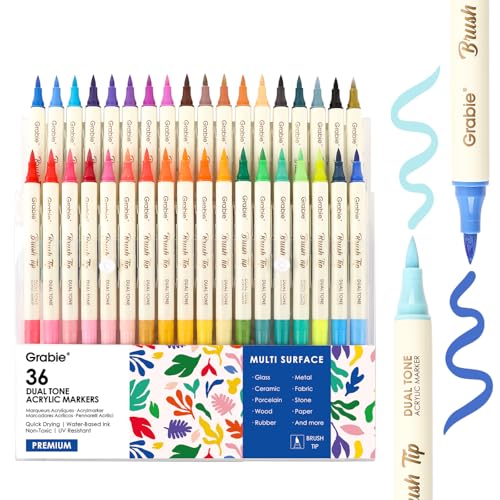
For the largest palette among these acrylic sets, this Grabie pack puts 72 colors into 36 dual-color markers. Its soft brush design is suited to coloring and shading, and the maker says the water-based acrylic ink is quick-drying and non-toxic. It is a fit for scrapbookers who want many color choices without carrying one marker for every color. The set is less targeted to tiny handwriting than a marker with a fine tip, so use a separate fine pen when captions need crisp, narrow strokes.
Bottom line: Choose it for varied brush-color work and shading.
KEVIN&SASA CRAFTS 24-Color Acrylic Markers
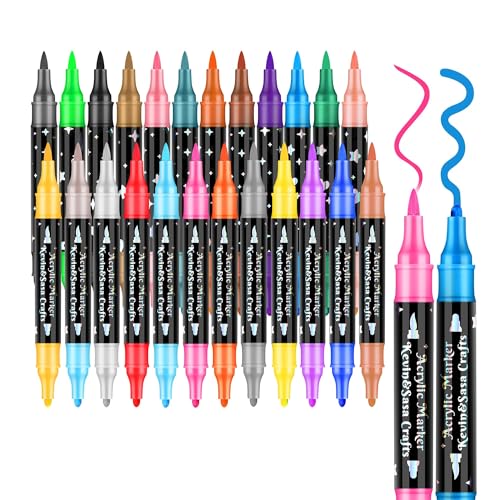
For a traditional round nib alongside a brush nib, this 24-color acrylic set offers a different tip pairing from the fine-and-dot option. The maker says the round and brush tips serve fine line work and larger fills, and the pens have a clear nib-identification pattern. Its 24 bright colors suit scrapbookers who prefer brush strokes for expressive lettering or larger embellishments. The round tip has no stated width, so it is harder to judge in advance whether it will make the narrow lines you want for compact captions.
Bottom line: Pick it for brush lettering with a separate round nib.
How to choose scrapbooking markers
Choose by the marks you need: fine tips make narrow captions, brush tips vary line width with pressure, and dot tips make round accents. Acrylic paint markers can provide opaque-looking strokes, while alcohol markers are designed for blending and coloring; the ink type changes how a mark behaves on paper. For journal-sized handwriting, favor a fine tip around 1 mm or smaller, then use a brush or dot tip for larger decoration. Test on a scrap of the same paper before working on a finished page, because paper coating and thickness affect feathering and show-through. Keep markers away from photographs unless the maker identifies them as suitable for that surface.
Paper choice affects the result as much as the pen. Thin paper can show marks through to the reverse, and wet paint can wrinkle or buckle it; heavier cardstock generally tolerates more decoration. Allow paint to dry fully before stacking or closing pages to reduce transfer.
| Scrapbook task | Tip to prioritize | Why |
|---|---|---|
| Captions and outlines | Fine | Supports narrower lines |
| Lettering and broad fills | Brush | Supports varied stroke width |
| Polka dots and accents | Dot | Makes round marks |
Acrylic paint markers versus alcohol markers
Acrylic paint markers and alcohol markers are different tools, even when both have two tips. Acrylic pens use paint and are often chosen for opaque-looking decoration; alcohol markers use alcohol-based ink and suit blending and illustration. That makes ink type the first filter: choose acrylic for painted embellishments and metallic accents, or alcohol ink for blended coloring. A marker that works on glass or wood is not automatically a good match for scrapbook paper, so test its mark on the page stock you plan to use.
Alcohol ink can bleed through thin paper, so place a protective sheet behind the page and test first. Acrylic paint can sit more visibly on a surface, but heavier application may take longer to dry and can affect delicate paper. Neither ink type should be assumed archival or photo-safe without an explicit product claim.
Tips for writing and coloring on scrapbook pages
Write captions before attaching small page pieces when you need a steady surface and room for your hand. Let paint marks dry completely before layering paper over them; otherwise fresh color can transfer to the next surface. For a clean margin, make a light pencil guide and test the marker width on matching scrap paper before inking. Tip shapes also matter for control: turn the page rather than twisting your wrist for long straight lines, and use a fine tip instead of a brush when letters are too small to keep consistent.
Keep the cap on between strokes, store pens as the maker directs, and avoid pressing hard enough to deform a tip. Before marking an original photograph, verify that the marker is intended for that surface and test on a duplicate or an inconspicuous area. A scrapbook page may include coated photo paper, cardstock, and adhesive, each of which can react differently to ink or paint.
Frequently Asked Questions
Will acrylic markers bleed through scrapbook paper?
They can show through or wrinkle thin paper, especially with broad, wet strokes. Test on a matching scrap and place a protective sheet behind the page before coloring.
Are alcohol markers good for scrapbook pages?
Alcohol markers work for blending and illustration, but the ink can bleed through thin paper. Put a barrier behind the page and test before using them near finished embellishments.
Which marker tip is best for scrapbook lettering?
A fine tip is easiest to control for small captions, while a brush tip suits larger lettering with varied strokes. For compact handwriting, a tip around 1 mm or smaller is a useful starting point.
How long should scrapbook marker ink dry?
Wait until the mark is fully dry before stacking pages or placing embellishments over it. Drying time changes with ink type, paper coating, and how heavily the marker is applied.
Can I use markers directly on scrapbook photos?
Only use a marker on a photo surface when the maker identifies it as suitable. Test on a duplicate or inconspicuous area first, since photo coatings can respond differently from cardstock.