
Best Tarp for Leaves: 4 Cleanup Options Compared

The Rocky Mountain Goods Drawstring Tarp, 9 x 9 ft suits most people because its 9-by-9-foot surface gives room to rake leaves before cinching the tarp for transport. Choose a handled tarp instead if you want to lift or drag debris without gathering a drawstring.
A leaf tarp is a reusable ground sheet for collecting yard debris; footprint and the way it closes or lifts determine how it works best.
We earn a commission if you buy through links on this page. As an Amazon Associate I earn from qualifying purchases. Products are compared on manufacturer specifications, not hands-on testing.
- Best overall: Rocky Mountain Goods Drawstring Tarp, 9 x 9 ft – The 9-by-9-foot surface pairs a broad collection area with a drawstring closure.
- Best for lifting: RAINDEWAY 9 x 9 ft Leaf Tarp – Four corner handles support lifting the tarp as a carry bag or hauling with two handles.
- Best for windy yards: 5 x 7 ft Leaf Tarp with Stakes – Two ground stakes help hold the 5-by-7-foot tarp in place while you rake.
| Product | Best for | Footprint | Hauling feature | Material / thickness | Shop |
|---|---|---|---|---|---|
| Rocky Mountain Goods Drawstring Tarp, 9 x 9 ft | Bag-style hauling | 9 x 9 ft | Drawstring closure | UV-treated poly | Check Price on Amazon |
| 7 x 7 ft Yard Garden Leaf Tarp | Compact cleanup | 7 x 7 ft | Four corner handles | PE-coated fabric | Check Price on Amazon |
| RAINDEWAY 9 x 9 ft Leaf Tarp | Handle-based hauling | 9 x 9 ft | Four corner handles | 10 mil | Check Price on Amazon |
| 5 x 7 ft Leaf Tarp with Stakes | Secured raking | 5 x 7 ft | Six handles; two stakes | Woven polyethylene | Check Price on Amazon |
Best Tarps for Leaves
Compare collection area, hauling style and construction to find a tarp that fits your cleanup routine.
Rocky Mountain Goods Drawstring Tarp, 9 x 9 ft

The drawstring closure distinguishes this 9-by-9-foot tarp from the handled designs. Rocky Mountain Goods says leaves can be raked or blown onto the tarp, then gathered into a bag shape for dragging or carrying. Its 81-square-foot footprint gives a broad area for collecting debris, and the UV-treated poly fabric can also serve as a cover for outdoor items. The closure is useful when you want to secure the load without separate ropes or cords. The limitation is that it has no corner handles, so choose another style if you prefer lifting by grips.
Bottom line: Pick this if you want a large collection surface that cinches into a bag for hauling.
7 x 7 ft Yard Garden Leaf Tarp
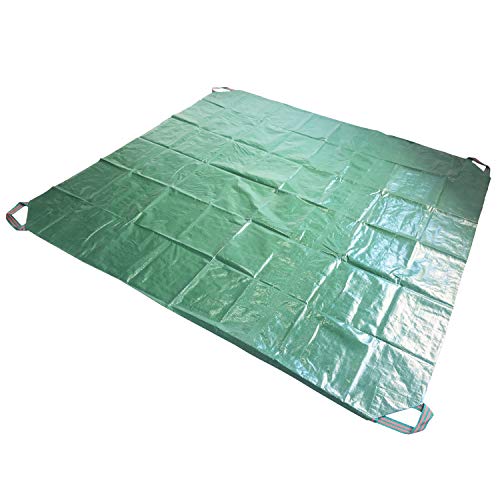
The 7-by-7-foot footprint is smaller than the 9-by-9-foot choices, making this a compact option for smaller cleanup areas. The tarp has four corner handles and PE-coated, tear-resistant fabric; the maker says it is waterproof and suited to leaf hauling and other outdoor uses. Its 49-square-foot area can be easier to position in a tight yard or near garden beds. A smaller footprint also fills sooner when gathering a large volume of leaves, so choose a larger tarp if you want fewer collection trips.
Bottom line: Choose this for smaller yards or garden areas where a compact handled tarp is easier to manage.
RAINDEWAY 9 x 9 ft Leaf Tarp
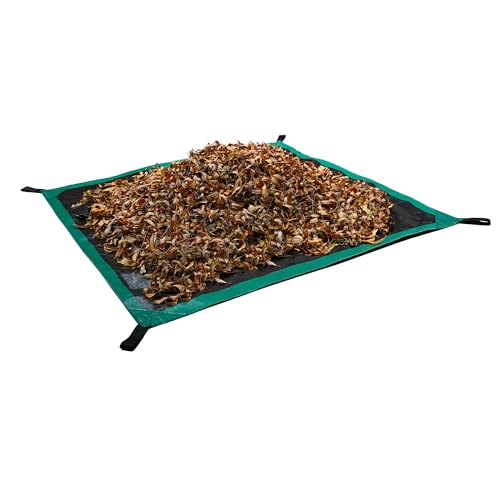
The four corner handles give this 9-by-9-foot tarp two hauling options: lift all four corners to form a carry bag, or use two handles to drag debris. RAINDEWAY says the tarp is waterproof and tear-resistant, and identifies its thickness as 10 mil. The 81-square-foot footprint offers as much collection area as the drawstring option, but the hauling method relies on handles rather than a cinch closure. That distinction matters if you want to bundle leaves securely without holding multiple grips.
Bottom line: Pick this if you want a full-size tarp with corner grips for lifting or dragging.
5 x 7 ft Leaf Tarp with Stakes

The included ground stakes set this tarp apart by helping keep its 5-by-7-foot surface from shifting as you rake. It has six reinforced handles for lifting or dragging, and its woven polyethylene construction is described as reusable. At 35 square feet, it is the smallest collection area among these options, so it suits smaller jobs better than gathering leaves across a broad lawn. The stakes help secure the tarp while working, but they do not add collection capacity; choose a larger footprint if minimizing trips is your priority.
Bottom line: Choose this for a small cleanup where keeping the tarp anchored during raking is useful.
How to Choose a Leaf Tarp Size
Choose by the amount of ground you need to cover and how often you are willing to unload the tarp. A 5-by-7-foot tarp covers 35 square feet, a 7-by-7 covers 49 square feet, and a 9-by-9 covers 81 square feet. If you routinely rake a broad lawn, choose the 9-by-9 size to collect more before hauling; for a narrow garden bed or small patio, a smaller footprint is easier to position. Measure the working area first, then leave enough room around it to rake without stepping on the tarp or blocking a path.
Footprint is not the same as load capacity: leaf volume, moisture and how the tarp is carried affect how much you can move in one trip. Damp leaves are heavier and harder to drag than dry leaves, so make smaller loads when the pile is wet.
Drawstring Versus Handles for Hauling Leaves
Choose a drawstring when you want to gather the tarp edges around a load; choose handles when you want fixed grips for lifting or dragging. A drawstring tarp can cinch into a bag shape, while corner handles let you lift by one or more points without gathering the entire edge. Six-handle designs add grip positions, and ground stakes address a different task by anchoring the sheet during raking.
The table compares each style by the job it supports. No closure or handle arrangement removes the need to keep loads manageable: wet leaves can become heavy, and a bulky load can make dragging difficult.
| Cleanup need | Useful feature | Tradeoff |
|---|---|---|
| Bundle leaves for carrying | Drawstring closure | Does not provide corner grips |
| Lift or drag from fixed points | Corner or reinforced handles | Load remains more exposed |
| Rake where wind shifts the tarp | Ground stakes | Does not increase tarp area |
Materials and Thickness in Leaf Tarps
Polyethylene is a common tarp material, but a fabric label alone does not tell you how a tarp will handle every load or season. These options include UV-treated poly, PE-coated fabric and woven polyethylene; one tarp also gives a 10-mil thickness. A mil is one-thousandth of an inch, so 10 mil equals 0.010 inch. Thickness is only one construction measure, and seams, reinforcement and how the tarp is dragged also affect wear.
Use the tarp on a clear route and avoid pulling it over sharp branches, stones or jagged edging, which can snag or abrade fabric. For storage, remove debris and let a damp tarp dry before folding it away; trapped moisture can encourage mildew on stored material.
Frequently Asked Questions
What size tarp works for a small yard?
A 5-by-7-foot tarp covers 35 square feet, while a 7-by-7-foot tarp covers 49 square feet. For a small yard or confined garden area, start with the smaller footprint if easier placement matters more than collecting a large pile per trip.
Are handles or a drawstring better for leaves?
Handles give you fixed grip points for lifting or dragging, while a drawstring gathers the tarp around the load. Choose handles if you want to control the tarp from its corners, or a drawstring if bundling the edges is more useful.
Can I rake wet leaves onto a tarp?
Yes, but wet leaves are heavier and more difficult to drag than dry leaves. Reduce the load size when leaves are damp, especially if you need to carry or pull the tarp any distance.
How do I keep a leaf tarp from moving?
Ground stakes can anchor a tarp while you rake, and the 5-by-7-foot option here includes two. Place stakes where they will not obstruct walking or lawn equipment, and remove them before moving the tarp.
How should I store a leaf tarp after cleanup?
Remove leaves and allow a damp tarp to dry before folding it for storage. Store it away from sharp objects that could puncture or abrade the material.