
L’ANGE 2-in-1 Volumizing Brush Dryers Compared

For most people, L’ANGE Le Volume 75 mm Titanium Brush is the best fit because its 75 mm oval barrel offers a larger styling surface for smoothing and volume in one step.
A hot-air brush combines airflow with a brush barrel to dry and shape hair. Match the barrel to your hair length and intended style, and use a different tool if you want interchangeable attachments or automatic curling.
We earn a commission if you buy through links on this page. As an Amazon Associate I earn from qualifying purchases. Products are compared on manufacturer specifications, not hands-on testing.
- Best overall: L’ANGE Le Volume 75 mm Titanium Brush – The 75 mm oval barrel is the largest of the L’ANGE options here.
- Best for a smaller barrel: L’ANGE VolumeBoost 60 mm Ceramic Brush Dryer – Its 60 mm ceramic-coated barrel is smaller than the other L’ANGE brush dryers.
- Best for root lift: L’ANGE Le Volume Elevé 65 mm Titanium Brush – The 65 mm teardrop shape is designed to lift roots and reach closer to them.
| Product | Best for | Barrel size | Barrel material | Heat settings | Shop |
|---|---|---|---|---|---|
| L’ANGE Le Volume 75 mm Titanium Brush | Larger blowouts | 75 mm | Titanium | Adjustable | Check Price on Amazon |
| L’ANGE VolumeBoost 60 mm Ceramic Brush Dryer | Compact styling | 60 mm | Ceramic-coated | 2 heat settings | Check Price on Amazon |
| L’ANGE Le Volume Elevé 65 mm Titanium Brush | Root-focused volume | 65 mm | Titanium | 3 settings | Check Price on Amazon |
L’ANGE 2-in-1 Volumizing Brush Dryers
Compare the barrel shapes and heat controls to find a brush dryer suited to your hair length and blowout style.
L’ANGE Le Volume 75 mm Titanium Brush

L’ANGE Le Volume 75 mm Titanium Brush stands out with the largest barrel among the L’ANGE brush dryers here: a 75 mm oval shape. The maker says its 360-degree airflow and titanium finish support even heat distribution, while the brush dries and styles at the same time. The adjustable heat settings give you a way to adapt the styling temperature. Its broad barrel suits longer sections and fuller blowouts better than a smaller brush. Buyers seeking close root work or tighter bends may prefer a smaller barrel; use manageable sections so the brush can shape each one.
Bottom line: Choose it for broad sections and a larger oval-barrel blowout.
L’ANGE VolumeBoost 60 mm Ceramic Brush Dryer
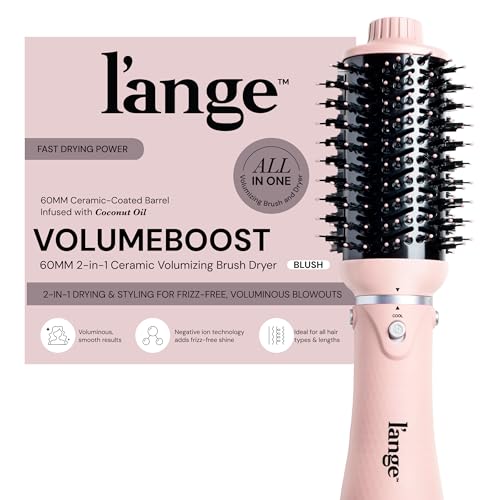
L’ANGE VolumeBoost 60 mm Ceramic Brush Dryer has the smallest barrel among the L’ANGE options here, at 60 mm, with a ceramic-coated surface infused with coconut oil. The maker says its negative-ion technology minimizes frizz and its lightweight DC motor supports faster styling; the brush also has two heat settings and a cool-shot switch. The smaller diameter can be easier to position around shorter sections than the 75 mm oval brush. Its two heat settings offer less temperature choice than a three-setting model, so buyers who want a dedicated cool, low and high selection should consider another option.
Bottom line: Pick it for a smaller barrel and two heat settings.
L’ANGE Le Volume Elevé 65 mm Titanium Brush

L’ANGE Le Volume Elevé 65 mm Titanium Brush differs from the oval-barrel models with a 65 mm teardrop shape and a cool, low and high heat selection. The maker says its bristles are designed to lift at the roots and smooth hard-to-reach areas, and its ionic technology is intended to reduce frizz. The shape may suit shoppers who prioritize root lift without moving to the largest barrel. One important constraint is the maker’s direction to start with completely dry hair, so this is not the right choice for someone who expects to use a brush dryer directly on wet hair.
Bottom line: Choose it for a teardrop barrel and root-focused styling on dry hair.
How to choose a volumizing brush dryer
Start with barrel diameter and shape: a smaller brush can work around shorter sections, while a larger barrel covers more hair per pass and makes broader bends. The choices here range from 60 mm to 75 mm, with one 1.5-inch round barrel; 1 inch equals 25.4 mm, so compare measurements in the same unit when shopping. Oval barrels offer a broad contact area, while round barrels are easier to use for shaping ends and curls. Heat control matters too: three settings provide more choices than two. Select the lowest effective heat, take sections small enough to wrap or brush evenly, and avoid holding heated airflow in one spot. A brush dryer is a styling tool, not a substitute for a separate dryer when you need to remove substantial moisture quickly.
Barrel size and hair length
A barrel that can reach the roots and move through each section is more useful than choosing by diameter alone. As a practical guide, try a barrel around 1 to 1.5 inches for shorter layers or tighter shaping; a 2.5- to 3-inch barrel is better suited to broad bends on longer sections. Hair length, density and the size of each section change how easily a brush moves through the hair, so those ranges are starting points rather than strict limits. If your layers are shorter than the brush barrel, a smaller round brush usually gives more control. If you want broad volume through longer lengths, a larger oval brush can cover more hair at once. Keep the tool moving and avoid forcing tangled hair through the bristles.
Brush dryer types and their tradeoffs
Barrel shape and heat control are the main differences among these brush dryers. A round barrel is suited to shaping ends and layers, while an oval barrel offers a wider surface for smoothing and volume. A teardrop shape is intended to bring bristles closer to the roots. The table compares these common choices by the job they suit; individual tools may differ in settings and materials.
| Brush type | Useful for | Tradeoff |
|---|---|---|
| Small round | Short layers and shaped ends | Works through less hair per section |
| Large oval | Broad smoothing and volume | Less precise around short layers |
| Teardrop | Closer root access | Shape and use directions vary by model |
Choose the shape based on where you want volume and whether your hair length allows the bristles to engage a section.
Heat use and hair protection
Use a brush dryer only when your hair is at the moisture level allowed by its maker; some tools are intended for damp hair, while others direct you to start with dry hair. Hot tools can damage hair when heat is excessive or repeatedly concentrated on one area, so begin with a lower setting and keep the brush moving. Detangle first and work in sections narrow enough for airflow and bristles to reach through. Let a section cool before brushing it out if you want its shape to hold. Keep the heated barrel away from skin, and unplug the tool after use so it can cool on a heat-safe surface. Never use a damaged cord or tool near water.
Frequently Asked Questions
Can a brush dryer be used on wet hair?
Use a brush dryer only at the moisture level its maker allows; some models are for damp hair and others require fully dry hair. Towel-drying first reduces the time hair spends under heat.
What barrel size works for short hair?
A barrel around 1 to 1.5 inches is a useful starting point for short layers and closer shaping. Choose a size that can reach the section without pulling or tangling it.
Does a larger brush create more volume?
A larger barrel covers wider sections and can create broader bends, but it may not grip short layers as well as a smaller brush. For closer root shaping, choose a barrel that can engage the hair near the scalp.
How many heat settings should a brush dryer have?
Two settings can work for a simple routine, while three settings that include cool offer more control over temperature selection. Start with the lowest effective heat and keep the brush moving.
Are round and oval brush dryers different?
Round barrels are useful for shaping layers, curls and flipped ends, while oval barrels provide a wider styling surface for smoothing and broad volume. Hair length and the desired finish determine which shape is easier to control.