
Best Glue for Nylon Fabric: 3 Flexible Options

Gorilla Fabric Glue 2.5 oz is the best glue for nylon fabric here because its maker says the waterproof bond stays flexible after washing and is washer- and dryer-safe once fully cured. Choose FITTDYHE Fabric Glue 60 mL if you want included clips and spreaders, or Aleene’s Fabric Fusion 4 oz for a larger container and woven-fabric repairs.
Fabric glue is an adhesive alternative to stitching for some repairs, but the right choice depends on the cloth and how the repaired area will be used.
We earn a commission if you buy through links on this page. As an Amazon Associate I earn from qualifying purchases. Products are compared on manufacturer specifications, not hands-on testing.
- Best overall: Gorilla Fabric Glue 2.5 oz – Its maker says the flexible, waterproof bond is washer- and dryer-safe after curing.
- Best for guided application: FITTDYHE Fabric Glue 60 mL – The package includes glue spreaders and clips, and the maker gives a 24–48-hour wait.
- Best for woven fabric: Aleene’s Fabric Fusion 4 oz – Its maker recommends it for woven materials including nylon, cotton, denim and flannel.
| Product | Best for | Container size | Washability | Shop |
|---|---|---|---|---|
| Gorilla Fabric Glue 2.5 oz | Washable repairs | 2.5 fl oz | Washer and dryer safe after cure | Check Price on Amazon |
| FITTDYHE Fabric Glue 60 mL | Guided application | 60 mL | Washable | Check Price on Amazon |
| Aleene’s Fabric Fusion 4 oz | Woven fabric | 4 oz | Washable | Check Price on Amazon |
Best Glue for Nylon Fabric
Compare these nylon-compatible fabric glues by application, container size and the repair conditions their makers describe.
Gorilla Fabric Glue 2.5 oz
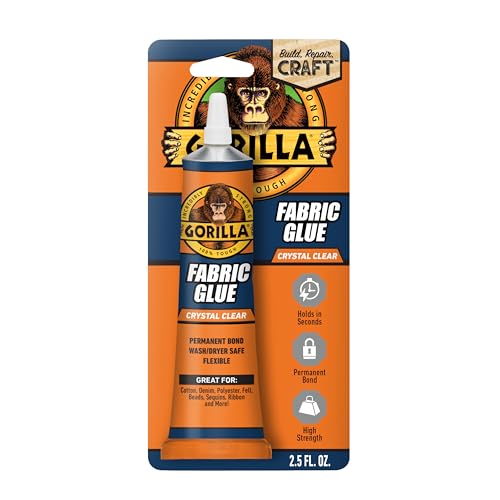
Gorilla Fabric Glue 2.5 oz is the option here whose maker specifically says its waterproof bond remains flexible after washing and is washer- and dryer-safe once fully cured. The clear, non-yellowing formula is designed for repairs and patches, and the maker lists nylon alongside cotton, denim, polyester, felt, leather and flannel. It can also bond embellishments such as ribbon, beads, sequins and rhinestones. This makes it a fit for nylon items that will be laundered.
Bottom line: Choose this for nylon repairs that need a flexible, washable bond.
FITTDYHE Fabric Glue 60 mL

FITTDYHE Fabric Glue 60 mL stands out for its included spreaders and clips, which support an even application along a seam. The maker lists nylon among the compatible materials and says to wait 24–48 hours after applying and securing the seam. Its 60 mL clear container may suit someone making a limited repair or working on clothing and fabric crafts. The maker also calls it washable. Unlike Gorilla Fabric Glue 2.5 oz, the maker does not describe waterproof performance or washer-and-dryer safety, so this is a less certain fit when a repaired item will face frequent laundering.
Bottom line: Pick this when included application aids and a 24–48-hour wait matter most.
Aleene’s Fabric Fusion 4 oz

Aleene’s Fabric Fusion 4 oz is the largest container here and is aimed at woven-fabric repairs and crafts. Its maker recommends it for woven materials including nylon, cotton, denim, flannel and silk, and says it dries flexible without sewing or heat setting. The maker also cautions against stretchy fabrics such as spandex, jersey and knits, as well as patches, heavy synthetics and felt. That makes this a more specific choice than a general nylon repair adhesive: it suits a woven nylon hem or embellishment, but not a stretch-knit repair or patch attachment.
Bottom line: Choose this for woven nylon projects, not stretchy fabric or patches.
How to choose fabric glue for nylon
For nylon, start with explicit nylon compatibility, then match the bond to washing and movement. Fabric adhesives are applied to clean, dry material; dirt, oil, water-repellent finishes and fabric softener can interfere with contact. Test a hidden swatch first, because glue can leave a visible mark or stiff spot even when the adhesive is clear. For a seam that flexes during wear, prioritize a formula whose maker describes a flexible bond. For a frequently washed item, require a clear laundering claim and let the adhesive fully cure before washing. Thin, even coverage avoids a bulky ridge, while a wider overlap gives the adhesive more fabric-to-fabric contact.
Nylon repair fit and preparation
A nylon repair needs sound fabric on both sides of the bonded area; glue cannot restore cloth that has frayed into loose threads or lost its coating. Trim only loose fibers, keep the fabric flat, and align edges before applying adhesive. For a tear, place a compatible fabric patch behind the opening when the adhesive is intended for patching; these products differ on patch suitability, so verify that use before applying. A narrow hem or seam is a better glue candidate than a high-tension strap or load-bearing seam, where stitching is more reliable. Let the bond cure without flexing or laundering it, using the product’s wait time when available.
Fabric glue types and repair choices
Fabric glue is useful for hems, embellishments and small repairs, while sewing is usually the stronger choice for structural seams and repeated pulling. Flexible adhesive helps clothing move more naturally, but even a flexible bond can feel stiffer than unglued fabric. Waterproof and washable are separate practical claims: a waterproof bond resists water exposure, while washer- and dryer-safe language addresses laundering after cure. Use the table to match a repair need to what each maker says, not as a guarantee for every nylon finish or construction.
| Repair need | Choice | Decision point |
|---|---|---|
| Frequent laundering | Gorilla Fabric Glue 2.5 oz | Maker says washer- and dryer-safe after cure |
| Guided seam application | FITTDYHE Fabric Glue 60 mL | Includes spreaders and clips; wait 24–48 hours |
| Woven nylon craft | Aleene’s Fabric Fusion 4 oz | Maker excludes stretchy fabric and patches |
Common nylon glue mistakes
The most common mistake is bonding over a finish that keeps adhesive from contacting the fibers; water-repellent coatings and oily residue are frequent obstacles. Another is choosing glue for a stretchy knit even though the formula is intended for woven cloth, which can lead to a stiff or failed repair as the fabric moves. Do not treat clear drying as proof that a bond is flexible or washable; those properties need to be stated separately. Keep adhesive away from skin and eyes, ventilate the work area, and keep it out of children’s reach. With a high-stress seam or a repair that must carry weight, use stitching rather than relying on fabric glue.
Frequently Asked Questions
How long should nylon fabric glue cure?
Allow the full cure period before flexing or washing a nylon repair. FITTDYHE Fabric Glue 60 mL gives a 24–48-hour wait; cure times can differ between formulas, so verify the product-specific timing before laundering.
Can fabric glue repair a nylon jacket?
Fabric glue can suit a small, low-stress repair on a nylon jacket if the adhesive is compatible with the fabric and its finish. Water-repellent coatings can interfere with bonding, so test a hidden area before treating the visible repair.
Is fabric glue strong enough for a nylon seam?
Fabric glue is better suited to light-duty seams than seams under repeated pulling or weight. For a strap, load-bearing seam, or area under steady tension, stitching is the safer repair choice.
Can nylon fabric glue go in the washing machine?
Only use a glue for machine-washed nylon when its maker says the bond is washer-safe after curing. Gorilla Fabric Glue 2.5 oz is described by its maker as washer- and dryer-safe once fully cured; wait until the cure period is complete.
Does fabric glue work on stretchy nylon?
Stretchy nylon needs an adhesive suitable for knit fabric and repeated movement. Aleene’s Fabric Fusion 4 oz is specifically not recommended by its maker for stretchy fabrics such as jersey and knits, so check compatibility before using any glue on stretch material.