
TripleLite 180 Degree Flashlights Compared by Output and Use

TripleLite TL1000 is the best fit for most people who want a TripleLite 180-degree flashlight because it combines the highest output, 1,000 lumens, with USB-C recharging.
We earn a commission if you buy through links on this page. As an Amazon Associate I earn from qualifying purchases. Products are compared on manufacturer specifications, not hands-on testing.
- Best overall: TripleLite TL1000 – Its 1,000-lumen output and USB-C rechargeable design combine high brightness with rechargeable power.
- Best for keychains: TripleLite TL050 Keychain 4-Pack – At 1.1 ounces, it is designed for keychain, bag, or backpack carry.
- Best for longer use: TripleLite TL800 – The maker says its runtime exceeds 5 hours, with high, low, and strobe settings.
| Product | Best for | Output | Power | Weight | Shop |
|---|---|---|---|---|---|
| TripleLite TL1000 | Rechargeable brightness | 1,000 lumens | USB-C rechargeable | — | Check Price on Amazon |
| TripleLite TL800 | Longer runtime | 800 lumens | — | — | Check Price on Amazon |
| TripleLite TL300 | Compact carry | 300 lumens | — | 4.5 oz | Check Price on Amazon |
| TripleLite TL050 Keychain 4-Pack | Keychain carry | 50 lumens | 2 AA batteries included | 1.1 oz each | Check Price on Amazon |
TripleLite 180 degree flashlights
Compare the handheld options by output, power format, and carry needs before choosing a beam style.
TripleLite TL1000

TripleLite TL1000 has the highest output among these handheld options at 1,000 lumens, and its USB-C rechargeable design avoids routine disposable-battery replacement. Its curved 180-degree beam is meant to spread light across the center and sides of your view, while the magnetic handle and included lanyard add ways to position or carry it. Consider it for outdoor tasks or emergencies where broad illumination matters. The limitation is that the maker gives no runtime figure; verify runtime if you need to plan around a specific number of hours.
Bottom line: Choose this for maximum listed output and USB-C recharging.
TripleLite TL800

TripleLite TL800 stands out for its runtime: the maker says it runs for 5+ hours, and its high, low, and strobe settings let you choose between brightness, longer use, and signaling. The 800-lumen output and 180-degree arc suit general handheld use such as walking or keeping a light ready for outages. It offers a middle ground between the 300-lumen compact model and the 1,000-lumen rechargeable option. The limitation is that its power format is unclear here; confirm the required battery or charging setup if you need it ready for repeated use.
Bottom line: Choose this if a 5+ hour runtime and multiple modes matter.
TripleLite TL300

TripleLite TL300 is a lighter handheld choice at 4.5 ounces, with 300 lumens. The maker gives a beam reach of up to 124 feet ahead and 124 feet wide, useful context for deciding whether broad nearby visibility or higher output is the priority. Its compact size suits a car kit, bedside storage, or a backpack without stepping up to the 800- or 1,000-lumen models. The limitation is lower listed output than the other full-size handheld choices; select a brighter light if maximum illumination is your deciding factor.
Bottom line: Choose this for a lighter carry light with a beam reach.
TripleLite TL050 Keychain 4-Pack
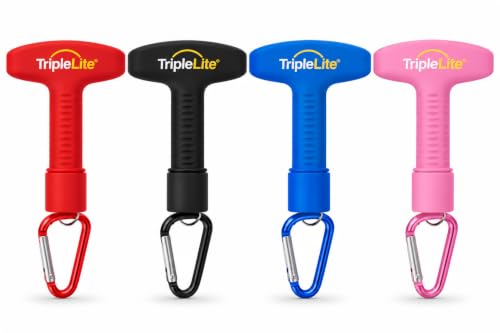
TripleLite TL050 Keychain 4-Pack is designed for small-item carry: each flashlight weighs 1.1 ounces, and the four-pack lets you place lights in several locations. Its 50-lumen output and 180-degree beam suit short-range everyday visibility, such as finding a car or walking near home, rather than matching the brightness of larger handheld models. The package includes two AA batteries. The limitation is its lower output, which makes it a poor fit for buyers who need stronger illumination for outdoor work or distance.
Bottom line: Choose this for lightweight keychain lighting in a multi-pack.
How to choose a 180-degree flashlight
Choose by the balance of brightness, beam spread, and runtime rather than lumens alone. Lumens measure total visible light output; they do not tell you how far a beam reaches, so use a beam distance when distance matters. A 180-degree beam spreads light laterally, which can help with nearby surroundings, while a narrower beam generally concentrates light farther ahead. Match the output to the task: a compact 50-lumen light suits close-range carry, while higher-output models make more sense when you need stronger general illumination. Compare runtime and available modes as well; a low setting can preserve power when full brightness is unnecessary.
Handheld flashlight or headlamp
A handheld flashlight is the straightforward choice when you want to point light with your hand; a headlamp is better when both hands need to stay free. For walking, a broad beam can make nearby surroundings easier to see, but it does not replace a focused beam when you need to inspect something far away. For repairs, camping setup, or carrying gear, a headlamp keeps light aligned with your gaze without occupying a hand. The included headlamp is a different format from the handheld lights, so select it only if wearable, hands-free use is the priority. Do not assume a headlamp and flashlight share the same beam reach just because both use wide-beam LEDs.
Compare the TripleLite flashlight formats
Use the table to narrow the choice by output and power format; beam reach is included only where a figure is provided.
| Need | Suitable format | Output or power detail |
|---|---|---|
| Keychain carry | Compact keychain flashlight | 50 lumens; 1.1 ounces each |
| Portable handheld | Compact handheld flashlight | 300 lumens; 4.5 ounces |
| Longer stated runtime | Multi-mode handheld flashlight | 800 lumens; maker says 5+ hours |
| Rechargeable high output | USB-C handheld flashlight | 1,000 lumens; rechargeable |
Everyday carry favors compact size, while a home emergency light may benefit from greater output or a runtime. Choose a rechargeable model if USB-C charging fits your routine; choose a battery-powered format only after confirming what replacement batteries it takes. A 180-degree spread is useful for peripheral illumination, but output and beam distance remain separate measures. When distance is central to your use, compare the beam reach rather than assuming the highest lumen number always reaches farthest.
Using and maintaining a flashlight
Check the light before you depend on it: switch through each mode and confirm the beam is unobstructed. For emergency storage, keep the flashlight where you can reach it and inspect battery-powered lights periodically for depleted or leaking cells; remove batteries during long-term storage if the manufacturer permits. Rechargeable lights need periodic charging so they are not empty when needed, but charging time and storage intervals vary by battery design. Do not look directly into a bright LED beam or point it at another person’s eyes. For outdoor use, water resistance is not the same as waterproofing, so avoid submersion unless the maker provides a specific submersion rating.
Frequently Asked Questions
Do 180-degree flashlights light farther ahead?
Not necessarily. A 180-degree beam spreads light across a wider area, while distance depends on beam focus and output; compare a reach when you need to see far ahead.
What does a flashlight lumen number measure?
Lumens measure the total visible light output, not beam distance or runtime. A wider beam can distribute the light over more area, so choose based on both output and the task.
How often should I check an emergency flashlight?
Check an emergency light every few months and before severe-weather seasons, confirming that it turns on and its batteries or rechargeable charge are ready. Replace depleted batteries promptly and watch for corrosion in battery compartments.
Can a water-resistant flashlight be submerged?
Water resistance does not automatically mean a flashlight can be submerged. Check for a specific immersion rating before using it underwater, and keep unrated lights out of water.