
PEAK Optix Wiper Blades Compared by Design and Fit

The 26-inch PEAK Optix Beam is the closest match for most drivers seeking PEAK Optix wiper blades, with beam construction and an EZ-Snap connector designed to fit most wiper arms. Choose another option if you need a different length, a winter-focused blade, or a commercial saddle-arm replacement.
Wiper blades clear water and debris from the windshield; the right length and arm connector depend on the vehicle.
We earn a commission if you buy through links on this page. As an Amazon Associate I earn from qualifying purchases. Products are compared on manufacturer specifications, not hands-on testing.
- Best overall: PEAK Optix Beam 26-inch – The 26-inch beam blade combines an all-weather design with an EZ-Snap connector for most wiper arms.
- Best for silicone hybrid: PEAK Silicone Plus Hybrid 26-inch – Its hybrid design uses a water-repellent silicone compound and tri-layer wiping technology.
- Best for winter conditions: PEAK Snow Beast 14-inch – The 14-inch beam blade has a spoiler designed to resist snow and ice buildup.
- Best for two-blade replacement: Rain-X WeatherBeater 26- and 16-inch Set – The set includes conventional blades in 26-inch and 16-inch lengths.
| Product | Best for | Length | Blade design | Connector or fit | Shop |
|---|---|---|---|---|---|
| PEAK Optix Beam 26-inch | All-weather beam | 26 in | Beam | EZ-Snap; most arms | Check Price on Amazon |
| PEAK Silicone Plus Hybrid 26-inch | Silicone hybrid | 26 in | Hybrid | Universal connector | Check Price on Amazon |
| PEAK Snow Beast 14-inch | Winter conditions | 14 in | Beam | Innovative connector | Check Price on Amazon |
| PEAK Transport Heavy Duty 26-inch | Commercial vehicles | 26 in | Heavy-duty saddle | Saddle wiper arm | Check Price on Amazon |
| Rain-X WeatherBeater 26- and 16-inch Set | Two-blade replacement | 26 and 16 in | Conventional | Pre-installed adapter | Check Price on Amazon |
PEAK Optix Wiper Blades and Alternatives
Compare blade style, length and intended use before choosing a replacement.
PEAK Optix Beam 26-inch

The Optix is the 26-inch beam-style choice in this group, with a heavy duty spoiler and EZ-Snap universal connector. PEAK says its design distributes pressure across the wiping element and provides 2X the durability; that claim makes it relevant for drivers seeking an all-weather blade rather than a specialized winter or commercial model. The connector is designed to fit most wiper arms, not every arm. Confirm the vehicle’s required blade length and arm connection before ordering, since a matching length alone does not guarantee fit.
Bottom line: Choose this for a 26-inch beam blade with an EZ-Snap connector.
PEAK Silicone Plus Hybrid 26-inch
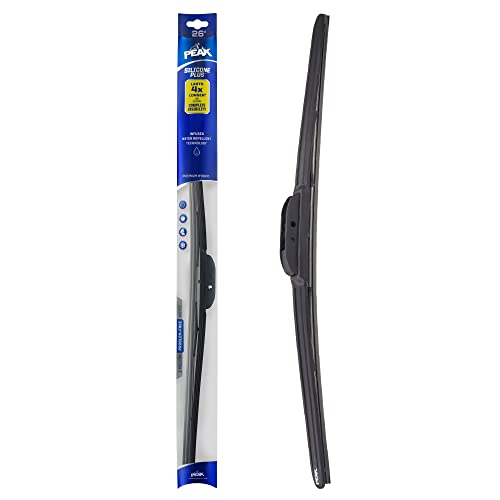
The Silicone Plus stands apart with hybrid construction and a silicone wiping compound, rather than the Optix’s beam design. PEAK says its tri-layer wiping technology uses nano-graphite, PTFE and MoS2, and claims 2 million wipes and four times the required industry-standard life. Its water-repellent formula is intended to coat the windshield and shed rain and winter spray. Those performance claims are maker claims, not a promise of a particular service life; choose another length if your vehicle does not use a 26-inch blade.
Bottom line: Choose this if you want a 26-inch hybrid blade with a silicone compound.
PEAK Snow Beast 14-inch

The Snow Beast is the winter-specific option here, with a 14-inch beam blade and a large wiping element intended for clearing snow and ice. Its singular spoiler is designed to resist buildup, and the wiping element is graphite coated. PEAK describes the blade as suited to extreme winter weather; that focus makes it less suitable as a general substitute when your vehicle requires a longer blade or a different type. The product family spans 13 to 28 inches, but this particular blade is 14 inches.
Bottom line: Choose this for a 14-inch blade designed around snow and ice.
PEAK Transport Heavy Duty 26-inch

The Transport blade is built around commercial-vehicle use and a wide saddle design, unlike the Optix’s passenger-style beam format. The 26-inch blade is intended for Class 6–8 trucks, Class A RVs, and school or transit buses with a saddle wiper arm. Its heavy duty natural-rubber wiping element is designed for those applications. That specific arm requirement is a meaningful limitation: it is not a general-purpose replacement for vehicles with other arm connections, even when the blade length matches.
Bottom line: Choose this only for a supported commercial vehicle with a saddle arm.
Rain-X WeatherBeater 26- and 16-inch Set

The WeatherBeater differs from PEAK’s single-blade options by supplying a 26-inch and a 16-inch conventional blade together. Rain-X says the set meets or exceeds original equipment manufacturer standards; it uses a galvanized steel frame, natural-rubber squeegee and multiple pressure points. A pre-installed adapter is included, but the set is described as vehicle-specific, so the two lengths alone do not establish compatibility. Check that both sizes and the adapter match your vehicle before choosing this alternative.
Bottom line: Choose this when your vehicle calls for a 26-inch and 16-inch pair.
How to choose a PEAK Optix wiper blade
Start with the vehicle’s specified blade length and arm type, then choose the blade construction for your conditions. Beam blades use a flexible structure to distribute pressure along the windshield; conventional blades use a frame with multiple pressure points, while hybrid designs combine features of both. A length match does not ensure the connector fits. Confirm the required length for each side and the arm connection before ordering; this is especially important when comparing universal connectors with saddle-arm commercial blades. Most conventional blades are replaced about every 6 to 12 months, but heat, sunlight, road grit and frequent use can shorten that interval. Replace a blade sooner if its edge cracks or leaves persistent unwiped bands.
Blade styles for rain and winter
Beam construction is a practical choice for a curved windshield because its flexible form is designed to maintain contact across the wiping element. Conventional blades use a supporting frame, and hybrid blades pair that frame-like support with a covered or streamlined profile. For winter driving, a blade designed to resist snow and ice buildup may be useful, but no wiper can remove heavy snow safely from a windshield on its own. Clear accumulated snow and ice before driving, and do not run blades over a frozen windshield. The table distinguishes the five options by their design and use; vehicle compatibility still depends on the needed length and arm.
| Option | Design | Stated focus |
|---|---|---|
| Optix | Beam | All-weather |
| Silicone Plus | Hybrid | Water-repellent compound |
| Snow Beast | Beam | Snow and ice |
| Transport | Wide saddle | Commercial vehicles |
| WeatherBeater | Conventional | Two-blade set |
Check blade length and arm fit
Use the vehicle maker’s specified lengths for both sides rather than assuming the driver and passenger blades match. Many vehicles use different lengths, and a blade that is too long can overlap the other blade or contact trim; one that is too short leaves more glass uncleared. Arm connections also vary, including hook, pin and bayonet styles, so confirm the connector type as well as the measured length. The Optix EZ-Snap connector is designed for most arms, while the Transport blade specifically calls for a saddle wiper arm. If your vehicle has a rear wiper, check its size separately rather than applying a front-blade measurement.
When to replace windshield wipers
Replace windshield wipers about every 6 to 12 months as a general maintenance interval, with earlier replacement when heat, UV exposure, dust or heavy use damages the edge. Streaking, skipping, chatter and visible cracks are common signs a blade is no longer clearing evenly. Clean the rubber edge and windshield periodically with a damp cloth to remove grit; abrasive cleaners can damage the wiping edge. In freezing weather, free blades from ice before operating them, and avoid forcing a blade stuck to the glass. If a new blade still streaks, check for a contaminated windshield, incorrect length, or a connector that is not seated securely.
Frequently Asked Questions
How often should windshield wiper blades be replaced?
A common replacement interval is every 6 to 12 months. Heat, UV exposure, grit and frequent operation can shorten that span, so replace blades sooner if they crack, skip or leave persistent streaks.
Can I use the same wiper blade length on both sides?
Not always; many vehicles use different lengths for the driver and passenger sides. Check each position’s specified length, since an oversized blade can overlap or strike trim.
What is the difference between beam and conventional wipers?
Beam blades use a flexible structure to distribute pressure along the wiping edge, while conventional blades use a framed support with multiple pressure points. Hybrid blades combine features of those designs.
Should I run wipers over a frozen windshield?
No; free blades from ice and clear heavy snow before operating the wipers. Running a blade frozen to the glass can damage its edge or strain the wiper mechanism.
How do I know whether a wiper connector will fit?
Match the vehicle’s arm type to the blade connector, not just the blade length. Common arm styles include hook, pin and bayonet, while a saddle-arm blade requires that specific arm design.