
Universal Chainsaw Sharpeners: 5 Tools Compared

For most people, Slodtranz Universal Chainsaw Sharpener Jig Kit is the most adaptable universal chainsaw sharpener because its jig has a 30° front angle and the kit includes seven diamond bits. Choose a squeeze-style tool instead if you want to sharpen by pressing the chain against a stone; choose Oregon Universal Field 7-Piece Kit if you prefer hand filing with a guide and multiple file sizes.
We earn a commission if you buy through links on this page. As an Amazon Associate I earn from qualifying purchases. Products are compared on manufacturer specifications, not hands-on testing.
- Best overall: Slodtranz Universal Chainsaw Sharpener Jig Kit – The jig uses a 30° front angle and comes with seven diamond bits.
- Best for hand filing: Oregon Universal Field 7-Piece Kit – Includes three round-file sizes, a flat file and a filing guide.
- Best for broad chain range: SWOJG Universal Sharpener with 5 Bits – Its fit range is 4 to 22 inches.
| Product | Best for | Sharpening style | Chain range | Included abrasives | Shop |
|---|---|---|---|---|---|
| Slodtranz Universal Chainsaw Sharpener Jig Kit | Guided sharpening | Hand-turn jig | 4–22 in. | 7 diamond bits | Check Price on Amazon |
| Oregon Universal Field 7-Piece Kit | Manual filing | Hand files and guide | — | 3 round files, flat file | Check Price on Amazon |
| SWOJG Universal Sharpener with 5 Bits | Wide stated range | Hand-turn jig | 4–22 in. | 5 tungsten steel bits | Check Price on Amazon |
| Portable Squeeze Sharpener with 10 Stones | Squeeze sharpening | Squeeze-on stone tool | 12–22 in. | 10 stones | Check Price on Amazon |
| OMCCHK Squeeze Sharpener with 4 Stones | Simple squeeze tool | Squeeze-on stone tool | 12–22 in. | 4 stones | Check Price on Amazon |
Universal Chainsaw Sharpeners Compared
Compare the sharpening method, stated chain range and included abrasives before choosing a kit.
Slodtranz Universal Chainsaw Sharpener Jig Kit

Slodtranz Universal Chainsaw Sharpener Jig Kit stands apart with a guided jig rather than a squeeze-on sharpener or a hand-file set. Its two fixed sharpening holes use a 30° front angle, and the kit includes seven diamond bits, a wrench, gloves and a cleaning brush. That setup suits someone who wants a repeatable guide and several bits in one portable kit. The chain range is 4 to 22 inches, but chain length alone does not establish cutter compatibility; match the bit and guide setup to the chain before sharpening.
Bottom line: Choose this if you want a guided jig with several interchangeable bits.
Oregon Universal Field 7-Piece Kit
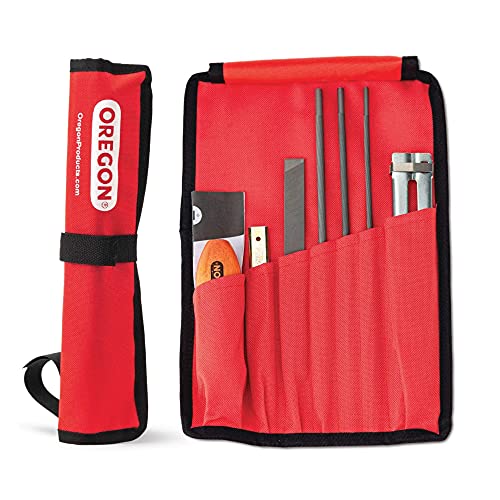
Oregon Universal Field 7-Piece Kit is the manual-filing option, with three round files sized 5/32, 3/16 and 7/32 inch, plus a 6-inch flat file, handle, filing guide and travel pouch. The file guide also supports depth-gauge setting, so this kit fits users who want to maintain cutters and depth gauges with hand tools rather than a jig. Its file sizes make it important to identify the chain’s required file diameter first; a wrong size can change the cutter profile.
Bottom line: Pick this for hand filing when you know the correct file diameter for your chain.
SWOJG Universal Sharpener with 5 Bits

SWOJG Universal Sharpener with 5 Bits combines a manual jig with five tungsten-steel sharpening bits and states a 4-to-22-inch chainsaw range. That broad stated span may suit a household with saws of different bar lengths, and the included bits keep the sharpening method distinct from hand filing. The specifications use both “titanium plated diamond” and “tungsten steel” to describe the bits, so verify the bit material before treating that distinction as decisive. As with any jig, choose by chain pitch and cutter geometry, not bar length alone.
Bottom line: Choose this if a wide stated bar-length range matters and you confirm the bit type.
Portable Squeeze Sharpener with 10 Stones

Portable Squeeze Sharpener with 10 Stones uses a squeeze-on sharpening action and comes with ten stones, unlike the guided, handle-turned jigs. It is described for 12-to-22-inch chainsaws and says the stone stays close to the chain during sharpening, making it a fit for a portable outdoor kit when the saw falls in that stated span. The approach is less adaptable by chain range than the 4-to-22-inch jigs, and the chain’s pitch and cutter style still need to match the tool’s setup.
Bottom line: Pick this for a squeeze-style tool if your saw is within its range.
OMCCHK Squeeze Sharpener with 4 Stones

OMCCHK Squeeze Sharpener with 4 Stones is another squeeze-style sharpener, but its kit includes four stones rather than ten. It is intended for 12-to-22-inch chainsaws and mentions one- or two-hole saw chains; that detail may matter when matching the tool’s attachment to the chain. Choose it if a compact squeeze-based method is the priority and the included stone count is sufficient for your needs. A bar-length range does not by itself confirm compatibility with every chain pitch, so identify the chain specification before use.
Bottom line: Choose this if the squeeze method and stated chain range suit your saw.
How to choose a universal chainsaw sharpener
Choose by chain pitch, cutter type and sharpening method, not by bar length alone. A chainsaw’s bar length does not identify the round-file diameter or jig setup; common round-file sizes include 5/32, 3/16 and 7/32 inch, but the correct size depends on the chain. Hand files give direct control, while a jig constrains the sharpening angle and a squeeze tool brings a stone to the chain. If you maintain more than one chain, first check each chain’s pitch and file-size recommendation, then choose a tool that covers those combinations. Never sharpen while the saw is running: remove the battery or disconnect the spark-plug lead, engage the chain brake, and wear gloves to limit cut risk from sharp cutters.
What chain range really tells you
A 4-to-22-inch or 12-to-22-inch range describes compatible saw bar lengths, not every chain specification. Chains also differ by pitch, gauge and cutter design; the file diameter and sharpening angle must match the chain, and depth gauges need separate attention. A practical decision rule is to choose a tool only after confirming its bar range includes your saw and its guide or abrasive matches your chain pitch. Oregon’s kit offers file sizes instead of a bar range, so select its round file using the chain maker’s specification. A longer bar does not automatically need a larger round file; file size follows chain design.
Jigs, squeeze tools and hand files
Jigs, squeeze-on tools and file kits solve the same maintenance task with different levels of guidance. A jig holds a fixed alignment and turns a bit through a guide; a squeeze tool presses the chain against a stone; hand filing relies on a file guide and the user’s filing motion. Use this comparison to narrow the method before checking fit.
| Method | Useful when | Check before use |
|---|---|---|
| Guided jig | You want a constrained angle and bit set | Chain pitch and compatible bit |
| Squeeze-on stone | You want a compact press-and-sharpen approach | Bar range and chain attachment fit |
| Hand file | You want direct manual control and depth-gauge tools | Round-file diameter and filing angle |
Sharpening safely and consistently
Secure the saw before sharpening and keep the engine or motor disabled; a stationary chain can still cut skin. File cutters with consistent strokes and angles, working each side evenly, then check the depth gauges because their height affects how much wood the cutters take. A flat file and depth-gauge guide help with that separate step; the round file sharpens the cutting edge. Clear chips and filings from the work area, and stop if the chain is cracked, damaged or unevenly worn rather than trying to correct structural damage by sharpening.
Frequently Asked Questions
How do I find my chainsaw chain pitch?
Chain pitch is commonly stamped on the guide bar or identified in the saw manual; it is the distance between three consecutive rivets divided by two. Match the sharpener’s guide and abrasive to that pitch, because a bar-length match alone does not ensure fit.
What round-file size does my chainsaw chain need?
The chain maker’s sharpening chart gives the correct round-file diameter, often one of 5/32, 3/16 or 7/32 inch. Confirm the chain model or pitch before choosing among those sizes; using the wrong diameter can alter the cutter shape.
How often should a chainsaw chain be sharpened?
Sharpen when the chain stops pulling itself into wood, produces fine dust instead of chips, or needs pressure to cut. Dirt and contact with soil dull cutters quickly, so inspect the edge after any ground contact rather than relying on a fixed number of hours.
Can I sharpen a chainsaw chain while it is on the saw?
Yes, a chain is commonly sharpened while mounted, but the saw must be completely disabled and stable. Remove the battery or disconnect the spark-plug lead, engage the chain brake, and use gloves because cutters remain sharp while stationary.
Why does my chainsaw cut crooked after sharpening?
Unequal cutter lengths or inconsistent filing angles can pull a chain to one side. Compare left- and right-hand cutters and correct the shorter side carefully; also inspect for damaged teeth or uneven depth gauges before continued cutting.