
6 x 24 x 50 Scope Options Compared by Reticle and Use

For a 6-24×50 scope with a first-focal-plane MIL reticle and a zero stop, choose Athlon Argos BTR GEN2 6-24×50; those features are the deciding difference for dialing corrections at changing magnification. Shooters who prefer a BDC hunting reticle or illuminated red-and-green aiming points should consider a different configuration.
We earn a commission if you buy through links on this page. As an Amazon Associate I earn from qualifying purchases. Products are compared on manufacturer specifications, not hands-on testing.
- Best overall: Athlon Argos BTR GEN2 6-24×50 – Its first-focal-plane APMR MIL reticle and Precision Zero Stop suit shooters who dial corrections across the 6-24x range.
- Best for BDC hunting: Vortex Crossfire II 6-24×50 AO – The Dead-Hold BDC reticle and capped reset turrets emphasize holdover estimates and a protected adjustment setup.
- Best for open reticle view: Arken SH4J GEN2 6-24×50 FFP – The FFP VHR reticle has an open design, and the side knob adjusts parallax from the shooting position.
| Product | Best for | Reticle | Parallax control | Shop |
|---|---|---|---|---|
| Athlon Argos BTR GEN2 6-24×50 | FFP MIL dialing | APMR FFP MIL | 10 yd to infinity | Check Price on Amazon |
| Vortex Crossfire II 6-24×50 AO | BDC hunting holds | Dead-Hold BDC | Adjustable objective | Check Price on Amazon |
| Arken SH4J GEN2 6-24×50 FFP | Open FFP reticle | VHR FFP, illuminated | Side knob; range numbers | Check Price on Amazon |
| CVLIFE 6-24×50 AOE Illuminated | Red-green illumination | Glass-etched; red/green | Adjustable objective | Check Price on Amazon |
| CVLIFE 6-24×50 AOE with Free Mount | Specified field view | Red/green illuminated | AOE; adjustable objective | Check Price on Amazon |
6-24×50 Scope Options
Compare reticle layout and parallax adjustment first, since those define how each scope supports aiming and correction.
Athlon Argos BTR GEN2 6-24×50
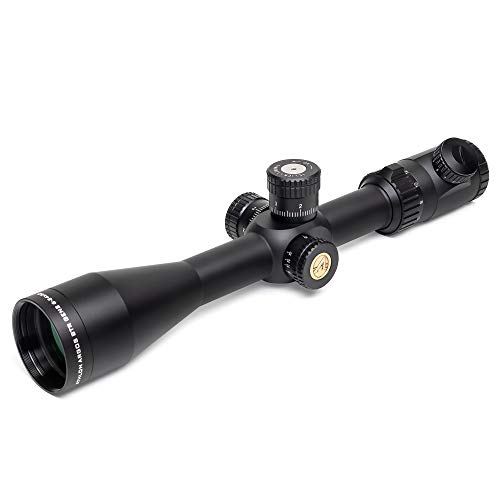
The first-focal-plane MIL reticle and zero-stop system distinguish this scope from the other 6-24×50 options. Athlon says the reticle remains usable across magnification settings, while its 0.1 MIL clicks and 18 MIL total adjustment support dialing corrections. The parallax adjustment spans 10 yards to infinity, which suits shooters working at varied distances. Fully multicoated optics are also part of the configuration. Its limitation is the MIL-based reticle and clicks: buyers who prefer MOA measurements or a simple BDC holdover layout may find another reticle system easier to use.
Bottom line: Choose it if you want an FFP MIL reticle and a zero stop for returning to a dialed zero.
Vortex Crossfire II 6-24×50 AO

The Dead-Hold BDC reticle sets this scope apart for hunters estimating holdover at varying ranges. Its adjustable objective provides image focus and parallax removal, while capped reset turrets use MOA clicks and can be reset to zero after sight-in. Vortex also describes long eye relief, a forgiving eye box and a fast-focus eyepiece as part of the setup. This configuration favors a BDC approach over the FFP MIL reticle or illuminated reticles found on other choices. Buyers who need an exposed, frequently dialed turret setup should weigh that tradeoff before choosing capped turrets.
Bottom line: Pick it if you want a BDC reticle and capped MOA turrets for hunting.
Arken SH4J GEN2 6-24×50 FFP

The VHR reticle’s open design is the key distinction here, paired with a first-focal-plane layout and illumination. Arken says the SH4J uses Japanese ELD glass, fully multicoated lenses and an AZS zero stop; a side knob adjusts parallax with range numbers visible from the shooting position. The VHR option is aimed at shooters prioritizing an unobstructed target view, while the product also offers a VPR reticle choice. The configuration names VHR, so confirm the desired reticle variant before ordering if you want VPR instead.
Bottom line: Choose it if an open FFP reticle and side parallax knob suit your practice.
CVLIFE 6-24×50 AOE Illuminated

Red-and-green illumination distinguishes this CVLIFE from the non-illuminated reticle configurations in this group. Its adjustable objective is intended to remove parallax and assist range estimation, while a fast-focus eyepiece includes diopter adjustment for reticle focus. The reticle is etched on glass, and the product name specifies a 20mm mount. That mount detail matters when planning a compatible setup; confirm the rifle’s rail and mounting requirements before ordering. The feature set does not provide a specific click value here, so shooters who need to dial measured corrections should prioritize a scope with a clearly matched reticle and adjustment system.
Bottom line: Pick it if adjustable red or green illumination is your priority.
CVLIFE 6-24×50 AOE with Free Mount
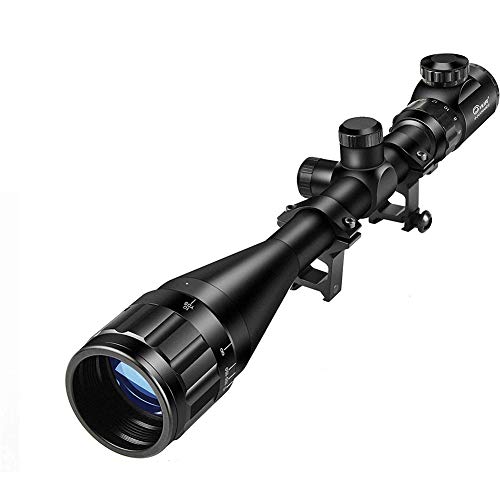
The field of view and click value make this CVLIFE the most numerically defined option for those two specifications: 28 feet at 100 yards and 1/8 inch per click at 100 yards. It offers red-and-green illumination, 6-24x magnification and a 50mm objective, and the name indicates a free mount. These figures can help compare sight pictures and adjustment increments with a particular shooting setup.
Bottom line: Choose it if the 28-foot field of view and stated click value fit your needs.
How to choose a 6-24×50 scope
Choose a 6-24×50 scope by matching its reticle and turret system to whether you hold over or dial corrections. A first-focal-plane reticle scales with magnification, so its subtensions remain valid throughout the zoom range; a second-focal-plane reticle generally has accurate subtensions at only one magnification, often the highest. MIL and MOA are different angular systems, so pair the reticle units with matching turret units rather than converting during a shot. A 0.1 MIL adjustment equals about 0.36 inch at 100 yards; 1 MOA is about 1.05 inches at that distance. If you expect to dial frequently, prioritize matched reticle and turret units and a zero-return feature; for simpler holdover, select a reticle designed for that purpose.
What the 50mm objective means at 6x and 24x
A 50mm objective produces an exit pupil of about 8.3mm at 6x and 2.1mm at 24x, calculated by dividing objective diameter by magnification. The smaller exit pupil at 24x makes eye position less forgiving and can make a dim image more noticeable in low light. A larger objective does not by itself guarantee a brighter view; lens coatings, image quality, and the shooter’s eye pupil also matter. High magnification narrows the field of view and makes reticle movement more visible, so use only as much magnification as the target and conditions call for. Before mounting, verify the scope’s tube diameter and the ring height needed to clear the rifle and objective bell.
How parallax adjustment affects aiming
Parallax adjustment helps align the target image and reticle so small changes in eye position do not shift the apparent aiming point. Adjustable-objective designs use a ring at the front of the scope, while side-focus designs place the control near the turret area for access from a shooting position. Range markings are starting references, not a substitute for checking parallax at the actual distance. To check, keep the rifle stable and move your eye slightly behind the eyepiece; if the reticle appears to move across the target, refine the adjustment. Set parallax for the target distance when the scope offers the control, then settle into a consistent cheek weld before firing.
Reticle and adjustment styles at a glance
Reticle style determines whether a scope emphasizes measured corrections, holdover, or visibility in changing light. Use this comparison to narrow the style before considering smaller conveniences such as eyepiece focus or turret caps.
| Need | Scope feature | Tradeoff |
|---|---|---|
| Dial measured corrections | Matched MIL or MOA reticle and turrets | Requires learning the angular system |
| Estimate hunting holdover | BDC reticle | Holdover marks rely on the intended setup |
| Aim in varied light | Illuminated reticle | Requires selecting a useful illumination level |
| Return to a prior zero | Zero-stop system | Must be set up at the established zero |
A BDC reticle’s holdover marks depend on the ammunition, velocity, and sight-in assumptions behind its design. Confirm those assumptions against your setup rather than treating a BDC mark as a universal distance value.
Frequently Asked Questions
What does 6-24×50 mean on a riflescope?
The scope magnifies an image from 6x to 24x and has a 50mm objective lens. At 24x, the 50mm objective yields an exit pupil of about 2.1mm, compared with about 8.3mm at 6x.
Is first focal plane useful on a 6-24×50 scope?
A first-focal-plane reticle changes apparent size with magnification so its subtensions remain valid throughout the zoom range. That helps when using reticle marks to measure or hold corrections at different powers; it is less important if you use the reticle only at one fixed magnification.
How do I set parallax on a variable-power scope?
Adjust parallax at the target’s distance, then check whether the reticle appears to shift as your eye moves slightly behind the eyepiece. If it shifts, refine the setting; range markings are only an initial reference, so confirm the view at the actual distance.
Should I use 24x magnification for every shot?
No; use the lowest magnification that gives a clear, usable sight picture. At 24x the exit pupil is about 2.1mm, eye placement is less forgiving, and the field of view is narrower than at 6x.
Can I use a MIL reticle with MOA turrets?
They can be combined, but the units do not match and require conversion when dialing. One MIL is about 3.44 MOA, so a matched MIL reticle and MIL turrets or MOA reticle and MOA turrets simplify corrections.