
One Way Privacy Window Film: 3 Sizes Compared

For one way privacy window film, choose Dwersty One Way Film, 35.4 × 157.4 in when you need a wider roll for larger panes; the film creates a daytime mirror effect only while outdoor light is stronger than indoor light. Dwersty One Way Film, 17.5 × 78.7 in is the named product type, while KESPEN One Way Film, 17.5 in × 6.5 ft is an alternative with 12% visible light transmission; none provides privacy after dark without curtains.
We earn a commission if you buy through links on this page. As an Amazon Associate I earn from qualifying purchases. Products are compared on manufacturer specifications, not hands-on testing.
- Best overall: Dwersty One Way Film, 35.4 × 157.4 in – Its 35.4-inch width covers wider panes with fewer vertical seams.
- Best for stated light data: KESPEN One Way Film, 17.5 in × 6.5 ft – It specifies 12% visible light transmission, 90% UV blocking and 82% infrared blocking.
- Best for narrow panes: Dwersty One Way Film, 17.5 × 78.7 in – Its 17.5-inch width suits narrower windows and the backing has 1-inch cut grids.
| Product | Best for | Roll size | Shop |
|---|---|---|---|
| Dwersty One Way Film, 35.4 × 157.4 in | Wide windows | 35.4 × 157.4 in | Check Price on Amazon |
| KESPEN One Way Film, 17.5 in × 6.5 ft | Light-control data | 17.5 × 78 in | Check Price on Amazon |
| Dwersty One Way Film, 17.5 × 78.7 in | Narrow windows | 17.5 × 78.7 in | Check Price on Amazon |
One Way Privacy Window Film Compared
Compare roll coverage and stated light-control figures, then match the width to your pane.
Dwersty One Way Film, 35.4 × 157.4 in

Dwersty One Way Film, 35.4 × 157.4 in stands apart with a 35.4-inch roll width, making it the practical choice when a narrower strip would leave more seams across a wide pane. The reflective black-silver static-cling film is removable and intended to reduce sun heat, UV exposure and glare while preserving daylight. Its mirror effect gives daytime privacy only when the outside is brighter than the room; at night, interior lighting can reverse the effect. The key limitation is the 35.4-inch width may be awkward on narrow panes, so measure the glass and plan cuts before applying.
Bottom line: Choose this wider roll for broad panes where reducing seam count matters.
KESPEN One Way Film, 17.5 in × 6.5 ft
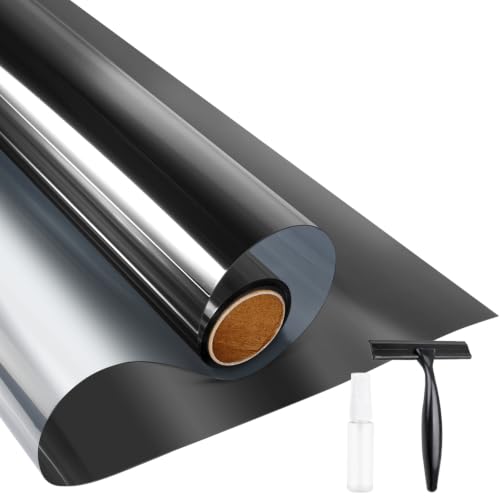
KESPEN One Way Film, 17.5 in × 6.5 ft is the only option with specific light-control figures: 12% visible light transmission, 90% UV blocking and 82% infrared blocking, according to the maker. That makes it easier to compare against a room where glare and fading concerns matter, though 12% VLT also means substantially less visible light passes through than with a clear pane. The black-silver static-cling film is sized for narrow windows or partial coverage. It shares the category’s daytime-only mirror effect, so it is not a substitute for curtains when the room is brighter than outdoors.
Bottom line: Pick this option when quantified light transmission and blocking claims guide the decision.
Dwersty One Way Film, 17.5 × 78.7 in
Dwersty One Way Film, 17.5 × 78.7 in pairs a 17.5-inch width with 1-inch backing grids, which can help mark straight cuts for slim panes or divided window sections. This black-silver static-cling film is positioned for daytime privacy, heat control, UV reduction and glare reduction. The mirrored appearance depends on brighter light outside than inside; once a room is brighter, people outdoors may see in. The narrow roll needs more side-by-side strips on a wide window, so it is better suited to a single narrow pane or small sections than broad uninterrupted glass.
Bottom line: Choose this roll for narrow panes where grid-marked cutting is useful.
How to choose one way privacy window film
Choose a roll by matching its width to the pane and deciding how much daylight you can give up. The 17.5-inch rolls suit narrow panes; the 35.4-inch roll covers wider glass with fewer vertical joins. Before cutting, measure each pane at top, middle and bottom because frames and older windows may not be square. Leave a small trimming margin and use a sharp utility blade on a cutting surface rather than cutting against the glass. Reflective films rely on unequal light levels, not a one-way optical barrier, so they cannot guarantee privacy when the room is brighter than outdoors.
Daytime privacy and nighttime limits
Reflective window film looks mirrored from the brighter side, so daytime privacy depends on outdoor light exceeding indoor light. At night, indoor lamps can make the room the brighter side and expose the view through the glass; close curtains or blinds whenever privacy matters. Overcast weather can also weaken the mirror effect if exterior light falls below interior light. A practical decision rule is to plan a separate window covering for any room used after dark, rather than relying on reflective film alone. Avoid assuming the mirror finish will remain on the street side in every lighting condition.
Roll dimensions and coverage planning
Roll width determines how many vertical strips a pane needs, while roll length sets total coverage. A 17.5-inch roll is easier to manage on narrow windows but requires more seams across broad glass; a 35.4-inch roll reduces those seams on wide panes. Estimate coverage by multiplying pane width by height, then add a modest allowance for trimming and mistakes. The chart gives the dimensions in inches; the 6.5-foot length is converted to 78 inches.
| Roll format | Useful fit | Tradeoff |
|---|---|---|
| 17.5 × 78–78.7 in | Narrow panes or sections | More strips on wide glass |
| 35.4 × 157.4 in | Broad panes | Wider material to handle and trim |
Installation and glass compatibility
Apply film only after checking that the window glass and any existing coating can tolerate the product. Window films can change how much solar energy glass absorbs, and certain insulated or treated panes may be more sensitive to added thermal stress. Clean the glass thoroughly, remove grit, and use a wet application with a squeegee if the film instructions call for it; trapped particles can create visible bumps. Check glass compatibility and any warranty guidance before applying, especially on insulated, tinted or coated glazing. Accurate cuts and clean glass matter more than choosing a roll with extra length.
Frequently Asked Questions
Does one way window film work at night?
No, reflective film does not provide reliable privacy at night when indoor light is brighter than outside. Close curtains or blinds after dark whenever people could see into the room.
Can people see through one way film on cloudy days?
They may, if the room is brighter than the outdoor scene. The mirror effect depends on the brighter side, so cloudy conditions and interior lighting can change which side reflects.
How much daylight does the KESPEN film let through?
The maker gives the film a 12% visible light transmission rating. That is a useful comparison point, but room brightness also depends on window size, orientation and surrounding shade.
How should I size film for a window pane?
Measure width and height in several places, then size each cut to the largest measurement with a small trimming margin. For wide panes, a 35.4-inch roll can reduce seams compared with a 17.5-inch roll.
Can window film go on insulated glass?
Check compatibility before applying film to insulated or coated glass because added solar absorption can increase thermal stress. Glass type and existing tint affect suitability, so confirm the film’s compatibility with the window manufacturer.