
Kitchen Runners for Hardwood Floors: 4 Fits Compared

For most kitchens, YDKGL 2 x 6-ft Brown Runner is the clearest fit because its 2-by-6-foot, 0.1-inch-low-pile design suits a walkway without adding much height. Choose another option if you need a longer run, a coordinated set, or a wider runner.
Kitchen runners are long floor coverings that protect a work path and add a softer surface; on hardwood, keep the floor beneath them dry and use only a pad compatible with the floor finish.
We earn a commission if you buy through links on this page. As an Amazon Associate I earn from qualifying purchases. Products are compared on manufacturer specifications, not hands-on testing.
- Best overall: YDKGL 2 x 6-ft Brown Runner – Its 24-by-72-inch size and 0.1-inch pile make it a slim fit for kitchen walkways.
- Best for long kitchens: Beige Washable Runner, 2.5 x 12 ft – At 30 by 144 inches, it covers a longer and wider path.
- Best for multiple zones: HEBE Boho Kitchen Rugs, Set of 3 – The set has three mats in lengths of about 32, 48, and 59 inches.
| Product | Best for | Size | Pile height | Material | Shop |
|---|---|---|---|---|---|
| YDKGL 2 x 6-ft Brown Runner | Slim walkways | 24 x 72 in | 0.1 in | Woven; material unspecified | Check Price on Amazon |
| Beige Washable Runner, 2.5 x 12 ft | Long kitchens | 30 x 144 in | 0.14 in | Material unspecified | Check Price on Amazon |
| HEBE Boho Kitchen Rugs, Set of 3 | Multiple work zones | 20 x 32, 48, 59 in | 0.012 in | Polypropylene | Check Price on Amazon |
| Beige Washable Runner, 2 x 6 ft | Short kitchen paths | 24 x 72 in | 0.14 in | Material unspecified | Check Price on Amazon |
Kitchen Runners for Hardwood Floors
Compare runner dimensions and construction to choose a floor covering that fits your kitchen path and clearance.
YDKGL 2 x 6-ft Brown Runner

YDKGL 2 x 6-ft Brown Runner is the thinnest runner in this group at 0.1 inch, making it a practical option where door clearance is tight. The brown woven surface measures 24 by 72 inches, a size suited to a short counter run or a compact kitchen path. Its low profile is the key distinction from the thicker cushioned mats and the 0.14-inch options. The maker describes it as washable and non-slip. Measure the door gap first: a clearance below 0.1 inch may cause the edge to catch, and the backing should be suitable for your hardwood finish.
Bottom line: Choose it for a compact path where a slim profile matters.
Beige Washable Runner, 2.5 x 12 ft

Beige Washable Runner, 2.5 x 12 ft is the longest and widest single runner here, measuring 30 by 144 inches. That extra coverage suits a longer kitchen aisle, but it also takes more floor space than a 24-inch-wide runner; check that cabinet doors and appliance doors can open without catching its edge. The maker describes the rug as washable, stain-resistant, and backed to resist slipping. Its 0.14-inch height is slightly greater than the slimmer woven option, so verify clearance at doorways before choosing it. A large runner can also be harder to lift for routine floor cleaning.
Bottom line: Pick it when your kitchen needs a single long, 30-inch-wide path covering.
HEBE Boho Kitchen Rugs, Set of 3
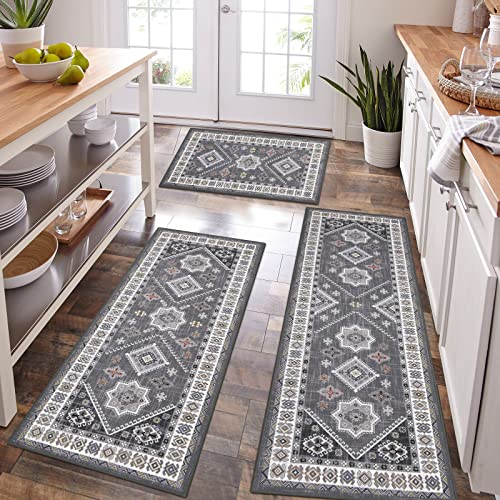
HEBE Boho Kitchen Rugs, Set of 3 differs from the single runners by supplying three separate mats, each 20 inches wide, in lengths of about 32, 48, and 59 inches. The pieces can be placed at separate work areas rather than covering one continuous aisle. The rug fabric is polypropylene, with TPR and cotton backing; the maker describes the set as washable and non-slip. Because the mats have separate edges, leave enough space between them to avoid creating a toe-catching gap or overlap. The narrow 20-inch width may not cover a broad kitchen walkway as fully as a 24- or 30-inch runner.
Bottom line: Choose the set when you want separate mats for several kitchen stations.
Beige Washable Runner, 2 x 6 ft

Beige Washable Runner, 2 x 6 ft has the same 24-by-72-inch footprint as the slim woven runner, but its 0.14-inch height is greater. That makes the measured doorway gap especially relevant if the mat sits near a swinging door. The beige rug has a low pile, a soft feel, and a non-slip backing, according to the product features. Its compact length suits a short counter-side stretch rather than an entire long galley kitchen. The backing material is not identified in the specifications, so confirm hardwood compatibility before placing it directly on a finished wood floor.
Bottom line: Choose it for a short kitchen run when beige styling is the priority.
How to Choose a Kitchen Runner for Hardwood
Start with the path length, then compare width and height against the space. Runners about 24 inches wide suit many narrow work paths, while a 30-inch width needs more clearance from cabinet fronts and appliance doors. A 6-foot length covers a short stretch; a 12-foot runner reaches much farther and is harder to move for cleaning. Measure the floor area and the door gap before selecting a size. On finished hardwood, use a rug pad explicitly compatible with that floor finish; avoid assuming every non-slip backing is safe for every finish. Wipe spills promptly and lift the runner periodically so moisture and trapped grit do not stay against the wood.
Runner Size and Door Clearance
A runner should sit within the usable walkway rather than under cabinet doors or appliance swings. Measure the clear floor width at the narrowest point, then leave room at both sides so the rug edge does not rub cabinetry. Measure from the floor to the lowest point of any swinging door; the runner and any pad together must fit beneath that gap. These choices range from 24-by-72-inch runners to a 30-by-144-inch option, while the three-piece set has lengths of about 32, 48, and 59 inches. For doors with less than 0.1 inch of gap, do not assume even the thinnest runner will clear; measure the actual installed surface and pad.
Backing and Hardwood Floor Care
Hardwood needs a dry, clean contact surface beneath rugs. Fine grit trapped under a runner can scratch a finish as people walk over it, while moisture held against the surface can damage some wood floors. Sweep or vacuum the floor and rug underside regularly, and lift the runner to clean and dry the floor beneath it. A non-slip claim alone does not establish that a backing is compatible with every hardwood finish; choose a pad marked safe for your floor type and follow the flooring maker’s care guidance. If a spill reaches the floor, remove the rug and dry the area promptly rather than leaving liquid trapped below.
Single Runner or Multiple Kitchen Mats
A single runner creates one continuous covered path, while separate mats can be placed at distinct workstations. Choose one continuous piece for an uninterrupted aisle; choose separate pieces when the sink and prep areas need independent coverage. Separate mats create more exposed floor between them, so position them flat with clear walking space and no overlaps. A 20-inch-wide three-piece set occupies less width than the 24- or 30-inch single-runner options. No rug should obstruct a door swing or sit where its edge becomes a trip point. For a busy path, frequent lifting and cleaning matter as much as surface coverage because dust, food crumbs, and moisture can collect beneath any floor covering.
Frequently Asked Questions
How wide should a kitchen runner be?
A 24-inch width is a useful starting point for a narrow kitchen walkway, while a 30-inch runner requires more clearance. Measure the clear floor width and keep the rug away from cabinet and appliance door swings.
Can a kitchen runner damage hardwood floors?
A runner can contribute to scratching if grit gets trapped beneath it, and moisture held against wood can harm some finishes. Keep the floor and rug underside clean and dry, and use a pad compatible with the flooring finish.
How much door clearance does a runner need?
The door gap must exceed the combined height of the rug and any pad beneath it. A 0.1-inch runner can still catch if the actual gap is smaller, so measure at the lowest point of the door.
How often should I clean under a kitchen runner?
Lift the runner regularly to remove crumbs and grit from the floor and underside; do it immediately after a spill or whenever the floor feels damp. Frequent cleaning is especially important in food-preparation areas where debris can collect quickly.