
Gifts for a Broken Arm: 5 Recovery Picks Compared

For a child who wants a comforting companion, SHSEEN Superhero Cast Teddy Bear, 8-Inch is the best fit because its cast switches between the left and right arm and its 8-inch size is easy to hold. Choose a different gift for an adult, or for someone who needs practical cast care or arm support rather than a plush toy.
These gifts range from recovery-themed clothing and bears to an itch tool and an elevation pillow; match the item to the recipient’s needs and age.
We earn a commission if you buy through links on this page. As an Amazon Associate I earn from qualifying purchases. Products are compared on manufacturer specifications, not hands-on testing.
- Best overall: SHSEEN Superhero Cast Teddy Bear, 8-Inch – Its cast fits either arm, and the 8-inch bear is sized for holding or bedside use.
- Best for cast itch: Cast Itch Scratcher, 17-Inch, Two Sticks – The 17-inch tool is designed to reach beneath arm or leg casts.
- Best for arm support: Buryeah Violet Arm Elevation Pillow – The foam pillow has a curved support shape and two pockets.
| Product | Best for | Size | Material | Special feature | Shop |
|---|---|---|---|---|---|
| SHSEEN Superhero Cast Teddy Bear, 8-Inch | Kids’ comfort | 8 inches | Plush fur | Switchable left/right cast | Check Price on Amazon |
| Cast Itch Scratcher, 17-Inch, Two Sticks | Cast itch care | 17 inches | — | Rounded, bumpy head | Check Price on Amazon |
| Buryeah Violet Arm Elevation Pillow | Arm elevation | 15.75 × 7.87 inches | Plush material; foam filling | Two pockets | Check Price on Amazon |
| Deekin Pink Get Well Soon Bear, 10-Inch | Pink plush gift | 9.84 inches | Long plush; PP cotton | Printed shirt; bandage detail | Check Price on Amazon |
| Broken Arm Art T-Shirt, Small | Recovery humor | Small | — | Lightweight, classic fit | Check Price on Amazon |
Gifts for a Broken Arm
Match a gift to the recipient’s age, comfort needs, and whether they need cast care or arm support.
SHSEEN Superhero Cast Teddy Bear, 8-Inch
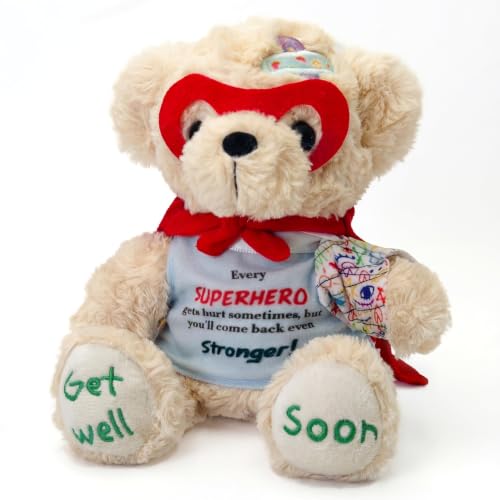
For a child who wants a comforting recovery companion, this 8-inch superhero bear has a fabric cast that can be placed on either arm. A red cape, soft mask, and “Be Brave” details give it a playful recovery theme, while its compact size suits a hospital bed, travel bag, or care package. The soft body is easy to hold at home or on the way to appointments. This is a comfort gift, not a cast-care tool, so choose another option when practical support is the main need.
Bottom line: Pick this for a child who would welcome a small, cast-ready plush companion.
Cast Itch Scratcher, 17-Inch, Two Sticks
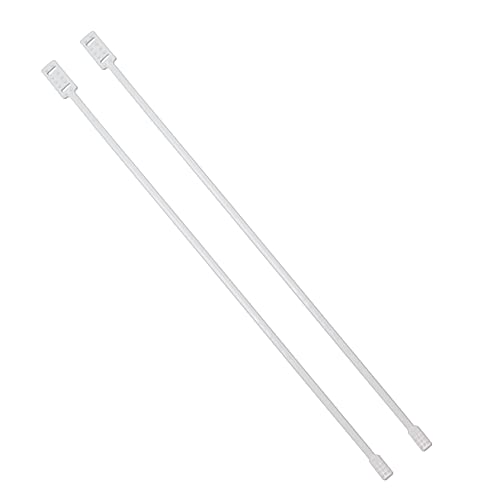
For someone already wearing a cast, this 17-inch scratcher is a practical alternative to a plush recovery gift. Its flexible shape follows the contour of an arm or leg, and the rounded, bumpy head is intended to reach beneath the cast without damaging skin. Two sticks are included. The tool is for itch relief and cleansing, not for changing or adjusting a cast; never force it under a tight cast or use it where skin is open, painful, or irritated.
Bottom line: Choose this for an adult or child who needs a cast-access tool and can use it safely.
Buryeah Violet Arm Elevation Pillow
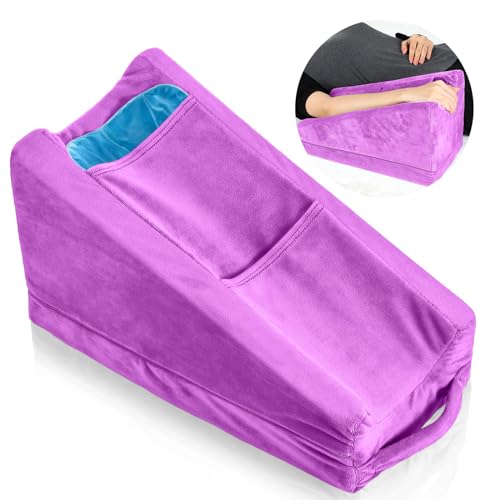
For someone who needs a place to rest an injured arm, this violet pillow differs from the smaller comfort gifts by providing an elevated surface. Its curved shape is designed for elbow support, and two pockets add space for small items. The pillow arrives vacuum-packed and may take about 48 hours to regain its shape. Its dimensions are 15.75 by 7.87 inches, so consider available bed or chair space before choosing it. It is not a substitute for medical guidance on arm positioning.
Bottom line: Pick this when a dedicated padded surface for resting an arm is more useful than a keepsake.
Deekin Pink Get Well Soon Bear, 10-Inch

For a recipient who prefers a soft, traditional get well plush, this bear stands apart from the superhero style with a pink printed T-shirt, a bandage detail on its arm, and a smiling face. It measures about 9.84 inches and has a long-plush outer layer with PP cotton filling, making it a straightforward cuddle-sized gift for a child or other plush-loving recipient. The design is decorative rather than functional: it does not support an injured arm or help with cast care.
Bottom line: Choose this for someone who would enjoy a pink, recovery-themed stuffed bear.
Broken Arm Art T-Shirt, Small
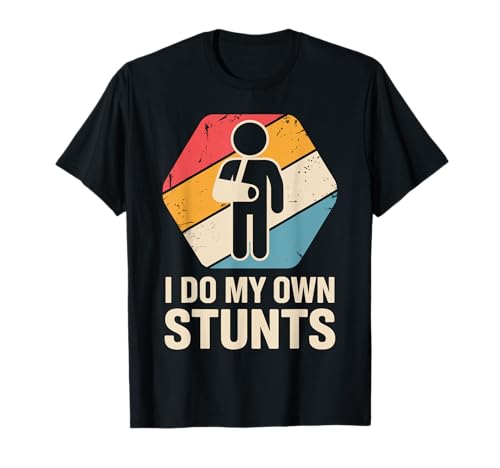
For a recipient who likes humor more than a stuffed gift, this black T-shirt uses the “I do my own stunts” broken arm theme. The shirt is described as lightweight with a classic fit and double-needle sleeve and bottom hem. This option is listed in size Small, so it suits only someone for whom that size works; clothing is a less certain choice if you do not know the recipient’s fit preference. The graphic makes it a lighthearted present, not medical or cast-care equipment.
Bottom line: Pick this for a recipient who enjoys the joke and wears a Small.
How to choose a broken arm gift
Start with the recipient’s immediate need: comfort, cast care, or a place to rest the arm. A plush toy or humorous shirt is a personal gesture, while a cast scratcher serves someone dealing with itch and an elevation pillow offers a padded resting surface. For a child, consider whether a small bear that fits either arm feels comforting; for a person in a cast, a purpose-made tool may be more useful. Match the present to what the recipient can use now, rather than assuming every person with a fracture wants the same kind of gift. Avoid making medical claims about a comfort item or assuming it replaces care advice.
Cast itch tools and safe use
Cast scratchers are designed to reach beneath a cast, but they should never be forced into a narrow opening. Use a tool gently and stop if it catches, causes pain, or reaches irritated skin; objects pushed inside can scrape skin and create injury that is hard to see. Do not put powders, oils, or other objects under a cast to address itching. Worsening pain, numbness, swelling, odor, drainage, or a cast that feels too tight warrants prompt contact with a clinician. A 17-inch reach can be helpful for access, but it does not make an unsuitable angle safe.
Arm support and elevation basics
Elevation is often used to help manage swelling after an injury, especially early on, but the arm’s position should follow the clinician’s advice and the injury’s needs. A pillow should support the forearm and elbow without pressing on the cast edge or leaving the hand hanging unsupported. Check that fingers remain warm and normally colored and that the support does not increase pain, tingling, or numbness. For a gift pillow, compare its footprint with the bed or chair where it will be used; a 15.75-inch-long support needs more space than a small plush. A comfort pillow is not a replacement for prescribed positioning instructions.
Choosing a recovery gift by need
Use this guide to narrow the type of gift before deciding on a specific design. Comfort gifts suit recipients who welcome a plush companion or light joke; practical gifts suit people coping with cast-related inconvenience. For clothing, confirm the lift range before ordering.
| Recipient need | Gift type | Consideration |
|---|---|---|
| Company or reassurance | Small plush bear | Age and preferred style |
| Cast itch access | Cast scratcher | Use gently; never force |
| Resting an arm | Elevation pillow | Space and clinician guidance |
| Humorous clothing | Graphic T-shirt | Confirm clothing size |
Frequently Asked Questions
Can someone use a scratcher inside any cast?
No; a cast tool should only be used if it fits easily and does not cause pain. Stop if it catches or if the skin is irritated, and contact a clinician for worsening pain, numbness, or swelling.
How long should an injured arm stay elevated?
There is no single duration that fits every fracture or procedure; use the clinician’s guidance for the specific injury. If elevation worsens pain, tingling, or numbness, change position and seek medical advice.
What should a child bring to a cast appointment?
A small comfort item can help occupy a child during an appointment, and an 8-inch plush fits readily in many travel bags. Keep the cast and fingers accessible so staff can examine them.
Can a gift pillow replace a sling?
No; a pillow provides a resting surface, while a sling is used only when directed for the particular injury. Ask the treating clinician how the arm should be supported, especially if the cast or hand feels tight.