
Local Hive Honey: Compare Three Regional Varieties

For a regional raw honey with a medium-bodied flavor, choose Local Hive Rocky Mountain Raw Honey, 16 oz; the Local Hive options differ by region and jar size, so select based on flavor and how much honey you need.
Choose Local Hive Texas Raw Honey, 16 oz instead for a bold, full-bodied Texas variety, or Local Hive Organic Honey, 24 oz if you want the 24-ounce organic option. Honey is not safe for children under 12 months.
We earn a commission if you buy through links on this page. As an Amazon Associate I earn from qualifying purchases. Products are compared on manufacturer specifications, not hands-on testing.
- Best overall: Local Hive Rocky Mountain Raw Honey, 16 oz – The 16-ounce Rocky Mountain variety combines raw, unfiltered honey with a medium-bodied regional flavor.
- Best for bold flavor: Local Hive Texas Raw Honey, 16 oz – The 16-ounce Texas variety is described as having bold, full-bodied sweetness.
- Best for a larger jar: Local Hive Organic Honey, 24 oz – Its 24-ounce size is larger than the 16-ounce regional varieties.
| Product | Best for | Size | Region | Processing | Shop |
|---|---|---|---|---|---|
| Local Hive Rocky Mountain Raw Honey, 16 oz | Medium-bodied flavor | 16 oz | Rocky Mountain | Raw and unfiltered | Check Price on Amazon |
| Local Hive Organic Honey, 24 oz | Larger jar | 24 oz | — | — | Check Price on Amazon |
| Local Hive Texas Raw Honey, 16 oz | Bold Texas flavor | 16 oz | Texas | Raw and unfiltered | Check Price on Amazon |
Local Hive honey varieties
Compare the regional flavor descriptions, jar sizes and processing claims to find the variety that suits your cooking or sweetening needs.
Local Hive Rocky Mountain Raw Honey, 16 oz

Local Hive Rocky Mountain Raw Honey, 16 oz is the medium-bodied regional choice, while Local Hive Texas Raw Honey, 16 oz is described as bolder and Local Hive Organic Honey, 24 oz comes in a larger jar. The maker says this honey is raw and unfiltered, never heated or filtered, and sourced from U.S. beekeepers in the Rocky Mountain region. Its 16-ounce size suits a household that wants a regional honey for tea, baking or drizzling.
Bottom line: Choose this for a medium-bodied Rocky Mountain flavor in a 16-ounce jar.
Local Hive Organic Honey, 24 oz

Local Hive Organic Honey, 24 oz stands apart by offering a 24-ounce jar and an organic designation in its name; Local Hive Rocky Mountain Raw Honey, 16 oz and Local Hive Texas Raw Honey, 16 oz identify specific regions and raw, unfiltered processing instead. The larger size can suit cooks who use honey regularly in recipes or drinks. Honey should never be given to children younger than 12 months.
Bottom line: Choose this when the 24-ounce size and organic designation are your priorities.
Local Hive Texas Raw Honey, 16 oz
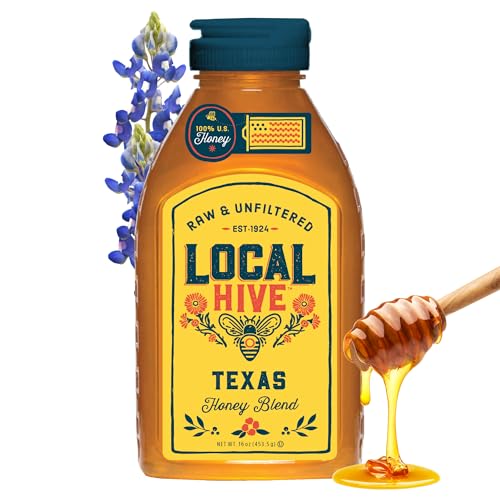
Local Hive Texas Raw Honey, 16 oz is the bold, full-bodied option among the Local Hive regional varieties; Local Hive Rocky Mountain Raw Honey, 16 oz is described as medium-bodied. The maker says the Texas honey is raw and unfiltered, sourced from Texas beekeepers, and made from 100% U.S. honey. Its 16-ounce jar fits buyers who want the Texas origin without moving to a larger format. The limitation is size: Local Hive Organic Honey, 24 oz offers 24 ounces, which may be more convenient for frequent use.
Bottom line: Choose this for the Texas origin and a bold, full-bodied flavor.
How to choose a Local Hive honey
Start with the flavor description and jar size, because those are the clearest differences among these varieties. Local Hive Rocky Mountain Raw Honey, 16 oz is described as medium-bodied, while Local Hive Texas Raw Honey, 16 oz is bold and full-bodied; Local Hive Organic Honey, 24 oz has the largest size at 24 ounces. Honey flavor varies with the nectar plants bees visit, so regional names can help distinguish batches but do not guarantee an identical taste from harvest to harvest. For everyday sweetening, a squeeze or spoonful can be stirred into warm—not boiling—drinks or used in baking. Honey is sweeter by volume than table sugar, so recipes may need adjustment for moisture and sweetness. Never give honey to an infant under 12 months, including honey baked into food.
What raw and unfiltered mean for honey
Raw honey is generally handled with limited heat, while unfiltered honey retains more fine particles such as pollen and wax than finely filtered honey. These terms do not mean the honey is sterile, and raw honey can still crystallize. Local Hive Rocky Mountain Raw Honey, 16 oz and Local Hive Texas Raw Honey, 16 oz are identified as raw and unfiltered, while Local Hive Organic Honey, 24 oz is identified as organic in its name. Raw honey is not a safe choice for infants under 12 months, because infant botulism spores can be present in honey regardless of processing. Crystallization is a natural change in glucose-rich honey, not proof that it has spoiled. A jar that develops crystals can be warmed gently in a bowl of warm water; avoid overheating, which can change flavor.
How to store honey and handle crystallization
Keep honey tightly closed at room temperature in a dry cupboard; refrigeration can speed crystallization. Honey’s low water content and acidity help it resist spoilage, but water introduced by a wet spoon can encourage fermentation, so use a clean, dry utensil. If a jar crystallizes, place it in warm water and stir as the crystals dissolve; avoid a rolling boil or direct high heat. Honey can darken and develop stronger flavor over time, especially with warmth and light exposure. Discard honey if it smells alcoholic or shows signs of fermentation rather than treating ordinary crystals as spoilage. For safe serving, remember the under-12-month restriction even when honey is used as an ingredient.
Regional honey and flavor variation
Regional honey reflects the plants flowering within bees’ foraging range, and seasonal weather can change which blooms dominate a harvest. A regional label therefore signals an origin or flavor aim, not a guarantee that every jar tastes exactly alike. These Local Hive choices name Rocky Mountain and Texas sourcing, with different flavor descriptions, while the 24-ounce organic variety does not identify a region in its name. If you are choosing for a recipe, stronger, fuller-flavored honey can be more noticeable in delicate tea or pastries; a milder honey may blend in more readily. Honey color also varies naturally with nectar sources and is not by itself a quality grade.
Frequently Asked Questions
Why does honey turn grainy in the jar?
Honey crystallizes when glucose separates from its liquid portion, and the change is natural rather than a sign of spoilage. Cooler storage speeds crystallization; gently warming the closed jar in warm water can soften it.
Can raw honey be given to babies?
The restriction applies to raw, filtered and cooked honey because spores linked to infant botulism may remain.
Should honey be kept in the refrigerator?
No, a closed jar is best kept at room temperature in a dry cupboard. Refrigeration can make honey crystallize faster, while moisture from a wet utensil can lead to fermentation.
Does regional honey always taste the same?
No, floral sources and seasonal conditions can change a regional honey’s flavor from harvest to harvest. The Rocky Mountain option is described as medium-bodied, while the Texas option is described as bold and full-bodied.
Is crystallized honey still usable?
Yes, crystallization alone does not mean honey has spoiled. Warm the jar gently in warm water, and discard it if it smells alcoholic or shows signs of fermentation.