
Best Dry Erase Board Eraser: 5 Options Compared

For most people, EXPO Soft Pile Block Eraser is the best dry erase board eraser because its compact 5-1/8-inch soft-pile block is lightweight and reusable. Choose a magnetic model instead if you want it to stay on a magnetic board, or a dual-surface microfiber option if you also erase chalk.
We earn a commission if you buy through links on this page. As an Amazon Associate I earn from qualifying purchases. Products are compared on manufacturer specifications, not hands-on testing.
- Best overall: EXPO Soft Pile Block Eraser – A compact soft-pile felt block that is reusable and designed for whiteboards and most non-porous surfaces.
- Best for magnetic hold: maxtek Magnetic Eraser, 2-Pack – Three magnets and a washable ABS body give it a distinct magnetic, rinse-clean design.
- Best for chalk and markers: Mr. Pen Microfiber Shag Erasers, 4-Pack – Four microfiber erasers have a second side intended for chalk.
| Product | Best for | Pack size | Dimensions | Surface | Shop |
|---|---|---|---|---|---|
| EXPO Soft Pile Block Eraser | Compact felt block | 1 | 5-1/8 x 1-1/2 in. | Soft-pile felt | Check Price on Amazon |
| maxtek Magnetic Eraser, 2-Pack | Magnetic board storage | 2 | 5 x 2.4 x 1.1 in. | ABS body; erasing surface unspecified | Check Price on Amazon |
| U Brands Magnetic Felt Eraser | Contoured felt grip | 1 | 2 x 5 x 1 in. | Felt | Check Price on Amazon |
| Mr. Pen Microfiber Shag Erasers, 4-Pack | Marker and chalk use | 4 | 4.7 x 3 x 1.2 in. | Microfiber and shag | Check Price on Amazon |
| Zonon Microfiber Shag Erasers, 4-Pack | Color-coded spares | 4 | 5 x 3 x 1.2 in. | Microfiber and shag | Check Price on Amazon |
Dry Erase Board Erasers Compared
Compare the eraser surface, size and design to match your board and the way you use it.
EXPO Soft Pile Block Eraser

EXPO Soft Pile Block Eraser is a compact felt block rather than a magnetic shell or shag-style pad. Its soft-pile surface is reusable and non-scratch, and the 5-1/8 x 1-1/2-inch form is easy to carry or store. EXPO says it removes markings quickly on whiteboards and most non-porous surfaces, making it a straightforward choice for a classroom, office or portable kit. The limitation is its small width: someone clearing a large board in long passes may prefer a broader eraser.
Bottom line: Choose it for a lightweight, compact felt block for general whiteboard use.
maxtek Magnetic Eraser, 2-Pack

maxtek Magnetic Eraser, 2-Pack stands out for its magnetic attachment and washable ABS body. Three magnets are designed to hold it to a magnetic whiteboard, and the curved shape offers a different grip from a flat felt block. The pack contains two erasers, useful when a room needs a spare. Maxtek says the design is intended for medium to large whiteboards and can be rinsed to remove ink stains. Its magnetic feature only helps on a board that attracts magnets, so it is not the choice for glass without a magnetic backing.
Bottom line: Pick this pair when magnetic storage and a rinse-clean body matter.
U Brands Magnetic Felt Eraser
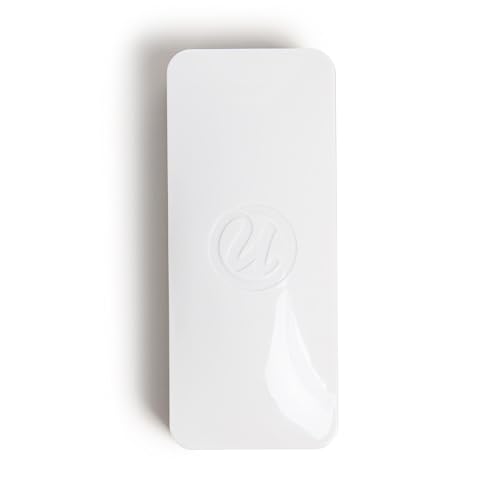
U Brands Magnetic Felt Eraser combines a felt erasing face with a contoured, magnetic body, giving it a shaped grip unlike the simple block format. Its 2 x 5 x 1-inch size is similar in length to a compact hand eraser. U Brands says it works on melamine, painted steel, porcelain and glass dry-erase boards. The multi-surface use is useful if a room has more than one board material; the trade-off is that this pack is a single eraser rather than a multi-piece set.
Bottom line: Choose it for a contoured felt eraser with magnetic storage.
Mr. Pen Microfiber Shag Erasers, 4-Pack

Mr. Pen Microfiber Shag Erasers, 4-Pack is the dual-surface pick: the microfiber side is for dry-erase ink, while the furry side is intended for chalk. Four erasers are included, and each measures 4.7 x 3 x 1.2 inches, a broader hand-sized shape than a narrow felt block. The maker says the microfiber surface works on dry-erase boards without liquid cleaner. This combination suits rooms that use both chalk and markers, but it is more than needed if the board is used only for dry-erase writing.
Bottom line: Pick this set for boards used with both markers and chalk.
Zonon Microfiber Shag Erasers, 4-Pack

Zonon Microfiber Shag Erasers, 4-Pack offers four washable microfiber shag erasers in assorted gray, blue and pink colors. The microfiber face is for dry-erase ink and the shag side is intended for chalk, similar to other dual-surface pads but with a 5 x 3 x 1.2-inch size. Zonon says the microfiber captures stains and erases without residue or crumbs. A four-piece set can be useful when several people share a room; for a marker-only board, the chalk side may go unused.
Bottom line: Choose this set when multiple colors and dual-surface spares are useful.
How to choose a dry erase board eraser
Match the erasing face to the board and writing medium: felt and microfiber are common dry-erase surfaces, while a dual-face pad can add a separate chalk side. A magnetic body is useful only when the board has a steel surface or magnetic backing; glass boards are often nonmagnetic. For a single small board, a hand-sized block is easy to maneuver; for a large writing area, a broader pad covers more area per pass. If the room uses both chalk and markers, choose distinct faces rather than relying on one surface to serve both purposes. Avoid abrasive scrubbers on a board face, which can scratch coatings and make future cleanup harder.
Board materials and magnetic storage
Board material changes which features matter. Melamine, painted steel, porcelain and glass can all have dry-erase surfaces, but only a magnetic substrate will hold an attached eraser. Product claims about compatibility should be read in the context of a board meant for dry-erase markers; glass alone does not guarantee magnetic hold. A magnetic model is convenient when the board has a compatible backing, while a nonmagnetic block works regardless of whether the board attracts magnets. Keep the eraser face free of grit and marker debris, because rubbing trapped particles across a smooth surface can leave marks or scratches.
Felt, microfiber and dual-surface erasers
Choose felt for a simple, compact dry-erase tool, microfiber when the washable fabric face is a priority, and a dual-surface pad when the second face will actually be used for chalk. The products differ in shape as well: the compact block is narrow, while the larger pads cover more board per pass but take up more storage space. An eraser is for removing dry-erase marks, not deep cleaning old ghosting; persistent stains may require a board-safe cleaner rather than harder pressure. The comparison below summarizes the main use case by type.
| Type | Useful when | Trade-off |
|---|---|---|
| Felt block | Compact, simple erasing | Narrower cleaning face |
| Magnetic body | Board has magnetic backing | Does not attach to nonmagnetic glass |
| Dual-surface microfiber | Room uses marker and chalk | Extra face may be unnecessary for marker-only use |
Care and safe board use
Washable fabric erasers can be rinsed when ink residue builds up, then should be allowed to dry before storage so damp material is not pressed against the board. Magnetic ABS bodies can be cleaned as directed by the maker, while felt faces should be kept clear of grit. Use light pressure and move loose dust off the board rather than grinding it into the finish. Never use a dry-erase eraser as a substitute for checking marker compatibility: permanent markers and abrasive cleaners can damage a surface or leave stains that ordinary erasing will not remove.
Frequently Asked Questions
Can a magnetic eraser stick to every whiteboard?
No; magnetic hold requires a board surface or backing that attracts magnets. Bare glass is generally nonmagnetic, so check that the board has a steel or magnetic backing before relying on attachment.
Are microfiber erasers washable after marker use?
Some are; washable designs can be rinsed to clear ink residue, then should dry before being stored against a board. The washable claim applies to the specific product, not every microfiber eraser.
Can one eraser remove both chalk and dry-erase ink?
A dual-surface model uses separate faces for the two media. Its microfiber face is intended for dry-erase ink, while its shag side is intended for chalk.
How do I avoid scratching a whiteboard while erasing?
Use a clean, grit-free erasing face and light pressure. Scrubbing particles against the board can damage the finish, so clear loose debris before wiping.