
Tiny Rubber Bands for Hair: 5 Options Compared

For frequent braiding and small sections, Hicarer Mini Rubber Bands, 1/2-Inch stands out for its roughly 1,000 bands and 1/2-inch size. Choose Cosy Companions Clear Elastics, 100 Count instead if you want clear bands and a 2 mm width, or a 14 mm option if that measurement better suits your section size.
Tiny hair elastics are small bands used to secure braids, ponytails and defined sections; choose by section thickness and whether you want the band visible. Latex-sensitive buyers should check the material before choosing a band.
We earn a commission if you buy through links on this page. As an Amazon Associate I earn from qualifying purchases. Products are compared on manufacturer specifications, not hands-on testing.
- Best overall: Hicarer Mini Rubber Bands, 1/2-Inch – Its 1/2-inch diameter and roughly 1,000-band pack suit frequent small-section styling.
- Best for clear styling: Cosy Companions Clear Elastics, 100 Count – The clear plastic elastics have a 2 mm width and stretch to 160 mm.
- Best for glide-off removal: Goody Ouchless Polyband Elastics, 250 Count – Goody describes its latex bands as designed to slide on and off without tugging.
| Product | Best for | Pack count | Color | Band size | Shop |
|---|---|---|---|---|---|
| Hicarer Mini Rubber Bands, 1/2-Inch | Frequent braiding | About 1,000 | Black | About 15 mm diameter | Check Price on Amazon |
| ANNIE Mini Rubber Bands, 1/2-Inch | High-use styling | 1,000 | Black | 13 mm | Check Price on Amazon |
| Cosy Companions Clear Elastics, 100 Count | Clear styling | 100 | Clear | 2 mm wide; stretches to 6.3 in | Check Price on Amazon |
| Annie 14 mm Rubber Bands, 300 Count | Medium-size sections | 300 | Black | 14 mm | Check Price on Amazon |
| Goody Ouchless Polyband Elastics, 250 Count | Easy removal | 250 | Clear | — | Check Price on Amazon |
Tiny Rubber Bands for Hair Compared
Match the band size and material to your section thickness, then choose a pack count that suits how often you style.
Hicarer Mini Rubber Bands, 1/2-Inch
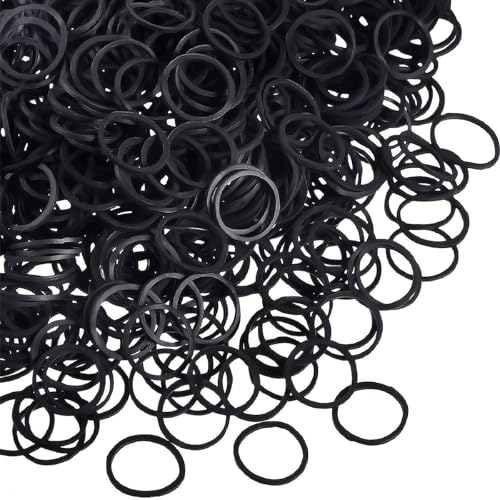
With about 1,000 bands and a roughly 15 mm diameter, this pack suits repeat styling of small sections. The bands are soft, flexible rubber about 1 mm thick, and the maker recommends using two or more for a hold. That extra-band step matters if a single band does not feel secure; using multiple bands may also create more bulk on very fine sections. The assortment is black, so it is less discreet against light hair than clear elastics. Consider it when quantity and a small diameter matter more than a clear finish.
Bottom line: Choose this pack for frequent small-section braiding when black bands are suitable.
ANNIE Mini Rubber Bands, 1/2-Inch

This ANNIE pack combines 1,000 black bands with a 13 mm size, making it a high-quantity choice for routine braid and twist work. The maker describes the bands as reusable, flexible and designed for secure styling, and the dark color can blend into many darker hairstyles. Unlike a clear option, the bands may show against light hair. The size is best considered against the section you plan to secure: a band that is too small can feel overly tight, while a loose band may need repositioning. Choose it for repeat styling where a large count is useful.
Bottom line: Pick this for a large supply of black bands for small braids and twists.
Cosy Companions Clear Elastics, 100 Count

These clear elastics are the only option here with a 2 mm width and stretch length of 160 mm, so they offer a defined measurement for buyers comparing band width and stretch. The 100-count pack is smaller than the 1,000-count choices, which may suit occasional styling better than frequent salon or family use. The maker positions them for ponytails and other styles across short, long and curly hair. Because the elastics are plastic and clear, they suit buyers seeking a less visible band; the stretch measurement alone does not tell you how firmly a particular section will be held.
Bottom line: Choose these when a clear finish and stated width matter more than a high pack count.
Annie 14 mm Rubber Bands, 300 Count

The 14 mm size distinguishes these bands from the options marked 1/2 inch, giving buyers a direct stated measurement to compare with their section size. The 300-count pack sits between the 100-count and 1,000-count choices, while the black color can blend into many darker styles. The maker describes the bands as soft and suitable for braids, twists, ponytails and sectioning. This is a medium-size choice rather than the smallest measured option here, so it may be less suited to very fine detail sections. Consider it for versatile styling when 14 mm is the fit you need.
Bottom line: Choose this for braid and ponytail styling when a 14 mm black band fits your sections.
Goody Ouchless Polyband Elastics, 250 Count
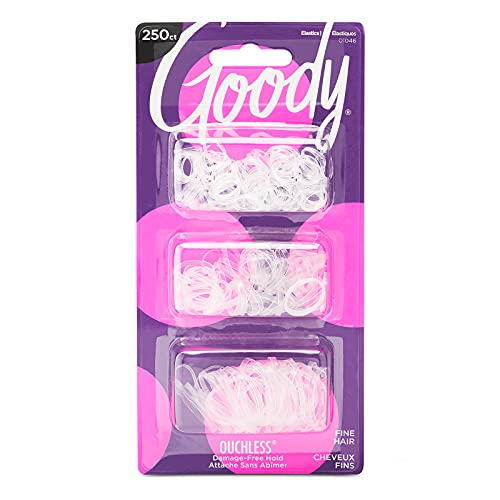
Goody distinguishes these clear latex polybands with a ridge design and a removal-focused feature: the maker says they glide off without pulling or snagging. That can matter when bands are removed from delicate, tangled or tightly styled sections. The 250-count pack is a mid-size supply, and the transparent color is less conspicuous than black in many styles. The latex material also makes these a poor match for anyone who needs to avoid latex.
Bottom line: Pick these if clear bands and easier removal are your priorities and latex is suitable.
How to Choose Tiny Hair Bands
Choose a band by the thickness of the section and the hold you want, not by pack count alone. A roughly 1/2-inch band is a common mini size for small braids and ponytails; a larger section may need a larger elastic or multiple bands. For fine hair or delicate styles, avoid winding a band so tightly that removal pulls strands. Clear bands tend to be less visible on light hair, while black bands can blend into darker styles. Material matters too: rubber and latex products are not interchangeable for people with latex sensitivity. If you have a known latex allergy, avoid latex bands and confirm the material of an alternative before use.
Band Size and Section Fit
A band that is too large can slip, while an undersized band can require extra winding and tug at hair during removal. The options here include measurements from 2 mm width to about 0.59-inch diameter, but width, diameter and stretch length describe different things. Do not compare them as if they were the same measurement. As a practical rule, choose a measured band around 1/2 inch for small sections; move to a larger band or use more than one when the section will not stay secured without excessive tension. Keep the band away from the scalp if it pulls, and remove it slowly rather than yanking it through hair.
Use this guide to match a styling need to a band feature:
| Need | What to prioritize |
|---|---|
| Less-visible hold | Clear color |
| Frequent small-section styling | Large pack count and small diameter |
| Reduced tug during removal | Band designed to glide off |
| Latex sensitivity | Confirm non-latex material |
Materials, Grip and Removal
Hair elastics may be made from rubber, plastic or latex blends, and material affects stretch, grip and removal. A latex band should be avoided by anyone with a latex allergy; a product called rubber is not automatically a safe substitute without confirming its composition. Smooth bands may slide off more easily, while ridged designs are intended to add grip. For easier removal, unwind the band where possible instead of pulling it over a braid or knot. If a band catches strands or causes discomfort, remove it carefully and choose a looser fit or another material. Do not reuse a band that has cracked, lost stretch or become rough at the edges.
Safe Use and Storage
Keep tiny elastics away from young children and pets because small bands can be choking hazards if swallowed. Store them in a closed container rather than loose in a bag or on a counter, and remove bands from hair before sleeping if they pull or snag. A tight elastic can create unnecessary tension at the hairline, so use only enough wraps to keep the style in place. Check each band before use for splits, rough edges or loss of elasticity; damaged bands are more likely to break during styling. When removing an elastic, unwind it gently or cut it carefully away from hair rather than snapping it toward the scalp.
Frequently Asked Questions
What size rubber bands work for tiny braids?
A band around 1/2 inch across is a common choice for tiny braids and small ponytails. Choose a larger size or more than one band if the section slips without excessive tightness.
Are clear hair elastics less visible?
Clear elastics are generally less conspicuous than black bands against light hair. Their visibility still depends on hair color, style and where the band sits.
Can latex hair bands trigger an allergy?
Yes, latex can trigger reactions in people with latex allergy. Avoid latex elastics and confirm the material before selecting a substitute.
How can I remove small hair bands without pulling?
Unwind the band gently instead of yanking it over hair or a braid. Stop if it catches strands, and avoid using a damaged band with rough or split edges.
How often should I replace mini hair elastics?
Replace an elastic as soon as it cracks, feels rough or no longer stretches back into shape. Damaged bands can snag or break during styling.