
Skintific Mugwort Clay Mask: 5 Options Compared

SKINTIFIC Mugwort Clay Stick is the closest match for most people seeking a Skintific mugwort clay mask because it combines mugwort with centella and salicylic acid in a 1.41-ounce stick. Choose SKINTIFIC Volcanic Clay and Mugwort Duo instead if you want both mugwort and volcanic clay for area-specific masking; the remaining options use volcanic clay or come from another brand.
A clay mask is a wash-off product used to absorb surface oil and cleanse the skin. Since clay and exfoliating ingredients can feel drying or irritating, patch-test a new formula and start with infrequent use.
We earn a commission if you buy through links on this page. As an Amazon Associate I earn from qualifying purchases. Products are compared on manufacturer specifications, not hands-on testing.
- Best overall: SKINTIFIC Mugwort Clay Stick – The Skintific Mugwort stick pairs mugwort with centella and salicylic acid in a single 1.41-ounce format.
- Best for two-zone masking: SKINTIFIC Volcanic Clay and Mugwort Duo – The set includes separate volcanic clay and mugwort sticks for applying to different areas.
- Best for volcanic clay: SKINTIFIC Alaska Volcanic Clay Stick – This Skintific stick uses Alaska volcanic clay and charcoal rather than mugwort.
| Product | Best for | Formula | Format | Size | Shop |
|---|---|---|---|---|---|
| SKINTIFIC Mugwort Clay Stick | Mugwort stick | Mugwort, centella, salicylic acid | Single stick | 1.41 oz | Check Price on Amazon |
| SKINTIFIC Volcanic Clay and Mugwort Duo | Two-mask routines | Volcanic clay and mugwort | Two sticks | 2.82 oz total | Check Price on Amazon |
| SKINTIFIC Alaska Volcanic Clay Stick | Volcanic clay | Volcanic clay, charcoal, glycolic acid | Single stick | 1.41 oz | Check Price on Amazon |
| Mugwort Clay Mask Stick | Ingredient alternative | Mugwort, salicylic acid, niacinamide | Single stick | 1.41 oz | Check Price on Amazon |
| innisfree Super Volcanic Pore Clay Mask | Larger tub | Volcanic clusters, AHA, hyaluronic acid | Tub | 3.38 oz | Check Price on Amazon |
Skintific Mugwort Clay Mask Options
Compare the mugwort formula with Skintific alternatives and other clay mask formats before choosing.
SKINTIFIC Mugwort Clay Stick

SKINTIFIC Mugwort Clay Stick is the direct match for a Skintific mugwort clay mask, while the other Skintific options focus on volcanic clay or combine two formulas. The 1.41-ounce stick contains mugwort, centella, and salicylic acid; the maker says it helps absorb excess oil and cleanse pore buildup without an overly dry feel. Its stick format suits targeted application, especially if you want to apply a mask only to selected areas.
Bottom line: Choose this if you specifically want Skintific’s mugwort formula in a single stick.
SKINTIFIC Volcanic Clay and Mugwort Duo
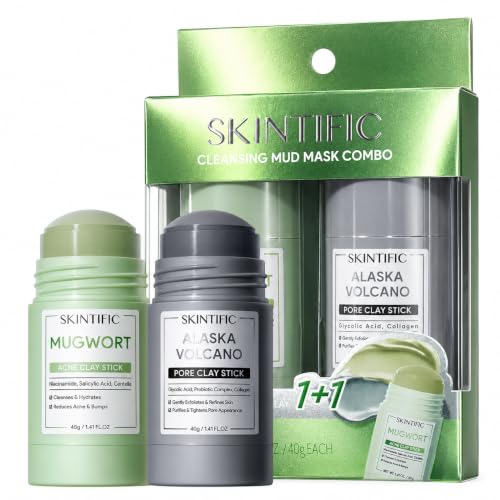
SKINTIFIC Volcanic Clay and Mugwort Duo differs from the single-formula options by pairing one Alaska volcanic clay stick with one mugwort clay stick. The maker recommends using the volcanic formula on oilier areas such as the forehead, nose, and chin, and the mugwort formula on cheeks or other chosen areas. That split makes the duo a fit for shoppers who want to vary application by facial area rather than use one mask everywhere. The tradeoff is that it is a two-formula set, not a standalone mugwort mask; choose a single stick if you only want one formula.
Bottom line: Pick this if you want both formulas for targeted multi-masking.
SKINTIFIC Alaska Volcanic Clay Stick

SKINTIFIC Alaska Volcanic Clay Stick is a Skintific alternative for shoppers who prefer its Alaska volcanic clay and charcoal formula over mugwort. The 1.41-ounce stick also includes glycolic acid, so it differs from SKINTIFIC Mugwort Clay Stick in both its featured clay and exfoliating ingredient. The maker cites a small study for its pore and oil appearance claims; those results should not be treated as a guarantee for an individual user. This option suits someone seeking the volcanic clay formula specifically, but it is not the right pick when mugwort is the deciding ingredient.
Bottom line: Choose this if volcanic clay and charcoal matter more to you than mugwort.
Mugwort Clay Mask Stick

Mugwort Clay Mask Stick shares the mugwort stick format and several named ingredients with SKINTIFIC Mugwort Clay Stick, but it is not identified as a Skintific product. Its formula also names niacinamide, making it the alternative for shoppers comparing ingredient combinations rather than looking for the brand match. The maker says it is intended to remove excess surface oil and support a smoother-looking complexion. The key limitation is brand: choose this only if the formula and stick format matter more than getting a Skintific mask.
Bottom line: Consider this if you want a mugwort stick with niacinamide and do not require Skintific.
innisfree Super Volcanic Pore Clay Mask

innisfree Super Volcanic Pore Clay Mask is the largest single-container option here, at 3.38 ounces, and uses Super Volcanic clusters with AHA and hyaluronic acid rather than mugwort. The maker describes it as a cooling clay mask for oily or combination skin and cites instrumental and home-use results for oiliness and texture. Its tub format contrasts with the Skintific sticks, which are designed for targeted application. This is a useful comparison if you want a volcanic clay formula in a larger container, but it does not meet a preference for Skintific or mugwort.
Bottom line: Pick this if you prefer a larger volcanic clay tub over a mugwort stick.
How to choose a mugwort clay mask
Choose by the ingredient and format you want, not by broad pore or oil claims. SKINTIFIC Mugwort Clay Stick is the direct Skintific mugwort option; SKINTIFIC Volcanic Clay and Mugwort Duo combines mugwort and volcanic clay, while SKINTIFIC Alaska Volcanic Clay Stick is a volcanic clay alternative. Clay masks are wash-off products that can absorb surface oil, but they do not permanently change pore size. Salicylic acid is an oil-soluble exfoliating ingredient commonly used in products for congested-looking skin; glycolic acid is a water-soluble alpha hydroxy acid that works on the skin surface. If you already use exfoliating acids, start with one active product per routine to reduce the chance of irritation.
Use the table to match the main preference to the formula type.
| Preference | Option | What distinguishes it |
|---|---|---|
| Skintific mugwort | SKINTIFIC Mugwort Clay Stick | Mugwort stick with centella and salicylic acid |
| Two targeted formulas | SKINTIFIC Volcanic Clay and Mugwort Duo | Mugwort and volcanic clay sticks |
| Volcanic clay | SKINTIFIC Alaska Volcanic Clay Stick | Alaska volcanic clay and charcoal |
How often to use a clay mask
Start with once weekly, then increase to twice weekly only if your skin stays comfortable; many clay masks can feel drying with more frequent use. Masking frequency depends on the formula, your skin’s tolerance, and whether your routine already includes exfoliating products. Salicylic acid and glycolic acid both exfoliate, so using a clay mask with one of these alongside a separate acid product in the same routine can add irritation risk. Do not leave a mask on until it cracks or feels painfully tight. Rinse it off at the time directed by the maker, then apply a plain moisturizer. Stop using it if persistent burning, swelling, or a rash develops.
How to apply a clay mask to different areas
Apply a clay mask to clean, dry skin and keep it away from the eyes, lips, and broken or freshly irritated skin. Multi-masking means applying different formulas to different facial zones; SKINTIFIC Volcanic Clay and Mugwort Duo is the only option here with separate mugwort and volcanic clay sticks for that purpose. A practical rule is to use the oil-absorbing formula only on areas that become shiny, rather than coating dry cheeks by default. Use clean fingers or the stick without pressing hard, and wash the product off fully. Do not share a stick between people, since direct contact with skin can transfer residue or microbes.
Patch testing and irritation precautions
Patch-test a new face mask on a small area before applying it across your face, especially if the formula includes salicylic or glycolic acid. A 24-hour wait can help reveal early irritation, although it cannot guarantee that a full-face application will be comfortable. Avoid using exfoliating masks on sunburned, cracked, or freshly shaved skin. Clay can absorb surface oil, but tightness is a sign to rinse rather than wait for the mask to dry completely. If you have a known sensitivity to an ingredient, check the full ingredient label before use; the ingredient highlights here are not a substitute for the complete formula.
Frequently Asked Questions
Can I use a mugwort clay mask every day?
Daily use is generally more frequent than needed; start at once a week and consider twice weekly only if your skin remains comfortable. Masks with exfoliating acids may be irritating when layered with other exfoliants.
Should I apply a clay mask before or after cleansing?
Apply a wash-off clay mask after cleansing so it goes onto clean skin. Rinse it away at the maker’s directed time, then moisturize rather than leaving it on until it cracks.
Can I use clay masks on dry cheeks?
You can apply a mask only to selected areas, but dry or sensitive cheeks may feel tighter after oil-absorbing clay. A useful rule is to keep clay on areas that become oily and skip zones that are already dry or irritated.
Can I use salicylic acid with a clay mask?
Some masks already include salicylic acid, so avoid stacking them with another exfoliating acid in the same routine when you are starting out. If redness or persistent stinging occurs, rinse the mask off and stop using it.
How long should a clay mask stay on the face?
Use the duration given by the maker rather than waiting for the mask to become fully dry. If the mask feels painful or uncomfortably tight before then, rinse it off.