
Freestyle Libre Waterproof Covers Compared by Fit

For a clear adhesive cover for Libre 3, AZEN Libre 3 Sensor Covers is the closest match, with a 100-pack and a breathable, latex-free patch. Choose another option if you need Libre 3 Plus compatibility, a non-stick center or a hard cap for bumps.
A CGM overpatch is an adhesive layer intended to help hold a sensor in place; it does not change the sensor’s own water-resistance limits.
We earn a commission if you buy through links on this page. As an Amazon Associate I earn from qualifying purchases. Products are compared on manufacturer specifications, not hands-on testing.
- Best overall: AZEN Libre 3 Sensor Covers – A 100-pack of transparent, breathable, latex-free covers made for Libre 3.
- Best for bump protection: Amolyfe Libre 3 Plus Hard-Cap Covers – Combines an adhesive cover with a hard cap over the sensor.
- Best for Libre 3 Plus: Not Just a Patch Air Libre 3 Covers – Made for Libre 3 and Libre 3 Plus, with a non-stick center.
| Product | Best for | Fit | Pack size | Design | Shop |
|---|---|---|---|---|---|
| AZEN Libre 3 Sensor Covers | Libre 3 basics | Libre 3 | 100 | Transparent adhesive patch | Check Price on Amazon |
| HECHUAN Libre 3 Plus Patches | Non-stick center | Libre 3 Plus | 50 | No glue at center | Check Price on Amazon |
| Amolyfe Libre 3 Plus Hard-Cap Covers | Added bump barrier | Libre 3 Plus | 20 + 1 cap | Adhesive patch and hard cap | Check Price on Amazon |
| Not Just a Patch Air Libre 3 Covers | Flexible fit | Libre 3 and Libre 3 Plus | 20 | Non-stick center | Check Price on Amazon |
| Onida Libre 3 Plus Patches | Pre-cut backing | Libre 3 Plus | 20 | No-glue center; pre-cut backing | Check Price on Amazon |
Freestyle Libre Waterproof Covers
Compare these adhesive covers by sensor compatibility, pack size and the protection features that matter to you.
AZEN Libre 3 Sensor Covers

For Libre 3 users who want a straightforward adhesive cover, this option comes in a 100-pack. The maker says its transparent patches are waterproof and breathable, and says the latex-free, hypoallergenic material suits sensitive skin. The patch is intended to help keep the sensor from falling off during activities such as showering or swimming.
The pack does not include a hard shell, so it is not the choice for someone seeking a rigid barrier against knocks. Confirm the sensor model before ordering, since this cover is identified for Libre 3.
Bottom line: Choose this if you want a large pack of simple Libre 3 adhesive covers.
HECHUAN Libre 3 Plus Patches

The non-stick center is the distinguishing feature here: the maker says the patch has no adhesive over the sensor center, so changing the patch is less likely to pull at the sensor. The pack contains 50 transparent patches for Libre 3 Plus, and the maker says the material is designed for extended wear without affecting readings.
This is a fit-specific alternative rather than a general Libre 3 cover. Choose it if your sensor is Libre 3 Plus and you value a non-adhesive center; check your exact sensor model before selecting it.
Bottom line: Pick this for Libre 3 Plus when a non-stick center is the priority.
Amolyfe Libre 3 Plus Hard-Cap Covers
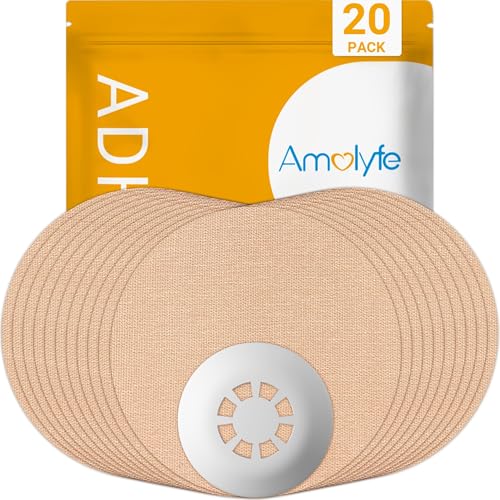
Unlike a patch-only cover, this option pairs 20 adhesive patches with one hard cap intended to add a physical barrier against bumps and snags. The maker says the patches are breathable, waterproof, latex-free and hypoallergenic, and designed to cover the sensor’s wear period. The tan color may also blend more closely with some skin tones than a transparent patch.
The rigid cap is the main reason to choose this set, but the cap count is one rather than one per patch. It is identified for Libre 3 Plus, so verify your sensor model before buying.
Bottom line: Choose this if you want a hard cap over a Libre 3 Plus sensor.
Not Just a Patch Air Libre 3 Covers

This option is explicitly made for both Libre 3 and Libre 3 Plus, making it a flexible fit choice if you use either model. It comes as 20 beige, thin overpatches with a non-stick center and edge-to-edge adhesive. The maker says the breathable, stretchable material is designed to hold for 15 or more days through workouts, sweat and swims.
There is no rigid cap, so buyers seeking impact protection should consider a hard-shell style instead. The wear duration is the maker’s design claim, not a guarantee for every wearer or activity.
Bottom line: Pick this if you need a patch made for either Libre 3 or Libre 3 Plus.
Onida Libre 3 Plus Patches

The pre-cut backing is a practical distinction for application, while the center has no glue to avoid sticking directly over the sensor. This 20-pack is tan and identified for Libre 3 Plus. The maker says its breathable, latex-free patches resist water and sweat, and recommends pressing firmly around the edges after application to improve adhesion.
There is no hard cap, so this is an adhesive-hold option rather than a rigid shield against impact. It is labeled for Libre 3 Plus; confirm compatibility if your sensor is another model.
Bottom line: Choose this for Libre 3 Plus if pre-cut backing and a non-stick center suit you.
How to choose a Freestyle Libre cover
Start with the sensor model, then decide whether you need adhesive hold, a non-stick center or impact protection. Libre 3 and Libre 3 Plus are not interchangeable labels: these options name compatibility by model, so match the cover to the sensor you wear. A patch-only overpatch can help secure a sensor, while a hard cap adds a rigid layer against bumps but is bulkier than fabric tape.
Check the pack contents as well as the count: the Amolyfe set has 20 patches but one hard cap. A product’s waterproof wording describes the maker’s claim for that cover; it does not extend the sensor’s own water-resistance rating. If you expect repeated swimming or prolonged water exposure, use the sensor manufacturer’s water instructions as the limit.
Libre 3 and Libre 3 Plus fit
Choose a cover that names your exact sensor model; a close match in the product name is not enough. Among these options, AZEN names Libre 3, while HECHUAN, Amolyfe and Onida name Libre 3 Plus; Not Just a Patch Air names both Libre 3 and Libre 3 Plus. Confirm the model printed on your sensor packaging or in its app before ordering.
Center design also affects how a cover sits over a sensor. A non-stick center avoids putting adhesive directly over the device, whereas edge adhesive is meant to grip around it. Avoid trimming a patch across its adhesive border, since changing the contact area may affect how it holds. Use this quick guide to narrow the design:
| Need | Option type |
|---|---|
| Rigid barrier against bumps | Patch with hard cap |
| Adhesive around sensor, not center | Non-stick-center patch |
| Simple adhesive cover | Patch-only cover |
Applying an overpatch for water and sweat
Apply a sensor cover to clean, fully dry skin so moisture or skin products do not interfere with the adhesive. Press around the outside edge after placing it, especially where fabric or movement can catch the patch. Onida specifically recommends firm pressure at the edges; that step is useful for any adhesive cover.
Waterproof claims do not mean that an overpatch makes every sensor or reader waterproof. Libre 3 sensor water-resistance is limited to immersion up to 1 meter for no more than 30 minutes; the reader has different limits, so check the instructions for the device you use. Do not rely on an adhesive cover to extend those limits. If an edge starts lifting, address the cover according to its maker’s instructions rather than pulling at the sensor.
Skin comfort and cover mistakes
Use an overpatch only on intact skin, and remove it if the area becomes irritated. Latex-free and hypoallergenic labels may help narrow material choices, but they do not guarantee that every person will tolerate an adhesive. If you have a history of reactions to tapes or adhesives, test cautiously and ask a clinician about a suitable alternative.
A common mistake is choosing by color or pack count before checking model fit. Another is assuming “waterproof” means unlimited swimming; water depth, duration and the sensor’s own limits still matter. For fewer than 20 patches, the 20-packs can suit a smaller supply need, while the 50- and 100-packs reduce how often you need to replenish. Pack count does not establish how long a patch will stay attached.
Frequently Asked Questions
Can I swim while wearing a Libre 3 sensor cover?
The sensor itself is water-resistant for immersion up to 1 meter for up to 30 minutes; an overpatch does not expand that limit. Follow the sensor instructions for swimming and water exposure.
Will a Libre 3 cover fit a Libre 3 Plus sensor?
Only choose a cover whose compatibility includes your exact model. Of these options, Not Just a Patch Air names both Libre 3 and Libre 3 Plus, while the others specify one model.
How do I help a sensor patch stay attached?
Apply the patch to clean, dry skin and press firmly around its edges. Sweat, moisture, skin oils and movement can weaken adhesive contact.
Can I put adhesive over the sensor center?
Some covers have a non-stick center, including the HECHUAN, Not Just a Patch Air and Onida options here. Match the patch design to your preference and keep the sensor’s own instructions in mind.
What should I do if adhesive irritates my skin?
Remove the cover if irritation develops and avoid applying adhesive to broken or irritated skin. Latex-free or hypoallergenic materials do not guarantee that an individual will avoid a reaction.