
Best Garage Door Seal Top and Sides: 5 Kits Compared

The Elvone 40-foot TPE seal suits most buyers because its extra length gives more room to cover the top and both sides of a standard garage door opening. Choose a shorter kit if your measured perimeter fits, or PVC molding if you prefer a rigid base with a flexible sealing fin.
Top-and-side weather seals attach to the door frame and close the gaps along the door’s edges; they do not replace the bottom seal.
We earn a commission if you buy through links on this page. As an Amazon Associate I earn from qualifying purchases. Products are compared on manufacturer specifications, not hands-on testing.
- Best overall: Elvone 40-Foot TPE Seal – Its 40-foot length gives the most coverage among these kits.
- Best for PVC molding: DuraSeal 34-Foot PVC Kit – The foamed PVC base and flexible fin differ from the TPE strip designs.
- Best for a 36-foot fit: 36-Foot Black TPE Seal – The 36-foot TPE strip comes with peel-and-stick adhesive and reinforcement nails.
| Product | Best for | Length | Material | Mounting | Shop |
|---|---|---|---|---|---|
| Elvone 40-Foot TPE Seal | Maximum coverage | 40 ft | TPE | Adhesive and nails | Check Price on Amazon |
| 36-Foot Black TPE Seal | 36-foot openings | 36 ft | TPE | Adhesive and nails | Check Price on Amazon |
| 36-Foot UV-Resistant TPE Seal | UV-resistant TPE | 36 ft | TPE | Adhesive and nails | Check Price on Amazon |
| DuraSeal 34-Foot PVC Kit | PVC fin profile | 34 ft | Foamed PVC base, PVC fin | Nails | Check Price on Amazon |
| 36-Foot White TPE Seal | White TPE finish | 36 ft | TPE | Adhesive and nails | Check Price on Amazon |
Garage Door Seals for Top and Sides
Measure the top and two side jambs before choosing a kit, then compare its length and mounting style.
Elvone 40-Foot TPE Seal

At 40 feet, this Elvone kit provides the most material in the group, giving extra allowance for cutting and fitting around the top and both side jambs. Its white TPE trim is paired with adhesive and reinforcement nails, so it can be attached without relying on adhesive alone. The maker says the material stays elastic from -58°F to 275°F and helps block dust, leaves, rain, snow, and cold air. This is a practical fit when the measured perimeter is longer than 36 feet; the added length may be unnecessary for a smaller opening.
Bottom line: Pick this when your measured perimeter needs more than 36 feet of seal.
36-Foot Black TPE Seal
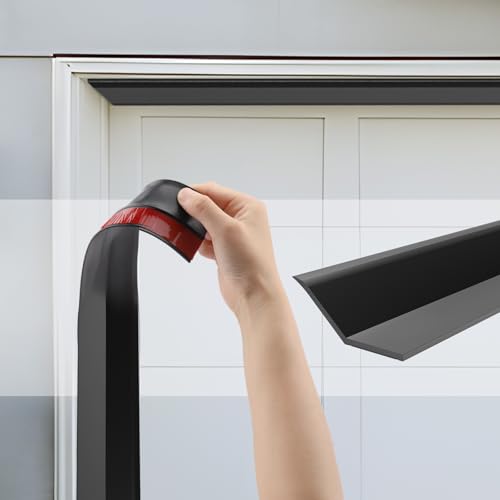
This black 36-foot TPE strip combines peel-and-stick installation with nails for added reinforcement, while the other 36-foot TPE options also emphasize UV resistance or pest protection. Its 2.2-inch width is suitable to consider when the door jamb has room for that profile. The maker positions the weather-resistant material to block drafts, dust, debris, and moisture at the top and sides. Measure the full perimeter first: an opening that needs more than 36 feet will require a longer kit or another plan, and adhesive needs a clean mounting surface.
Bottom line: Choose this for a black TPE seal when your opening measures within 36 feet.
36-Foot UV-Resistant TPE Seal

UV resistance is the distinguishing feature of this 36-foot black TPE option, which also includes an adhesive strip, nails, and lids for fastening. The maker says the seal remains flexible and resilient and helps keep leaves, drafts, dust, rain, and bugs out; it also claims noise-dampening benefits. Its length matches the other 36-foot kits, so there is no extra allowance if your perimeter measurement is close to that limit. Choose it when UV exposure is a priority and the length covers the top and both sides of your particular opening.
Bottom line: Choose this if UV resistance is your priority and 36 feet covers the frame.
DuraSeal 34-Foot PVC Kit
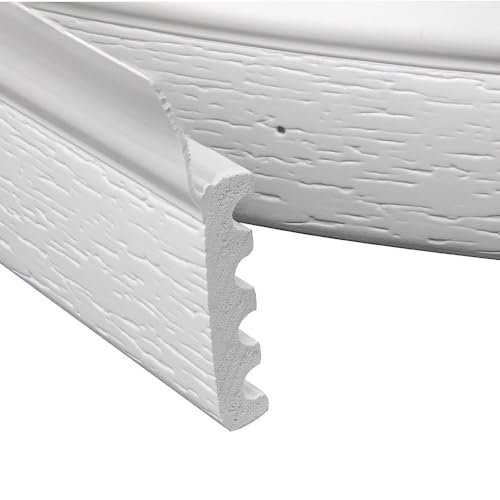
DuraSeal uses a foamed PVC base and flexible PVC fin rather than a single TPE strip, creating a molding-style seal for the door stop. The white kit provides 34 feet of uncut material and 60 color-matched nails, making it the shortest option here. The maker says it helps block drafts, rain, snow, dust, and insects. Its coiled form needs preparation: warm it to room temperature, lay it flat with weights, and allow about 24 hours to relax before installation. That extra setup matters if you need to install the seal the same day it arrives.
Bottom line: Pick this for a PVC base-and-fin profile when 34 feet is enough.
36-Foot White TPE Seal

This white 36-foot TPE seal offers the same broad format as the black 36-foot options, but suits buyers matching a light-colored frame. Its adhesive strip and included nails provide two ways to secure the trim. The maker says the UV-resistant material remains flexible and helps block leaves, drafts, dust, rain, and bugs, with energy and noise benefits also claimed. The white finish and 2.2-inch width are useful selection points; however, its 36-foot length leaves no extra coverage compared with the black versions, so measure carefully before cutting.
Bottom line: Choose this for a white finish when a 36-foot TPE kit fits your frame.
How to Measure for a Garage Door Seal
Measure the top edge and both vertical jambs, then add the three lengths to determine the minimum seal required. A 16-foot-wide by 7-foot-high opening, for example, needs 30 feet before allowing for corner cuts or mistakes; 34 feet leaves 4 feet of extra material. Measure the frame where the seal will mount, not the door panel. Use one continuous run across the top when the kit permits, and cut side pieces to meet it neatly. A gap at a corner can admit water or insects even when the straight runs fit well.
Choose a kit longer than the sum of those three measurements rather than treating the advertised length as an exact fit. Leave a small trimming allowance, but do not stretch the seal to make a short kit reach.
TPE Strip Versus PVC Stop Molding
TPE strips and PVC stop molding use different profiles, so choose by the frame and sealing surface rather than color alone. TPE options in this group are 2.2 inches wide and attach with adhesive plus nails; the PVC kit has a 1.95-inch width, a foamed base, and a flexible fin. A fin-style molding is designed to press against the closed door, while a strip-style seal is mounted along the jamb to close the edge gap.
Before choosing, inspect the existing stop molding and note where the door meets it when closed. If the jamb is narrower than the seal’s width, a wider profile may overhang; if the door does not contact the fin, the gap can remain open.
Installing Top and Side Weather Seals
Install top-and-side weather stripping on a clean, dry, sound frame, and test the door’s contact before fastening the full length. Adhesive-backed strips need a dust-free surface; nails provide mechanical reinforcement but should not be driven so tightly that a flexible fin cannot meet the door. For a coiled PVC strip, warming it and flattening it under weights for about 24 hours helps remove its coil memory before fitting.
Cut only after measuring and test-fit each run. Close the door gently to check that the seal contacts the door without preventing it from closing or distorting the track. Keep hands clear of hinges, rollers, and moving sections, and disconnect power before working near an automatic opener or its moving parts.
What Top and Side Seals Do Not Replace
A top-and-side seal closes perimeter gaps at the door jamb, but the bottom seal handles the separate gap at the floor. If daylight remains below a closed door, changing the side trim will not solve that floor-level opening; inspect the bottom astragal or threshold instead. Common bottom-seal profiles include T-style, bulb, and beaded designs, and compatibility depends on the retainer channel.
Also check that the door is aligned and closes evenly before adding thicker weather stripping. A poorly balanced or misaligned door can leave uneven gaps that trim cannot reliably correct. For gaps that vary substantially from top to bottom, address alignment before relying on a new seal.
Frequently Asked Questions
How much seal do I need for a garage door?
Add the door opening’s width to twice its height, then allow extra length for trimming. A 16-by-7-foot opening uses 30 feet for the top and sides before any allowance.
Can I use a top and side seal on the bottom?
No, a perimeter seal is meant for the top and side jambs, while the floor gap needs a bottom seal. Bottom seals use profiles such as T-style, bulb, or beaded designs that fit a compatible retainer.
Should garage door weather stripping touch the door?
Yes, the seal should make light, continuous contact with the closed door without stopping it from closing. If the door bows or the opener struggles, the seal may be positioned too tightly or the door may need alignment.
Do I need adhesive and nails for garage door seals?
Adhesive-backed trim should be installed on a clean, dry mounting surface, and nails can add mechanical reinforcement where the kit includes them. Avoid overdriving nails into flexible molding because it can prevent the sealing edge from moving against the door.
How do I flatten coiled garage door weather stripping?
Warm coiled PVC molding to room temperature, lay it flat, and weight it along its length for about 24 hours. This lets the material relax before it is cut and attached.