
Best Squeegee for Window Cleaning: 4 Picks Compared

The Unger Total Pro Window Cleaning Kit suits most home window cleaning because its kit pairs a 12-inch squeegee with a 14-inch scrubber and a pole that extends to 6 feet. Choose Unger EZ Change 18-Inch Squeegee for both 12- and 18-inch blades, or PIMEKOY 61-Inch Window Cleaning Kit if a bucket and 61-inch handle matter more than a telescopic pole.
A window squeegee pulls rinse water off glass with a rubber blade; the right width and reach depend on pane size and access.
We earn a commission if you buy through links on this page. As an Amazon Associate I earn from qualifying purchases. Products are compared on manufacturer specifications, not hands-on testing.
- Best overall: Unger Total Pro Window Cleaning Kit – Combines a 12-inch squeegee, 14-inch scrubber and pole extending to 6 feet.
- Best for mixed window sizes: Unger EZ Change 18-Inch Squeegee – Includes both 12- and 18-inch blades for smaller and larger panes.
- Best for bucket-based cleaning: PIMEKOY 61-Inch Window Cleaning Kit – Pairs a 3-gallon bucket with a 14-inch squeegee, 15-inch scrubber and 61-inch handle.
| Product | Best for | Blade width | Reach | Included tools | Shop |
|---|---|---|---|---|---|
| Unger Total Pro Window Cleaning Kit | Complete home cleaning | 12 in | Up to 6 ft | 14 in scrubber | Check Price on Amazon |
| Unger EZ Change 18-Inch Squeegee | Mixed pane sizes | 12 and 18 in | Handheld or pole | 12 in channel | Check Price on Amazon |
| Unger 12-Inch Stainless Steel Squeegee | Durable handheld use | 12 in | Handheld or pole | 12 in squeegee | Check Price on Amazon |
| PIMEKOY 61-Inch Window Cleaning Kit | Bucket-based washing | 14 in | 61 in handle | 15 in scrubber, bucket | Check Price on Amazon |
Window Squeegees for Window Cleaning
Match blade width, reach and included washing tools to the panes you clean most often.
Unger Total Pro Window Cleaning Kit

The Unger Total Pro Window Cleaning Kit is the most complete setup here for washing and drying household glass: it includes a 12-inch squeegee, a 14-inch scrubber with reusable microfiber sleeve, and a telescopic pole extending to 6 feet. The maker says its professional-grade rubber is intended to leave glass streak-free. Choose it if you want to wet the pane with a scrubber before pulling off water, including on higher windows within the pole’s reach.
The main limitation is the fixed 12-inch squeegee width; people cleaning broad panes may prefer a wider blade.
Bottom line: Pick this for a scrubber-and-squeegee kit with reach up to 6 feet.
Unger EZ Change 18-Inch Squeegee

The Unger EZ Change 18-Inch Squeegee stands out for covering two pane sizes: its kit includes 12- and 18-inch channels, while EZ Release functionality makes the rubber replaceable. The cushioned grip is designed for wet hands, and the tool can be used handheld or with an Unger Connect & Clean telescopic pole. The maker says the rubber is intended for streak-free results.
This option is suited to homes with a mix of narrow and broad glass. The pole is not included, so buyers who need reach beyond arm length must pair it with a compatible pole.
Bottom line: Choose this for two blade widths and replaceable rubber.
Unger 12-Inch Stainless Steel Squeegee

The Unger 12-Inch Stainless Steel Squeegee uses a stainless steel construction and a 12-inch rubber blade, making it a straightforward handheld choice for windows, shower doors and mirrors. Its grip is described as ergonomic and suitable for wet hands, and the tool is compatible with Unger pole accessories. The maker says the blade is intended to clean without scratching and deliver streak-free results.
This suits buyers who want a single squeegee rather than a wash-and-dry kit. Its 12-inch width may mean more overlapping passes on wide glass, and no scrubber is included.
Bottom line: Pick this for a stainless-steel 12-inch squeegee without extra kit pieces.
PIMEKOY 61-Inch Window Cleaning Kit
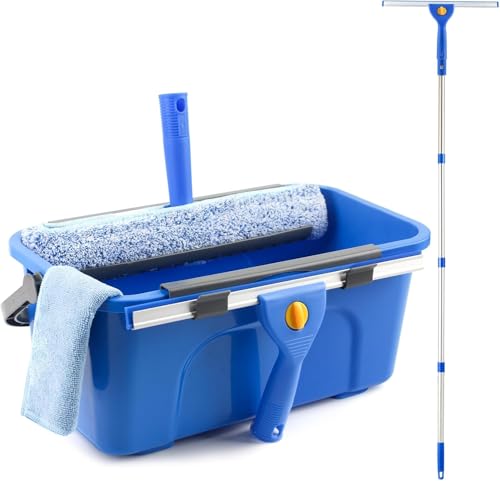
The PIMEKOY 61-Inch Window Cleaning Kit differs by bringing the water container along with the cleaning tools: the kit includes a 3-gallon bucket, a 14-inch squeegee, a 15-inch scrubber, a 61-inch handle, microfiber cloth and replaceable scrubber sleeve. Side holders keep the squeegee and scrubber with the bucket, which suits outdoor washing where carrying tools together is useful.
Choose it when an integrated bucket and long handle matter more than a telescoping pole. Its handle reach is 61 inches, so measure the window height and your safe working position before relying on it for elevated panes.
Bottom line: Choose this for a bundled bucket and 61-inch handle.
How to choose a window squeegee
Choose blade width by pane size and choose reach by where you can work safely. A 10- to 12-inch blade is easier to steer around small panes and divided windows; an 18-inch blade can cover broad, unobstructed glass in fewer strokes. For tall windows, select a pole that reaches the working area while both feet stay on the ground; do not lean out of an upper-story window to extend reach.
A washer or sponge is useful because grit should be loosened before the blade crosses the glass. A squeegee alone removes rinse water, but it does not replace pre-cleaning on dirty panes. For this set, compare the specified blade sizes and maximum reach, then check how the handle attaches before buying if you already own a pole.
Blade width and window fit
Blade width should be slightly narrower than the glass area you can sweep in a controlled pass. An 18-inch blade can suit a wide picture window, while a 10- or 12-inch blade is easier to maneuver around muntins, narrow sidelights and shower hardware. On divided windows, a blade that cannot fit between frame edges forces awkward angles that can leave water behind.
Use this quick match as a starting point, then allow for frame width and obstacles. The product measurements here refer to blade width, not the width of the whole frame.
| Glass and task | Useful starting point | Why |
|---|---|---|
| Small or divided panes | 10 to 12 in blade | Easier control in narrow sections |
| Broad, clear panes | 18 in blade | Covers more glass per pass |
| Higher exterior windows | Pole reaching the work area | Reduces need to stretch or climb |
How to avoid streaks on glass
Clean grit off the pane before drawing a rubber blade across it; trapped grit can scratch glass or damage the rubber edge. Wet the glass with a washer or sponge and a suitable cleaning solution, then pull the blade in overlapping strokes so a narrow dry gap does not remain between passes. Wipe the blade edge with a clean cloth when residue begins to collect.
Work from the top down so rinse water does not run over finished glass. On a sunny, hot pane, solution can dry before the next pass, so work in smaller sections or choose a shaded time. Replaceable rubber is useful when the edge becomes nicked or leaves persistent lines despite a clean blade and properly wetted glass.
Safe reach for outdoor windows
Keep both feet on a stable surface and avoid stretching sideways with a pole; reposition instead. A six-foot pole or a 61-inch handle can extend reach for ground-accessible windows, but neither makes an unstable ladder or leaning from a window safe. Pole length also does not equal safe working height because your stance and the angle of the tool change how far it reaches.
For second-story exterior panes, use a method that lets you remain safely indoors or hire a qualified window cleaner rather than leaning out. Do not use a wet pole near overhead power lines; maintain at least 10 feet of clearance from energized lines. Measure the actual window position before choosing a handle, and favor stable ground access over maximum reach.
Frequently Asked Questions
How wide should a window squeegee blade be?
A 10- to 12-inch blade is a practical starting point for smaller or divided panes, while an 18-inch blade suits broader, clear glass. Leave enough room for the blade to pass between frame edges without binding.
Do I need a scrubber with a window squeegee?
A scrubber or sponge helps loosen dust and film before the blade removes rinse water. For a light, already-clean pane, a squeegee alone may be enough, but gritty glass should be washed first to reduce scratching risk.
How do I stop a squeegee leaving streaks?
Keep the glass wet and the rubber edge clean, and overlap each pass slightly so no dry strip remains. If streaks persist, inspect the rubber for nicks and clear away grit before continuing.
Can I clean second-story windows with a long squeegee?
Only use a setup that lets you stay on stable ground or safely indoors; a 55- or 61-inch handle does not make leaning from a window safe. Keep wet tools at least 10 feet from overhead power lines.
When should I replace squeegee rubber?
Replace the rubber when its edge has visible nicks, splits or persistent streaking after cleaning. Check the blade after each session because grit and storage damage can wear or deform the edge.