
Locking Mountain Bike Grips: Fit and Style Compared

For most riders seeking locking mountain bike grips, PNW Loam XL 34 mm stands out for its trail-focused tacky rubber and choice of 30 mm or 34 mm grip diameter. Choose another option if you want double clamps, a longer grip, or an extra pair rather than its single-clamp design.
We earn a commission if you buy through links on this page. As an Amazon Associate I earn from qualifying purchases. Products are compared on manufacturer specifications, not hands-on testing.
- Best overall: PNW Loam XL 34 mm – Its tacky rubber and two diameter options let riders choose a thinner or fuller trail grip.
- Best for double clamps: Corki Double-Lock 130 mm – Two locking rings secure each 130 mm grip.
- Best for spare pairs: ROCKBROS 4-Piece Lock-On Grips – The package includes two pairs of grips.
| Product | Best for | Clamp style | Length | Grip material | Shop |
|---|---|---|---|---|---|
| PNW Loam XL 34 mm | Tacky trail feel | Single clamp | — | 25A rubber | Check Price on Amazon |
| Corki Double-Lock 130 mm | Double-clamp security | Double clamp | 130 mm | TPR rubber | Check Price on Amazon |
| GPMTER Single-Lock 131 mm | Longer grip length | Single clamp | 131 mm | Non-slip rubber | Check Price on Amazon |
| ROCKBROS 4-Piece Lock-On Grips | Two spare pairs | Bilateral locking rings | — | Rubber | Check Price on Amazon |
Locking Mountain Bike Grips
Compare grip length, clamp arrangement, and surface material to find a set that fits your hands and bar ends.
PNW Loam XL 34 mm

Unlike the other choices, this set offers two grip diameters: 30 mm Regular and 34 mm XL, with the XL option shown here. PNW says its 25A tacky rubber and dual-pattern surface are designed for trail and enduro riding, with thin traction strips and a thicker palm-support pattern. The single-clamp design fits standard 22.2 mm mountain bike bars, and the closed end provides a finished bar end. Choose the 34 mm version if you prefer more grip volume; riders wanting a slimmer feel should select the Regular size instead.
Bottom line: Pick this if you want a tacky, patterned trail grip and prefer a fuller 34 mm diameter.
Corki Double-Lock 130 mm
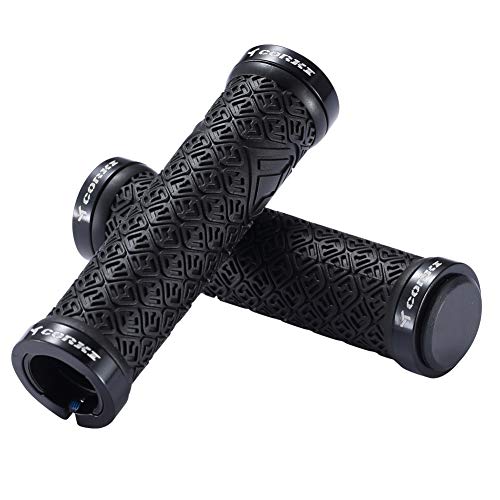
The double locking rings distinguish this 130 mm pair from the single-clamp alternatives. The grips use TPR rubber with aluminum-alloy rings and are specified for handlebars with an outer diameter between 20 and 22 mm. That range makes bar measurement especially important: the usual 22.2 mm MTB grip area sits just outside the upper limit. Check bar compatibility before ordering if your handlebar measures 22.2 mm; riders who want a clearly stated 22.2 mm fit may prefer another option.
Bottom line: Choose this if you specifically want double locking rings and your bar measures within its 20–22 mm range.
GPMTER Single-Lock 131 mm
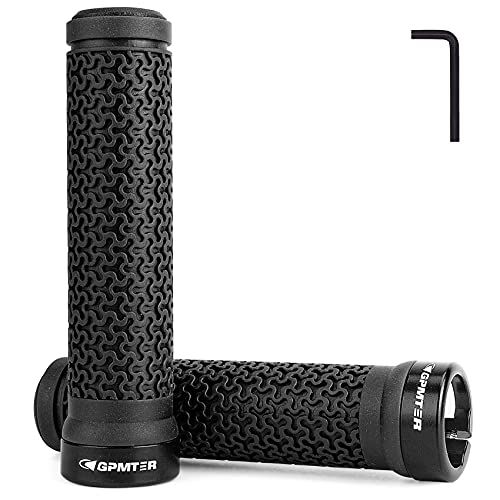
At 131 mm, this grip is the longest option here with a length, a small difference from the 130 mm Corki pair. It combines non-slip rubber with an aluminum-alloy single lock-on clamp and an added gel layer. The manufacturer says the grip fits bars with a 22.2 mm diameter, covering a common MTB bar size. Its single clamp is simpler than a double-ring layout, but riders who prioritize two clamp rings should choose the Corki option instead. The ergonomic shape may also suit riders seeking a softer-feeling grip.
Bottom line: Pick this if you want a 131 mm grip, a single clamp, and an added gel layer.
ROCKBROS 4-Piece Lock-On Grips

This is the only package with two pairs, so it can outfit two bikes or leave a spare set on hand. ROCKBROS describes soft, durable rubber grips with locking rings at both sides and handlebar end plugs. The maker does not give a grip length or bar diameter, so compare those measurements with your bike before choosing this set. Its two-pair format is useful when quantity matters, but a rider choosing by precise fit or diameter has more directly stated sizing with the PNW and GPMTER options.
Bottom line: Choose this when two pairs and bilateral locking rings matter more than a grip length.
How to choose locking mountain bike grips
Start with bar diameter, then choose grip thickness and clamp style. Most mountain bike handlebars have a 22.2 mm diameter where the grips sit; measure the straight grip area, not the wider center section. Grip length commonly falls around 130 mm, so compare the grip against available space between the shifter, brake lever, and bar end. A single clamp leaves one locking ring, while a double-clamp design secures both ends. With less than about 130 mm of usable bar space, choose a shorter grip or adjust controls only if the handlebar and component makers permit it. Wider or thicker grips change hand position, so prioritize a comfortable grasp over a larger diameter by default.
Grip diameter and handlebar fit
A grip must match the handlebar’s outside diameter at the grip area; 22.2 mm is the common mountain bike size. Measure with calipers when possible, since a few tenths of a millimeter can affect installation and retention. Grip diameter is different from bar diameter: a 34 mm grip describes the outside thickness at the hand, not the bar size. A thicker grip can fill more of the palm, while a thinner grip gives a smaller circumference to wrap fingers around. Confirm that grip length leaves room for brake levers and shifters, and never force a grip onto a bar that is outside its fit range. Secure bar-end plugs before riding; exposed bar ends can cause serious injury in a fall.
Single-clamp versus double-clamp grips
Single-clamp grips use one locking ring per grip, while double-clamp models use rings at both ends. Both designs rely on the clamp tightening against the handlebar, so a correctly sized clean bar and properly tightened fasteners matter more than clamp count alone. Use the maker’s torque guidance for the specific clamp; over-tightening can damage clamp hardware or the bar. The table summarizes the practical differences.
| Style | Clamp layout | Useful when |
|---|---|---|
| Single clamp | One ring at one end | You want the layout in the PNW or GPMTER options |
| Double clamp | Rings at both ends | You prefer two locking points per grip |
Installation and grip care
Install grips on a clean, dry handlebar unless the grip maker specifies another method. Slide each grip fully into position, align its pattern and end, then tighten clamp bolts evenly to the specified torque; do not guess at a torque value. Check that each grip cannot rotate by twisting it firmly before the first ride, and recheck after the first ride because components can settle. Inspect rubber for cuts, tearing, or a loose clamp before riding, especially after a crash or bar impact. Keep grips and hands free of grease during installation, since contamination can reduce secure contact. Replace a damaged grip or end plug rather than riding with a loose or exposed bar end.
Frequently Asked Questions
What diameter handlebar do mountain bike grips fit?
Most mountain bike grip areas measure 22.2 mm in outside diameter. Measure the straight section where the grip sits and compare it with the grip’s range.
How long are standard mountain bike grips?
Many MTB grips are about 130 mm long. Check the available bar space between controls and the bar end, especially if your shifter or brake lever sits close to the grip.
How do I stop lock-on grips from twisting?
Match the grip to the bar diameter, install it on a clean, dry bar, and tighten the clamp to the maker’s torque specification. Test for rotation before riding and inspect it again after the first ride.
Can I ride with missing bar-end plugs?
No; install secure bar-end plugs before riding. Exposed handlebar ends can cause serious injury during a fall, and a loose or damaged plug should be replaced.